Recombinant Human TGFBR1 / ALK-5 / SKR4 Protein

Recombinant Human TGFBR1 / ALK-5 / SKR4 Protein — Transmembrane serine/threonine kinase forming with the TGF-beta type II serine/threonine kinase receptor, TGFBR2, the non-promiscuous receptor for the TGF-beta cytokines TGFB1, TGFB2 and TGFB3. Purity >95%.

SKU: BCRETP-000042 Category:

Product Specifications

Product SkuBCRETP-000042
Product DescriptionRecombinant Human TGFBR1 / ALK-5 / SKR4 Protein is expressed from HEK293 with Fc tag at the C-Terminus. It contains 1-125aa. [Accession | P36897].
Uniprot No.P36897
SynonymsAAT5;ACVRLK4;ALK-5;ALK5;ESS1;LDS1;LDS1A;LDS2A;MSSE;SKR4;tbetaR-I;TGFR-1
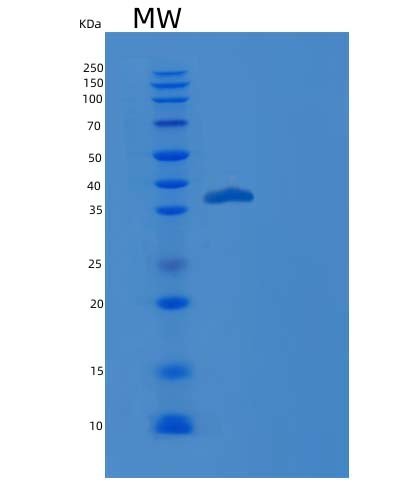
PurityGreater than 95% as determined by SDS-PAGE.
Expression SystemHEK293 Cells
Expression Region1-125aa
Tag InfoC-His & Fc
Molecular weight38.8 kDa
EndotoxinLess than 1.0 EU/μg as determined by LAL method.

Function

Transmembrane serine/threonine kinase forming with the TGF-beta type II serine/threonine kinase receptor, TGFBR2, the non-promiscuous receptor for the TGF-beta cytokines TGFB1, TGFB2 and TGFB3. Transduces the TGFB1, TGFB2 and TGFB3 signal from the cell surface to the cytoplasm and is thus regulating a plethora of physiological and pathological processes including cell cycle arrest in epithelial and hematopoietic cells, control of mesenchymal cell proliferation and differentiation, wound healing, extracellular matrix production, immunosuppression and carcinogenesis. The formation of the receptor complex composed of 2 TGFBR1 and 2 TGFBR2 molecules symmetrically bound to the cytokine dimer results in the phosphorylation and the activation of TGFBR1 by the constitutively active TGFBR2.

Biological Context

Subcellular Location: Cell membrane (Single-pass type I membrane protein); Cell junction, tight junction; Cell surface; Membrane raft
Tissue Specificity: Found in all tissues examined, most abundant in placenta and least abundant in brain and heart. Expressed in a variety of cancer cell lines
Disease Association: Loeys-Dietz syndrome 1 (LDS1) : An aortic aneurysm syndrome with widespread systemic involvement, characterized by arterial tortuosity and aneurysms, hypertelorism, and bifid uvula or cleft palate. Physical findings include prominent joint laxity, easy bruising, wide and atrophic scars, velvety and translucent skin with easily visible veins, spontaneous rupture of the spleen or bowel, and catastrophic complications of pregnancy, including rupture of the gravid uterus and the arteries, either during pregnancy or in the immediate postpartum period. Some patients have craniosynostosis, exotropy, micrognathia and retrognathia, structural brain abnormalities, and intellectual deficit. [The disease is caused by variants affecting the gene represented in this entry. TGFBR1 mutation Gln-487 has been reported to be associated with thoracic aortic aneurysms and dissection (TAAD). This phenotype, also known as thoracic aortic aneurysms type 5 (AAT5), is distinguised from LDS1 by having aneurysms restricted to thoracic aorta. It is unclear, however, if this condition is fulfilled in individuals bearing Gln-487 mutation, that is why they are considered as LDS1 by the OMIM resource] | Multiple self-healing squamous epithelioma (MSSE) : A disorder characterized by multiple skin tumors that undergo spontaneous regression. Tumors appear most often on sun-exposed regions, are locally invasive, and undergo spontaneous resolution over a period of months leaving pitted scars. [The disease is caused by variants affecting the gene represented in this entry]

Product Specifications

Recombinant Human TGFBR1 / ALK-5 / SKR4 Protein is a recombinant protein, expressed in HEK293 Cells, covering amino acids 1-125aa, with C-His & Fc tag, molecular weight 38.8 kDa, purity Greater than 95% as determined by SDS-PAGE.. Suitable for ELISA and Western Blot applications.
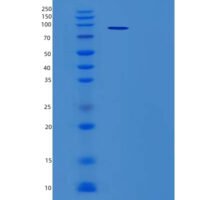
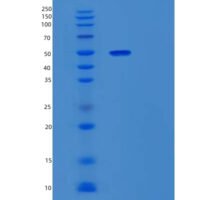
SDS-PAGE: Single band at expected molecular weight confirming purity.

ELISA: Suitable as coating antigen or detection standard.

Western Blot: Compatible with standard Western Blot protocols.

Protein Interaction: Validated for SPR (Surface Plasmon Resonance) and BLI (Bio-Layer Interferometry) studies.

Shipping: Shipped at ambient temperature. Lyophilized protein is stable during transit.

Storage: Store lyophilized protein at -20°C to -80°C. Reconstituted protein should be aliquoted and stored at -80°C. Avoid repeated freeze-thaw cycles.

Shelf Life: 12 months from date of receipt when stored as recommended.

Shipping Time: Orders placed before 2 PM EST ship same day. International orders typically deliver within 5-10 business days.

Protein Biology

Function

Transmembrane serine/threonine kinase forming with the TGF-beta type II serine/threonine kinase receptor, TGFBR2, the non-promiscuous receptor for the TGF-beta cytokines TGFB1, TGFB2 and TGFB3. Transduces the TGFB1, TGFB2 and TGFB3 signal from the cell surface to the cytoplasm and is thus regulating a plethora of physiological and pathological processes including cell cycle arrest in epithelial and hematopoietic cells, control of mesenchymal cell proliferation and differentiation, wound healing, extracellular matrix production, immunosuppression and carcinogenesis (PubMed:33914044). The formation of the receptor complex composed of 2 TGFBR1 and 2 TGFBR2 molecules symmetrically bound to the cytokine dimer results in the phosphorylation and the activation of TGFBR1 by the constitutively active TGFBR2. Activated TGFBR1 phosphorylates SMAD2 which dissociates from the receptor and interacts with SMAD4. The SMAD2-SMAD4 complex is subsequently translocated to the nucleus where it modulates the transcription of the TGF-beta-regulated genes. This constitutes the canonical SMAD-dependent TGF-beta signaling cascade. Also involved in non-canonical, SMAD-independent TGF-beta signaling pathways. For instance, TGFBR1 induces TRAF6 autoubiquitination which in turn results in MAP3K7 ubiquitination and activation to trigger apoptosis. Also regulates epithelial to mesenchymal transition through a SMAD-independent signaling pathway through PARD6A phosphorylation and activation

Subcellular Location

Cell membrane (Single-pass type I membrane protein); Cell junction, tight junction; Cell surface; Membrane raft

Disease Association

Loeys-Dietz syndrome 1 (LDS1) : An aortic aneurysm syndrome with widespread systemic involvement, characterized by arterial tortuosity and aneurysms, hypertelorism, and bifid uvula or cleft palate. Physical findings include prominent joint laxity, easy bruising, wide and atrophic scars, velvety and translucent skin with easily visible veins, spontaneous rupture of the spleen or bowel, and catastrophic complications of pregnancy, including rupture of the gravid uterus and the arteries, either during pregnancy or in the immediate postpartum period. Some patients have craniosynostosis, exotropy, micrognathia and retrognathia, structural brain abnormalities, and intellectual deficit. [The disease is caused by variants affecting the gene represented in this entry. TGFBR1 mutation Gln-487 has been reported to be associated with thoracic aortic aneurysms and dissection (TAAD) (PubMed:16791849). This phenotype, also known as thoracic aortic aneurysms type 5 (AAT5), is distinguised from LDS1 by having aneurysms restricted to thoracic aorta. It is unclear, however, if this condition is fulfilled in individuals bearing Gln-487 mutation, that is why they are considered as LDS1 by the OMIM resource] | Multiple self-healing squamous epithelioma (MSSE) : A disorder characterized by multiple skin tumors that undergo spontaneous regression. Tumors appear most often on sun-exposed regions, are locally invasive, and undergo spontaneous resolution over a period of months leaving pitted scars. [The disease is caused by variants affecting the gene represented in this entry]

Tissue Specificity

Found in all tissues examined, most abundant in placenta and least abundant in brain and heart. Expressed in a variety of cancer cell lines (PubMed:25893292)

Subunit

Homodimer; in the endoplasmic reticulum but also at the cell membrane. Heterohexamer; TGFB1, TGFB2 and TGFB3 homodimeric ligands assemble a functional receptor composed of two TGFBR1 and TGFBR2 heterodimers to form a ligand-receptor heterohexamer. The respective affinity of TGBRB1 and TGFBR2 for the ligands may modulate the kinetics of assembly of the receptor and may explain the different biological activities of TGFB1, TGFB2 and TGFB3. Component of a complex composed of TSC22D1 (via N-terminus), TGFBR1 and TGFBR2; the interaction between TSC22D1 and TGFBR1 is inhibited by SMAD7 and promoted by TGFB1 (PubMed:21791611). Interacts with CD109; inhibits TGF-beta receptor activation in keratinocytes. Interacts with RBPMS. Interacts (unphosphorylated) with FKBP1A; prevents TGFBR1 phosphorylation by TGFBR2 and stabilizes it in the inactive conformation. Interacts with SMAD2, SMAD3 and ZFYVE9; ZFYVE9 recruits SMAD2 and SMAD3 to the TGF-beta receptor. Interacts with TRAF6 and MAP3K7; induces MAP3K7 activation by TRAF6. Interacts with PARD6A; involved in TGF-beta induced epithelial to mesenchymal transition. Interacts with NEDD4L (PubMed:15496141). Interacts with SMAD7, SMURF1 and SMURF2; SMAD7 recruits NEDD4L, SMURF1 and SMURF2 to the TGF-beta receptor (PubMed:11163210, PubMed:11278251). Interacts with USP15 and VPS39. Interacts with SDCBP (via C-terminus) (PubMed:25893292). Interacts with CAV1 and this interaction is impaired in the presence of SDCBP (PubMed:25893292). Interacts with APPL1; interaction is TGF beta dependent; mediates trafficking of the TGFBR1 from the endosomes to the nucleus via microtubules in a TRAF6-dependent manner (PubMed:26583432). Interacts with GPR50; this interaction promotes the constitutive activation of SMAD signaling pathway (PubMed:29572483)

Gene: TGFBR1  |  Organism: Homo sapiens  |  Synonyms: Activin A receptor type II-like protein kinase of 53kD; Activin receptor-like kinase 5; Serine/threonine-protein kinase receptor R4; TGF-beta type I receptor; Transforming growth factor-beta receptor type I
Key Publications

Frequently Asked Questions

How do I order or inquire about this product?

Fill out the Online Inquiry form with your required quantity and specifications. You can also email sales@biocrestsci.com. Our team typically responds within 4 business hours with a quote and availability confirmation.

What is the shipping and delivery time?

Orders placed before 2 PM EST ship the same day. Domestic (US) delivery typically takes 2-3 business days. International orders deliver within 5-10 business days. All products are shipped at ambient temperature with appropriate packaging to ensure stability.

How should I store this recombinant protein?

Lyophilized proteins should be stored at -20°C to -80°C upon receipt. After reconstitution, aliquot and store at -80°C. Avoid repeated freeze-thaw cycles. Shelf life is 12 months from date of receipt when stored as recommended.

What quality controls are performed on your products?

Each product undergoes SDS-PAGE purity analysis (typically >85-95%), endotoxin testing, and bioactivity validation. Products are validated for ELISA, Western Blot, and SPR/BLI applications as specified on this product page. A Certificate of Analysis (CoA) is available upon request.

Shopping Cart
Scroll to Top