Function
Mediates high affinity thiamine uptake, probably via a proton anti-port mechanism. Has no folate transport activity. Mediates H(+)-dependent pyridoxine transport.
Biological Context
Subcellular Location: Membrane (Multi-pass membrane protein)
Tissue Specificity: Widely expressed but most abundant in placenta, kidney and liver
Disease Association: Basal ganglia disease, biotin-thiamine responsive (BTBGD) : An autosomal recessive metabolic disorder characterized by episodic encephalopathy, often triggered by febrile illness, presenting as confusion, seizures, external ophthalmoplegia, dysphagia, and sometimes coma and death. If untreated, encephalopathies can result in permanent dystonia. Brain imaging may show characteristic bilateral lesions of the basal ganglia. [The disease is caused by variants affecting the gene represented in this entry]
Product Specifications
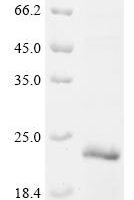
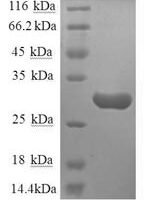
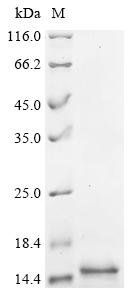
Recombinant Human Thiamine transporter 2 (SLC19A3), partial is a recombinant protein from Homo sapiens (Human), expressed in E.coli, covering amino acids 208-273aa, with N-terminal 6xHis-tagged tag, molecular weight 11.4kDa, purity Greater than 90% as determined by SDS-PAGE.. Suitable for ELISA and Western Blot applications.
![Human Succinate dehydrogenase [ubiquinone] flavoprotein subunit, mitochondrial (SDHA), partial Recombinant Protein, N-GST - BioCrest Sci](https://www.biocrestsci.com/wp-content/uploads/protein/1/BCACP-838381-SDS-150x200.jpg)