Function
Cytokine that binds to TNFRSF4. Co-stimulates T-cell proliferation and cytokine production.
Biological Context
Subcellular Location: Membrane (Single-pass type II membrane protein)
Disease Association: Systemic lupus erythematosus (SLE) : A chronic, relapsing, inflammatory, and often febrile multisystemic disorder of connective tissue, characterized principally by involvement of the skin, joints, kidneys and serosal membranes. It is of unknown etiology, but is thought to represent a failure of the regulatory mechanisms of the autoimmune system. The disease is marked by a wide range of system dysfunctions, an elevated erythrocyte sedimentation rate, and the formation of LE cells in the blood or bone marrow. [Disease susceptibility is associated with variants affecting the gene represented in this entry. The upstream region of TNFSF4 contains a single risk haplotype for SLE, which is correlated with increased expression of both cell-surface TNFSF4 and TNFSF4 transcripts. Increased levels of TNFSF4 are thought to augment T-cell-APC interaction and the functional consequences of T-cell activation, thereby destabilizing peripheral tolerance]
Product Specifications
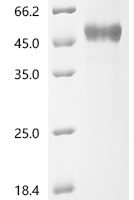
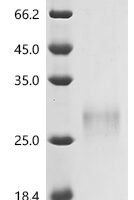
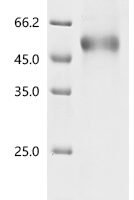
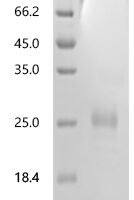
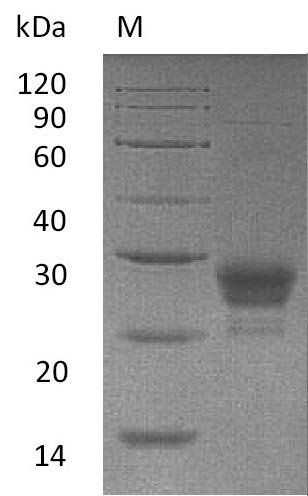
Recombinant Human Tumor necrosis factor ligand superfamily member 4 (TNFSF4), partial (Active) is a recombinant protein from Homo sapiens (Human), expressed in Mammalian cell, covering amino acids 51-183aa, with N-terminal 6xHis-tagged tag, molecular weight 16.3 kDa, purity Greater than 95% as determined by SDS-PAGE.. Suitable for ELISA and Western Blot applications. Explore more TNF Family proteins →