Function
Non-receptor tyrosine-protein kinase that plays an essential role in the selection and maturation of developing T-cells in the thymus and in the function of mature T-cells. Plays a key role in T-cell antigen receptor (TCR)-linked signal transduction pathways. Constitutively associated with the cytoplasmic portions of the CD4 and CD8 surface receptors.
Biological Context
Subcellular Location: Cell membrane (Lipid-anchor); Cytoplasm, cytosol
Tissue Specificity: Expressed specifically in lymphoid cells
Disease Association: [A chromosomal aberration involving LCK is found in leukemias. Translocation t(1;7)(p34;q34) with TCRB] | Immunodeficiency 22 (IMD22) : A primary immunodeficiency characterized by T-cell dysfunction. Affected individuals present with lymphopenia, recurrent infections, severe diarrhea, and failure to thrive. [The disease is caused by variants affecting the gene represented in this entry]
Product Specifications
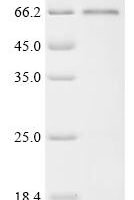
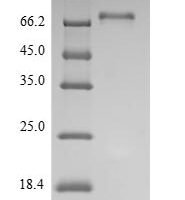
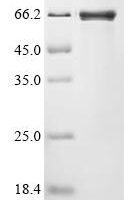
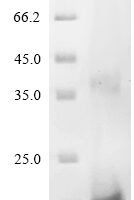
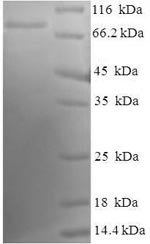
Recombinant Human Tyrosine-protein kinase Lck (LCK) is a recombinant protein from Homo sapiens (Human), expressed in E.coli, covering amino acids 1-539aa, with N-terminal 6xHis-SUMO-tagged tag, molecular weight 77.2kDa, purity Greater than 90% as determined by SDS-PAGE.. Suitable for ELISA and Western Blot applications. Explore more Kinase proteins →