Function
May be responsible for potassium buffering action of glial cells in the brain. Inward rectifier potassium channels are characterized by a greater tendency to allow potassium to flow into the cell rather than out of it. Their voltage dependence is regulated by the concentration of extracellular potassium; as external potassium is raised, the voltage range of the channel opening shifts to more positive voltages.
Biological Context
Subcellular Location: Membrane (Multi-pass membrane protein); Basolateral cell membrane
Tissue Specificity: Widely expressed in adult brain, including in the neocortex, the stratum pyrimadale of the hippocampus and the piriform cortex. Expressed by cultured astrocytes and also by cocultured cortical neurons (at protein level). In the distal segment of the nephron, expressed in the distal convoluted tubule, the connecting tubule, and the early cortical collecting duct
Product Specifications
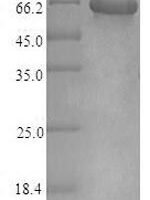
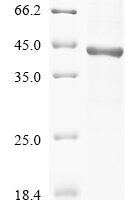
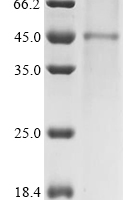
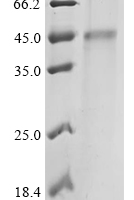
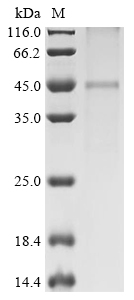
Recombinant Mouse ATP-sensitive inward rectifier potassium channel 10 (Kcnj10) Protein is a recombinant protein from Mus musculus (Mouse), expressed in in vitro E.coli expression system, covering amino acids 1-379aa, with N-terminal 10xHis-tagged tag, molecular weight 48.5kDa, purity Greater than 85% as determined by SDS-PAGE.. Suitable for ELISA and Western Blot applications.