Function
Endoribonuclease involved in various biological functions such as cellular inflammatory response and immune homeostasis, glial differentiation of neuroprogenitor cells, cell death of cardiomyocytes, adipogenesis and angiogenesis. Functions as an endoribonuclease involved in mRNA decay. Modulates the inflammatory response by promoting the degradation of a set of translationally active cytokine-induced inflammation-related mRNAs, such as IL6 and IL12B, during the early phase of inflammation.
Biological Context
Subcellular Location: Nucleus; Cytoplasm; Rough endoplasmic reticulum membrane (Peripheral membrane protein); Cytoplasmic granule; Cytoplasm, P-body
Tissue Specificity: Expressed in CD4(+) helper T-cells (at protein level). Highly expressed in macrophages. Expressed in lung, lymph nodes, spleen and thymus. Expressed weakly in heart. Expressed weakly in cardiomyocytes (at protein level). Expressed in spleen, lung, intestine, brown adipose tissue and thymus. Weakly expressed in the heart. Weakly expressed in cardiomyocytes
Disease Association: [Increased expression of ZC3H12A is associated with ischemic heart disease ]
Product Specifications
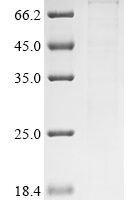
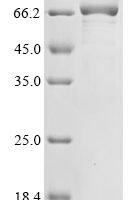
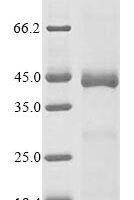
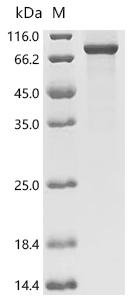
Recombinant Mouse Endoribonuclease ZC3H12A (Zc3h12a) is a recombinant protein from Mus musculus (Mouse), expressed in E.coli, covering amino acids 1-596aa, with N-terminal 10xHis-tagged and C-terminal Myc-tagged tag, molecular weight 73.0kDa, purity Greater than 85% as determined by SDS-PAGE.. Suitable for ELISA and Western Blot applications.