,

Recombinant Mouse G-protein coupled receptor 183 (Gpr183)-VLPs Protein

Recombinant Mouse G-protein coupled receptor 183 (Gpr183)-VLPs Protein — G protein-coupled receptor expressed in lymphocytes that acts as a chemotactic receptor for B-cells, T-cells, splenic dendritic cells, monocytes/macrophages and astrocytes. Purity >95%.

SKU: BCRECP-00510TM Categories: ,

Product Specifications

Uniprot No.Q3U6B2
Gene NamesGpr183
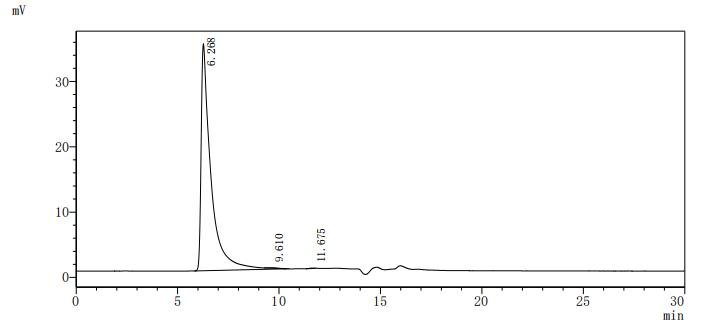
PurityGreater than 95% as determined by SEC-HPLC.
Expression SystemMammalian cell
Expression Region1-357aa
SpeciesMus musculus (Mouse)
Tag InfoN-terminal 10xHis-tagged(This tag can be tested only under denaturing conditions)
Molecular weight41.7kDa
ActivityNot Test
BufferIf the delivery form is liquid, the default storage buffer is Tris/PBS-based buffer, 5%-50% glycerol.If the delivery form is lyophilized powder, the buffer before lyophilization is Tris/PBS-based buffer, 6% Trehalose.
StorageStore at -20°C/-80°C upon receipt, aliquoting is necessary for mutiple use. Avoid repeated freeze-thaw cycles.

Function

G protein-coupled receptor expressed in lymphocytes that acts as a chemotactic receptor for B-cells, T-cells, splenic dendritic cells, monocytes/macrophages and astrocytes. Receptor for oxysterol 7-alpha,25-dihydroxycholesterol (7-alpha,25-OHC) and other related oxysterols. Mediates cell positioning and movement of a number of cells by binding the 7-alpha,25-OHC ligand that forms a chemotactic gradient.

Biological Context

Subcellular Location: Cell membrane (Multi-pass membrane protein)
Tissue Specificity: Expressed in mature B-cells and increases in expression early after activation, before being down-regulated in germinal center B-cells. Expressed in astrocytes. Specifically expressed in CD4(+) dendritic cells but not in CD8(+) dendritic cells. Expressed in monocyte/osteoclasts precursors and mature osteoclasts

Product Specifications

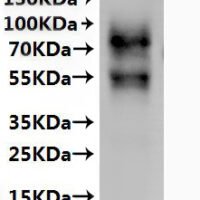
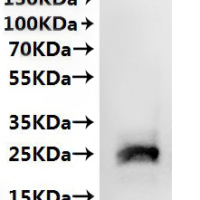
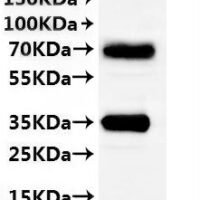
Recombinant Mouse G-protein coupled receptor 183 (Gpr183)-VLPs Protein is a recombinant protein from Mus musculus (Mouse), expressed in Mammalian cell, covering amino acids 1-357aa, with N-terminal 10xHis-tagged(This tag can be tested only under denaturing conditions) tag, molecular weight 41.7kDa, purity Greater than 95% as determined by SEC-HPLC.. Suitable for ELISA and Western Blot applications.

Recommended applications depend on the target, product format, and product-specific validation data. Refer to the product datasheet or Certificate of Analysis (CoA), or contact BioCrest Sci for application guidance.

Biological Activity: Not Test

Storage: Store at -20°C/-80°C upon receipt, aliquoting is necessary for mutiple use. Avoid repeated freeze-thaw cycles.

Shipping & Lead Time: Availability, shipping conditions, and estimated lead time are confirmed in the formal quotation or order confirmation based on the product format, destination, and order requirements.

Protein Biology

Function

G protein-coupled receptor expressed in lymphocytes that acts as a chemotactic receptor for B-cells, T-cells, splenic dendritic cells, monocytes/macrophages and astrocytes (PubMed:19597478, PubMed:19615922, PubMed:21796211, PubMed:21796212, PubMed:21844396, PubMed:27147029). Receptor for oxysterol 7-alpha,25-dihydroxycholesterol (7-alpha,25-OHC) and other related oxysterols (PubMed:21796211, PubMed:21796212). Mediates cell positioning and movement of a number of cells by binding the 7-alpha,25-OHC ligand that forms a chemotactic gradient (PubMed:21796211, PubMed:21796212, PubMed:27147029). Binding of 7-alpha,25-OHC mediates the correct localization of B-cells during humoral immune responses (PubMed:21796211, PubMed:21796212). Collaborates with CXCR5 to mediate B-cell migration; probably by forming a heterodimer with CXCR5 that affects the interaction between of CXCL13 and CXCR5 (PubMed:21948984, PubMed:22913878). Guides B-cell movement along the B-cell zone-T-cell zone boundary and later to interfollicular and outer follicular regions (PubMed:19597478, PubMed:19615922, PubMed:21844396). Its specific expression during B-cell maturation helps position B-cells appropriately for mounting T-dependent antibody responses (PubMed:19615922). Also acts as a chemotactic receptor for some T-cells upon binding to 7-alpha,25-OHC ligand (PubMed:27147029). Promotes follicular helper T (Tfh) cells differentiation by positioning activated T-cells at the follicle-T-zone interface, promoting contact of newly activated CD4 T-cells with activated dendritic cells and exposing them to Tfh-cell-promoting inducible costimulator (ICOS) ligand (PubMed:27147029). Expression in splenic dendritic cells is required for their homeostasis, localization and ability to induce B- and T-cell responses: GPR183 acts as a chemotactic receptor in dendritic cells that mediates the accumulation of CD4(+) dendritic cells in bridging channels (PubMed:23502855, PubMed:23682316). Regulates migration of astrocytes and is involved in communication between astrocytes and macrophages (PubMed:25297897, PubMed:27166278). Promotes osteoclast precursor migration to bone surfaces (PubMed:26438360). Signals constitutively through G(i)-alpha, but not G(s)-alpha or G(q)-alpha (By similarity). Signals constitutively also via MAPK1/3 (ERK1/2) (By similarity)

Subcellular Location

Cell membrane (Multi-pass membrane protein)

Tissue Specificity

Expressed in mature B-cells and increases in expression early after activation, before being down-regulated in germinal center B-cells (PubMed:19597478). Expressed in astrocytes (PubMed:25297897). Specifically expressed in CD4(+) dendritic cells but not in CD8(+) dendritic cells (PubMed:23502855, PubMed:23682316). Expressed in monocyte/osteoclasts precursors and mature osteoclasts (PubMed:26438360)

Subunit

Homodimer and heterodimer. Heterodimerizes with CXCR5; leading to modulate the interaction between of CXCL13 and CXCR5

Gene: Gpr183  |  Organism: Mus musculus  |  Synonyms: Epstein-Barr virus-induced G protein-coupled receptor 2 homolog
Key Publications

Frequently Asked Questions

How do I order or inquire about this product?

Submit the Online Inquiry form with your required quantity and specifications, or email sales@biocrestsci.com. Available sizes, pricing, stock status, documentation, and estimated lead time are confirmed in the formal quotation.

What is the shipping and delivery time?

Availability, dispatch timing, shipping conditions, and delivery estimates depend on the product format, destination, and order requirements. These details are confirmed in the formal quotation or order confirmation.

How should this product be stored?

Follow the storage and handling instructions in the product-specific datasheet and Certificate of Analysis (CoA). Requirements may vary by product form and formulation; contact BioCrest Sci if product-specific guidance is needed.

What quality controls are performed on your products?

Quality-control data such as identity, purity, endotoxin level, or biological activity are provided only when specified on this product page, the datasheet, or Certificate of Analysis (CoA). Biological activity is not implied unless explicitly stated.

Shopping Cart
Scroll to Top