Recombinant Mouse High mobility group protein B1 (Hmgb1), partial

Recombinant Mouse High mobility group protein B1 (Hmgb1), partial — In the extracellular compartment (following either active secretion or passive release) involved in regulation of the inflammatory response. Purity >85%.

SKU: BCRECP-002998 Category:

Product Specifications

Product SkuBCRECP-002998
Product DescriptionRecombinant Mouse High mobility group protein B1 (Hmgb1) Protein is expressed from E.coli with N-terminal 6xHis-tagged. It contains 2-215aa. [Accession | P63158].
Uniprot No.P63158
Gene NamesHmgb1
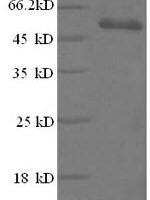
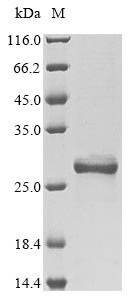
PurityGreater than 85% as determined by SDS-PAGE.
Expression SystemE.coli
Expression Region2-215aa
SpeciesMus musculus (Mouse)
Tag InfoN-terminal 6xHis-tagged
Molecular weight25.7kDa
ActivityPlease contact us to obtain bioactivity data.
BufferIf the delivery form is liquid, the default storage buffer is Tris/PBS-based buffer, 5%-50% glycerol. If the delivery form is lyophilized powder, the buffer before lyophilization is Tris/PBS-based buffer, 6% Trehalose.
StorageStore at -20°C/-80°C upon receipt, aliquoting is necessary for mutiple use. Avoid repeated freeze-thaw cycles.
Research AreasEpigenetics and Nuclear Signaling

Function

In the extracellular compartment (following either active secretion or passive release) involved in regulation of the inflammatory response. Fully reduced HGMB1 (which subsequently gets oxidized after release) in association with CXCL12 mediates the recruitment of inflammatory cells during the initial phase of tissue injury; the CXCL12:HMGB1 complex triggers CXCR4 homodimerization. Induces the migration of monocyte-derived immature dendritic cells and seems to regulate adhesive and migratory functions of neutrophils implicating AGER/RAGE and ITGAM.

Biological Context

Subcellular Location: Nucleus; Cytoplasm; Chromosome; Cell membrane (Peripheral membrane protein); Endosome; Endoplasmic reticulum-Golgi intermediate compartment; Secreted
Tissue Specificity: Serum levels are found elevated in mice with modeled systemic lupus erythematosus (SLE) and are correlated with SLE disease activity

Product Specifications

Recombinant Mouse High mobility group protein B1 (Hmgb1), partial is a recombinant protein from Mus musculus (Mouse), expressed in E.coli, covering amino acids 2-215aa, with N-terminal 6xHis-tagged tag, molecular weight 25.7kDa, purity Greater than 85% as determined by SDS-PAGE.. Suitable for ELISA and Western Blot applications.
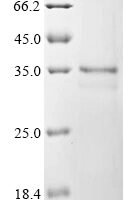
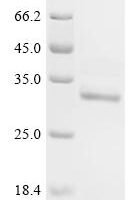
SDS-PAGE: Single band at expected molecular weight confirming purity.

ELISA: Suitable as coating antigen or detection standard.

Western Blot: Compatible with standard Western Blot protocols.

Protein Interaction: Validated for SPR (Surface Plasmon Resonance) and BLI (Bio-Layer Interferometry) studies.

Shipping: Shipped at ambient temperature. Lyophilized protein is stable during transit.

Storage: Store lyophilized protein at -20°C to -80°C. Reconstituted protein should be aliquoted and stored at -80°C. Avoid repeated freeze-thaw cycles.

Shelf Life: 12 months from date of receipt when stored as recommended.

Shipping Time: Orders placed before 2 PM EST ship same day. International orders typically deliver within 5-10 business days.

Protein Biology

Function

In the extracellular compartment (following either active secretion or passive release) involved in regulation of the inflammatory response. Fully reduced HGMB1 (which subsequently gets oxidized after release) in association with CXCL12 mediates the recruitment of inflammatory cells during the initial phase of tissue injury; the CXCL12:HMGB1 complex triggers CXCR4 homodimerization (PubMed:22370717). Induces the migration of monocyte-derived immature dendritic cells and seems to regulate adhesive and migratory functions of neutrophils implicating AGER/RAGE and ITGAM (PubMed:17268551). Can bind to various types of DNA and RNA including microbial unmethylated CpG-DNA to enhance the innate immune response to nucleic acids. Proposed to act in promiscuous DNA/RNA sensing which cooperates with subsequent discriminative sensing by specific pattern recognition receptors (PubMed:19890330). Promotes extracellular DNA-induced AIM2 inflammasome activation implicating AGER/RAGE. Disulfide HMGB1 binds to transmembrane receptors, such as AGER/RAGE, TLR2, TLR4 and probably TREM1, thus activating their signal transduction pathways (PubMed:17568691, PubMed:19264983, PubMed:21419643). Mediates the release of cytokines/chemokines such as TNF, IL-1, IL-6, IL-8, CCL2, CCL3, CCL4 and CXCL10 (PubMed:12110890, PubMed:17548579). Promotes secretion of interferon-gamma by macrophage-stimulated natural killer (NK) cells in concert with other cytokines like IL-2 or IL-12. TLR4 is proposed to be the primary receptor promoting macrophage activation and signaling through TLR4 seems to implicate LY96/MD-2. In bacterial LPS- or LTA-mediated inflammatory responses binds to the endotoxins and transfers them to CD14 for signaling to the respective TLR4:LY96 and TLR2 complexes (By similarity). Contributes to tumor proliferation by association with ACER/RAGE (By similarity). Can bind to IL1-beta and signals through the IL1R1:IL1RAP receptor complex (By similarity). Binding to class A CpG activates cytokine production in plasmacytoid dendritic cells implicating TLR9, MYD88 and AGER/RAGE and can activate autoreactive B cells. Via HMGB1-containing chromatin immune complexes may also promote B cell responses to endogenous TLR9 ligands through a B-cell receptor (BCR)-dependent and ACER/RAGE-independent mechanism (By similarity). Inhibits phagocytosis of apoptotic cells by macrophages; the function is dependent on poly-ADP-ribosylation and involves binding to phosphatidylserine on the cell surface of apoptotic cells (PubMed:18768881, PubMed:22204001). In adaptive immunity may be involved in enhancing immunity through activation of effector T-cells and suppression of regulatory T (TReg) cells (PubMed:21419643). In contrast, without implicating effector or regulatory T-cells, required for tumor infiltration and activation of T-cells expressing the lymphotoxin LTA:LTB heterotrimer thus promoting tumor malignant progression (PubMed:23108142). Also reported to limit proliferation of T-cells (By similarity). Released HMGB1:nucleosome complexes formed during apoptosis can signal through TLR2 to induce cytokine production (By similarity). Involved in induction of immunological tolerance by apoptotic cells; its pro-inflammatory activities when released by apoptotic cells are neutralized by reactive oxygen species (ROS)-dependent oxidation specifically on Cys-106 (By similarity). During macrophage activation by activated lymphocyte-derived self apoptotic DNA (ALD-DNA) promotes recruitment of ALD-DNA to endosomes (PubMed:25660970)

Subcellular Location

Nucleus; Cytoplasm; Chromosome; Cell membrane (Peripheral membrane protein); Endosome; Endoplasmic reticulum-Golgi intermediate compartment; Secreted

Tissue Specificity

Serum levels are found elevated in mice with modeled systemic lupus erythematosus (SLE) and are correlated with SLE disease activity (PubMed:26078984)

Subunit

Interacts (fully reduced HMGB1) with CXCL12; probably in a 1:2 ratio involving two molecules of CXCL12, each interacting with one HMG box of HMGB1; inhibited by glycyrrhizin (PubMed:22370717). Associates with the TLR4:LY96 receptor complex (By similarity). Component of the RAG complex composed of core components RAG1 and RAG2, and associated component HMGB1 or HMGB2 (PubMed:9184213). Interacts (in cytoplasm upon starvation) with BECN1; inhibits the interaction of BECN1 and BCL2 leading to promotion of autophagy (PubMed:20819940). Interacts with KPNA1; involved in nuclear import (PubMed:17114460). Interacts with SREBF1, TLR2, TLR4, TLR9, APEX1, FEN1, POLB, TERT (PubMed:16040616, PubMed:16267105, PubMed:17548579, PubMed:17803946, PubMed:22544226). Interacts with AGER, PTPRZ1, IL1B, MSH2, XPA, XPC, HNF1A, TP53 (By similarity). Interacts with CD24; the probable CD24:SIGLEC10 complex is proposed to inhibit HGMB1-mediated tissue damage immune response (PubMed:19264983). Interacts with THBD; prevents HGMB1 interaction with ACER/RAGE and inhibits HGMB1 pro-inflammatory activity (By similarity). Interacts with HAVCR2; impairs HMGB1 binding to B-DNA and likely HMGB1-mediated innate immune response (PubMed:22842346). Interacts with XPO1; mediating nuclear export (By similarity). Interacts with receptor RAGE/AGER (By similarity)

Gene: Hmgb1  |  Organism: Mus musculus  |  Synonyms: High mobility group protein 1
Key Publications

Frequently Asked Questions

How do I order or inquire about this product?

Fill out the Online Inquiry form with your required quantity and specifications. You can also email sales@biocrestsci.com. Our team typically responds within 4 business hours with a quote and availability confirmation.

What is the shipping and delivery time?

Orders placed before 2 PM EST ship the same day. Domestic (US) delivery typically takes 2-3 business days. International orders deliver within 5-10 business days. All products are shipped at ambient temperature with appropriate packaging to ensure stability.

How should I store this recombinant protein?

Lyophilized proteins should be stored at -20°C to -80°C upon receipt. After reconstitution, aliquot and store at -80°C. Avoid repeated freeze-thaw cycles. Shelf life is 12 months from date of receipt when stored as recommended.

What quality controls are performed on your products?

Each product undergoes SDS-PAGE purity analysis (typically >85-95%), endotoxin testing, and bioactivity validation. Products are validated for ELISA, Western Blot, and SPR/BLI applications as specified on this product page. A Certificate of Analysis (CoA) is available upon request.

Shopping Cart
Scroll to Top