Recombinant Mouse Kit ligand (Kitlg), partial (Active)

Recombinant Mouse Kit ligand (Kitlg), partial (Active) — Ligand for the receptor-type protein-tyrosine kinase KIT. Purity >95%.

SKU: BCACP-001224 Category:
Product SKUBCACP-001224
Product DescriptionRecombinant Mouse Kit ligand (Kitlg) protein is expressed from E.coli with Tag-Free. It contains 26-189aa. [Accession | P20826].
Uniprot No.P20826
Gene NamesKitlg
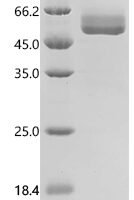
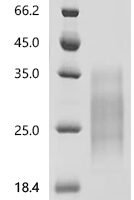
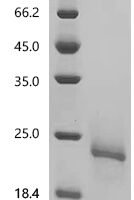
PurityGreater than 95% as determined by SDS-PAGE.
Expression SystemE.coli
Expression Region26-189aa
SpeciesMus musculus (Mouse)
Tag InfoTag-Free
Molecular weight18.4 kDa
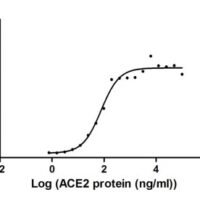
ActivityThe ED50 as determined in a cell proliferation assay using Balb/3T3 mouse embryonic fibroblast cells is less than 3 ug/ml.
BufferLyophilized from a 0.2 μm filtered 20 mM Tris-HCl, 0.5 M NaCl, 6% Trehalose, pH 8.0
StorageStore at -20°C/-80°C upon receipt, aliquoting is necessary for mutiple use. Avoid repeated freeze-thaw cycles.
Alternative NamesKitlg; Kitl; Mgf; Sl; Slf; Kit ligand; Hematopoietic growth factor KL; Mast cell growth factor; MGF; Steel factor; Stem cell factor; SCF; c-Kit ligand

Function

Ligand for the receptor-type protein-tyrosine kinase KIT. Plays an essential role in the regulation of cell survival and proliferation, hematopoiesis, stem cell maintenance, gametogenesis, mast cell development, migration and function, and in melanogenesis. KITLG/SCF binding can activate several signaling pathways.

Product Specifications

Recombinant Mouse Kit ligand (Kitlg), partial (Active) is a recombinant protein, expressed in E.coli, covering amino acids 26-189aa, with Tag-Free tag, molecular weight 18.4 kDa, purity Greater than 95% as determined by SDS-PAGE.. Suitable for ELISA and Western Blot applications.

SDS-PAGE: Single band at expected molecular weight confirming purity.

ELISA: Suitable as coating antigen or detection standard.

Western Blot: Compatible with standard Western Blot protocols.

Protein Interaction: Validated for SPR (Surface Plasmon Resonance) and BLI (Bio-Layer Interferometry) studies.

Shipping: Shipped at ambient temperature. Lyophilized protein is stable during transit.

Storage: Store lyophilized protein at -20°C to -80°C. Reconstituted protein should be aliquoted and stored at -80°C. Avoid repeated freeze-thaw cycles.

Shelf Life: 12 months from date of receipt when stored as recommended.

Shipping Time: Orders placed before 2 PM EST ship same day. International orders typically deliver within 5-10 business days.

Protein Biology

Function

Ligand for the receptor-type protein-tyrosine kinase KIT. Plays an essential role in the regulation of cell survival and proliferation, hematopoiesis, stem cell maintenance, gametogenesis, mast cell development, migration and function, and in melanogenesis. KITLG/SCF binding can activate several signaling pathways. Promotes phosphorylation of PIK3R1, the regulatory subunit of phosphatidylinositol 3-kinase, and subsequent activation of the kinase AKT1. KITLG/SCF and KIT also transmit signals via GRB2 and activation of RAS, RAF1 and the MAP kinases MAPK1/ERK2 and/or MAPK3/ERK1. KITLG/SCF and KIT promote activation of STAT family members STAT1, STAT3 and STAT5. KITLG/SCF and KIT promote activation of PLCG1, leading to the production of the cellular signaling molecules diacylglycerol and inositol 1,4,5-trisphosphate. KITLG/SCF acts synergistically with other cytokines, probably interleukins

Gene: Kitlg  |  Organism: Mus musculus

Frequently Asked Questions

How do I order or inquire about this product?

Fill out the Online Inquiry form with your required quantity and specifications. You can also email sales@biocrestsci.com. Our team typically responds within 4 business hours with a quote and availability confirmation.

What is the shipping and delivery time?

Orders placed before 2 PM EST ship the same day. Domestic (US) delivery typically takes 2-3 business days. International orders deliver within 5-10 business days. All products are shipped at ambient temperature with appropriate packaging to ensure stability.

How should I store this recombinant protein?

Lyophilized proteins should be stored at -20°C to -80°C upon receipt. After reconstitution, aliquot and store at -80°C. Avoid repeated freeze-thaw cycles. Shelf life is 12 months from date of receipt when stored as recommended.

What quality controls are performed on your products?

Each product undergoes SDS-PAGE purity analysis (typically >85-95%), endotoxin testing, and bioactivity validation. Products are validated for ELISA, Western Blot, and SPR/BLI applications as specified on this product page. A Certificate of Analysis (CoA) is available upon request.

Shopping Cart
Scroll to Top