, ,

Recombinant Mouse Phosphatidylinositol 3-kinase regulatory subunit alpha (Pik3r1)

Recombinant Mouse Phosphatidylinositol 3-kinase regulatory subunit alpha (Pik3r1) — Binds to activated (phosphorylated) protein-Tyr kinases, through its SH2 domain, and acts as an adapter, mediating the association of the p110 catalytic unit to the plasma membrane. Purity >90%.

SKU: BCRECP-004078 Categories: , ,

Product Specifications

Product SkuBCRECP-004078
Product DescriptionRecombinant Mouse Phosphatidylinositol 3-kinase regulatory subunit alpha (Pik3r1) Protein is expressed from E.coli with C-terminal 6xHis-tagged. It contains 2-724aa. [Accession | P26450].
Uniprot No.P26450
Gene NamesPik3r1
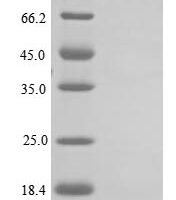
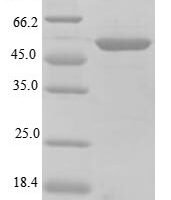
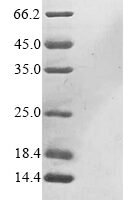
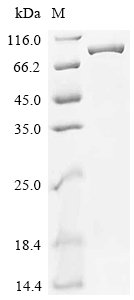
PurityGreater than 90% as determined by SDS-PAGE.
Expression SystemE.coli
Expression Region2-724aa
SpeciesMus musculus (Mouse)
Tag InfoC-terminal 6xHis-tagged
Molecular weight90.3kDa
ActivityPlease contact us to obtain bioactivity data.
BufferIf the delivery form is liquid, the default storage buffer is Tris/PBS-based buffer, 5%-50% glycerol. If the delivery form is lyophilized powder, the buffer before lyophilization is Tris/PBS-based buffer, 6% Trehalose.
StorageStore at -20°C/-80°C upon receipt, aliquoting is necessary for mutiple use. Avoid repeated freeze-thaw cycles.
Research AreasCancer

Function

Binds to activated (phosphorylated) protein-Tyr kinases, through its SH2 domain, and acts as an adapter, mediating the association of the p110 catalytic unit to the plasma membrane. Necessary for the insulin-stimulated increase in glucose uptake and glycogen synthesis in insulin-sensitive tissues. Plays an important role in signaling in response to FGFR1, FGFR2, FGFR3, FGFR4, KITLG/SCF, KIT, PDGFRA and PDGFRB.

Biological Context

Subcellular Location: Cytoplasm

Product Specifications

Recombinant Mouse Phosphatidylinositol 3-kinase regulatory subunit alpha (Pik3r1) is a recombinant protein from Mus musculus (Mouse), expressed in E.coli, covering amino acids 2-724aa, with C-terminal 6xHis-tagged tag, molecular weight 90.3kDa, purity Greater than 90% as determined by SDS-PAGE.. Suitable for ELISA and Western Blot applications.

SDS-PAGE: Single band at expected molecular weight confirming purity.

ELISA: Suitable as coating antigen or detection standard.

Western Blot: Compatible with standard Western Blot protocols.

Protein Interaction: Validated for SPR (Surface Plasmon Resonance) and BLI (Bio-Layer Interferometry) studies.

Shipping: Shipped at ambient temperature. Lyophilized protein is stable during transit.

Storage: Store lyophilized protein at -20°C to -80°C. Reconstituted protein should be aliquoted and stored at -80°C. Avoid repeated freeze-thaw cycles.

Shelf Life: 12 months from date of receipt when stored as recommended.

Shipping Time: Orders placed before 2 PM EST ship same day. International orders typically deliver within 5-10 business days.

Protein Biology

Function

Binds to activated (phosphorylated) protein-Tyr kinases, through its SH2 domain, and acts as an adapter, mediating the association of the p110 catalytic unit to the plasma membrane. Necessary for the insulin-stimulated increase in glucose uptake and glycogen synthesis in insulin-sensitive tissues (PubMed:27708159). Plays an important role in signaling in response to FGFR1, FGFR2, FGFR3, FGFR4, KITLG/SCF, KIT, PDGFRA and PDGFRB. Likewise, plays a role in ITGB2 signaling (By similarity). Modulates the cellular response to ER stress by promoting nuclear translocation of XBP1 isoform 2 in a ER stress- and/or insulin-dependent manner during metabolic overloading in the liver and hence plays a role in glucose tolerance improvement (PubMed:20348926)

Subcellular Location

Cytoplasm

Subunit

Heterodimer of a regulatory subunit PIK3R1 and a p110 catalytic subunit (PIK3CA, PIK3CB or PIK3CD). Interacts (via SH2 domains) with CCDC88A/GIV (tyrosine-phosphorylated form); the interaction enables recruitment of PIK3R1 to the EGFR receptor, enhancing PI3K activity and cell migration (By similarity). Interacts with XBP1 isoform 2; the interaction is direct and induces translocation of XBP1 isoform 2 into the nucleus in a ER stress- and/or insulin-dependent but PI3K-independent manner (PubMed:20348926). Interacts with PIK3R2; the interaction is dissociated in an insulin-dependent manner (PubMed:20348926). Interacts with phosphorylated LAT, LAX1 and TRAT1 upon TCR activation. The SH2 domains interact with the YTHM motif of phosphorylated INSR in vitro. Also interacts with tyrosine-phosphorylated IGF1R in vitro. Interacts with IRS1, IRS2 and phosphorylated IRS4, as well as with NISCH and HCST (By similarity). Interacts with phosphorylated TOM1L1. Interacts with phosphorylated LIME1 upon TCR or BCR activation. Interacts with CBLB. Interacts with CD28 and CD3Z upon T-cell activation. Interacts with SOCS7 and HCST. Interacts with AXL, FASLG, FGR, HCK, KIT and BCR. Interacts with PTK2/FAK1 (By similarity). Interacts with PDGFRB (tyrosine phosphorylated) (By similarity). Interacts with NTRK1 (phosphorylated upon ligand-binding) (By similarity). Interacts (via SH2 domain) with CSF1R (tyrosine phosphorylated) (PubMed:9312046). Interacts with FER. Interacts with FGFR1, FGFR2, FGFR3 and FGFR4 (phosphorylated) (Probable). Interacts with PDGFRA (tyrosine phosphorylated). Interacts with LYN (via SH3 domain); this enhances enzyme activity. Interacts with ERBB4. Interacts (via SH2 domain) with TEK/TIE2 (tyrosine phosphorylated). Interacts with FAM83B; activates the PI3K/AKT signaling cascade (By similarity). Interacts with APPL1 and APPL2 (PubMed:25328665). Interacts with SRC (By similarity). Interacts with ALOX5; this interaction bridges ALOX5 with CD40 after CD40 ligation in B cells and leads to the production of reactive oxygen species (ROS) (By similarity). Interacts with TYK2 (By similarity). Interacts with nephrin NPHN1; the interaction is reduced by high glucose levels (By similarity). Interacts with CD28 (By similarity). Interacts with ICOS (PubMed:19915142)

Gene: Pik3r1  |  Organism: Mus musculus  |  Synonyms: Phosphatidylinositol 3-kinase 85 kDa regulatory subunit alpha
Key Publications

Frequently Asked Questions

How do I order or inquire about this product?

Fill out the Online Inquiry form with your required quantity and specifications. You can also email sales@biocrestsci.com. Our team typically responds within 4 business hours with a quote and availability confirmation.

What is the shipping and delivery time?

Orders placed before 2 PM EST ship the same day. Domestic (US) delivery typically takes 2-3 business days. International orders deliver within 5-10 business days. All products are shipped at ambient temperature with appropriate packaging to ensure stability.

How should I store this recombinant protein?

Lyophilized proteins should be stored at -20°C to -80°C upon receipt. After reconstitution, aliquot and store at -80°C. Avoid repeated freeze-thaw cycles. Shelf life is 12 months from date of receipt when stored as recommended.

What quality controls are performed on your products?

Each product undergoes SDS-PAGE purity analysis (typically >85-95%), endotoxin testing, and bioactivity validation. Products are validated for ELISA, Western Blot, and SPR/BLI applications as specified on this product page. A Certificate of Analysis (CoA) is available upon request.

Shopping Cart
Scroll to Top