Recombinant Rat Protein S100-A8 (S100a8)

Recombinant Rat Protein S100-A8 (S100a8) — S100A8 is a calcium- and zinc-binding protein which plays a prominent role in the regulation of inflammatory processes and immune response. Purity >90%.

SKU: BCRECP-004351 Category:

Product Specifications

Product SkuBCRECP-004351
Product DescriptionRecombinant Rat Protein S100-A8 (S100a8) Protein is expressed from E.coli with N-terminal 6xHis-tagged. It contains 2-89aa. [Accession | P50115].
Uniprot No.P50115
Gene NamesS100a8
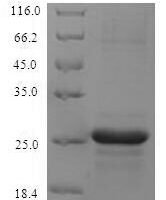
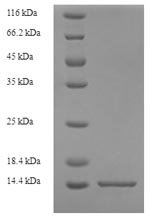
PurityGreater than 90% as determined by SDS-PAGE.
Expression SystemE.coli
Expression Region2-89aa
SpeciesRattus norvegicus (Rat)
Tag InfoN-terminal 6xHis-tagged
Molecular weight14.1kDa
ActivityPlease contact us to obtain bioactivity data.
BufferIf the delivery form is liquid, the default storage buffer is Tris/PBS-based buffer, 5%-50% glycerol. If the delivery form is lyophilized powder, the buffer before lyophilization is Tris/PBS-based buffer, 6% Trehalose.
StorageStore at -20°C/-80°C upon receipt, aliquoting is necessary for mutiple use. Avoid repeated freeze-thaw cycles.
Research AreasOthers

Function

S100A8 is a calcium- and zinc-binding protein which plays a prominent role in the regulation of inflammatory processes and immune response. It can induce neutrophil chemotaxis and adhesion. Predominantly found as calprotectin (S100A8/A9) which has a wide plethora of intra- and extracellular functions.

Biological Context

Subcellular Location: Secreted; Cytoplasm; Cytoplasm, cytoskeleton; Cell membrane (Peripheral membrane protein)

Product Specifications

Recombinant Rat Protein S100-A8 (S100a8) is a recombinant protein from Rattus norvegicus (Rat), expressed in E.coli, covering amino acids 2-89aa, with N-terminal 6xHis-tagged tag, molecular weight 14.1kDa, purity Greater than 90% as determined by SDS-PAGE.. Suitable for ELISA and Western Blot applications.
Recommended applications depend on the target, product format, and product-specific validation data. Refer to the product datasheet or Certificate of Analysis (CoA), or contact BioCrest Sci for application guidance.

Biological Activity: Please contact us to obtain bioactivity data.

Storage: Store at -20°C/-80°C upon receipt, aliquoting is necessary for mutiple use. Avoid repeated freeze-thaw cycles.

Shipping & Lead Time: Availability, shipping conditions, and estimated lead time are confirmed in the formal quotation or order confirmation based on the product format, destination, and order requirements.

Protein Biology

Function

S100A8 is a calcium- and zinc-binding protein which plays a prominent role in the regulation of inflammatory processes and immune response. It can induce neutrophil chemotaxis and adhesion. Predominantly found as calprotectin (S100A8/A9) which has a wide plethora of intra- and extracellular functions. The intracellular functions include: facilitating leukocyte arachidonic acid trafficking and metabolism, modulation of the tubulin-dependent cytoskeleton during migration of phagocytes and activation of the neutrophilic NADPH-oxidase. Also participates in regulatory T-cell differentiation together with CD69. Activates NADPH-oxidase by facilitating the enzyme complex assembly at the cell membrane, transferring arachidonic acid, an essential cofactor, to the enzyme complex and S100A8 contributes to the enzyme assembly by directly binding to NCF2/P67PHOX. The extracellular functions involve pro-inflammatory, antimicrobial, oxidant-scavenging and apoptosis-inducing activities. Its pro-inflammatory activity includes recruitment of leukocytes, promotion of cytokine and chemokine production, and regulation of leukocyte adhesion and migration. Acts as an alarmin or a danger associated molecular pattern (DAMP) molecule and stimulates innate immune cells via binding to pattern recognition receptors such as Toll-like receptor 4 (TLR4) and receptor for advanced glycation endproducts (AGER). Binding to TLR4 and AGER activates the MAP-kinase and NF-kappa-B signaling pathways resulting in the amplification of the pro-inflammatory cascade. Has antimicrobial activity towards bacteria and fungi and exerts its antimicrobial activity probably via chelation of Zn(2+) which is essential for microbial growth. Can induce cell death via autophagy and apoptosis and this occurs through the cross-talk of mitochondria and lysosomes via reactive oxygen species (ROS) and the process involves BNIP3. Can regulate neutrophil number and apoptosis by an anti-apoptotic effect; regulates cell survival via ITGAM/ITGB and TLR4 and a signaling mechanism involving MEK-ERK. Its role as an oxidant scavenger has a protective role in preventing exaggerated tissue damage by scavenging oxidants. The iNOS-S100A8/A9 transnitrosylase complex is proposed to direct selective inflammatory stimulus-dependent S-nitrosylation of multiple targets such as GAPDH, ANXA5, EZR, MSN and VIM by recognizing a [IL]-x-C-x-x-[DE] motif; S100A8 seems to contribute to S-nitrosylation site selectivity (By similarity)

Subcellular Location

Secreted; Cytoplasm; Cytoplasm, cytoskeleton; Cell membrane (Peripheral membrane protein)

Subunit

Homodimer. Preferentially exists as a heterodimer or heterotetramer with S100A9 known as calprotectin (S100A8/A9). S100A8 interacts with AGER, ATP2A2 and with the heterodimeric complex formed by TLR4 and LY96. Calprotectin (S100A8/9) interacts with CEACAM3 and tubulin filaments in a calcium-dependent manner. Heterotetrameric calprotectin (S100A8/A9) interacts with ANXA6 and associates with tubulin filaments in activated monocytes. S100A8 and calprotectin (S100A8/9) interact with NCF2/P67PHOX, RAC1 and RAC2. Calprotectin (S100A8/9) interacts with CYBA and CYBB (By similarity). Calprotectin (S100A8/9) interacts with NOS2 to form the iNOS-S100A8/A9 transnitrosylase complex (By similarity). Calprotectin (S100A8/9) interacts with CD69 (By similarity)

Gene: S100a8  |  Organism: Rattus norvegicus  |  Synonyms: Calgranulin-A; Migration inhibitory factor-related protein 8; S100 calcium-binding protein A8

Frequently Asked Questions

How do I order or inquire about this product?

Submit the Online Inquiry form with your required quantity and specifications, or email sales@biocrestsci.com. Available sizes, pricing, stock status, documentation, and estimated lead time are confirmed in the formal quotation.

What is the shipping and delivery time?

Availability, dispatch timing, shipping conditions, and delivery estimates depend on the product format, destination, and order requirements. These details are confirmed in the formal quotation or order confirmation.

How should this product be stored?

Follow the storage and handling instructions in the product-specific datasheet and Certificate of Analysis (CoA). Requirements may vary by product form and formulation; contact BioCrest Sci if product-specific guidance is needed.

What quality controls are performed on your products?

Quality-control data such as identity, purity, endotoxin level, or biological activity are provided only when specified on this product page, the datasheet, or Certificate of Analysis (CoA). Biological activity is not implied unless explicitly stated.

Shopping Cart
Scroll to Top