,

Recombinant Saccharomyces cerevisiae Sterol-4-alpha-carboxylate 3-dehydrogenase, decarboxylating (ERG26)

Recombinant Saccharomyces cerevisiae Sterol-4-alpha-carboxylate 3-dehydrogenase, decarboxylating (ERG26) — Sterol-4-alpha-carboxylate 3-dehydrogenase; part of the third module of ergosterol biosynthesis pathway that includes the late steps of the pathway. Purity >90%.

SKU: BCRECP-002657 Categories: ,

Product Specifications

Product SkuBCRECP-002657
Product DescriptionRecombinant Saccharomyces cerevisiae Sterol-4-alpha-carboxylate 3-dehydrogenase, decarboxylating (ERG26) Protein is expressed from E.coli with N-terminal 10xHis-tagged and C-terminal Myc-tagged. It contains 1-349aa. [Accession | P53199].
Uniprot No.P53199
Gene NamesERG26
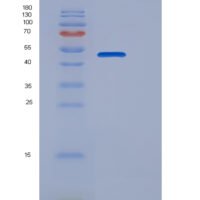
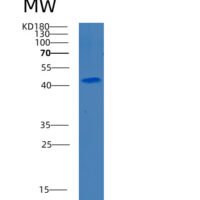
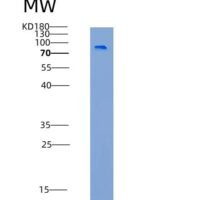
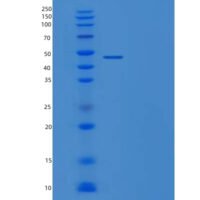
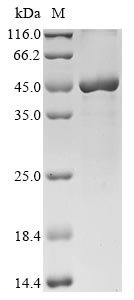
PurityGreater than 90% as determined by SDS-PAGE.
Expression SystemE.coli
Expression Region1-349aa
SpeciesSVG-Saccharomyces cerevisiae (strain ATCC 204508 / S288c) (Baker's yeast)
Tag InfoN-terminal 10xHis-tagged and C-terminal Myc-tagged
Molecular weight46.1kDa
ActivityPlease contact us to obtain bioactivity data.
BufferIf the delivery form is liquid, the default storage buffer is Tris/PBS-based buffer, 5%-50% glycerol. If the delivery form is lyophilized powder, the buffer before lyophilization is Tris/PBS-based buffer, 6% Trehalose.
StorageStore at -20°C/-80°C upon receipt, aliquoting is necessary for mutiple use. Avoid repeated freeze-thaw cycles.
Research AreasOthers

Function

Sterol-4-alpha-carboxylate 3-dehydrogenase; part of the third module of ergosterol biosynthesis pathway that includes the late steps of the pathway. ERG26 is a catalytic component of the C-4 demethylation complex that catalyzes the oxidative decarboxylation that results in a reduction of the 3-beta-hydroxy group at the C-3 carbon to an oxo group.

Product Specifications

Recombinant Saccharomyces cerevisiae Sterol-4-alpha-carboxylate 3-dehydrogenase, decarboxylating (ERG26) — Sterol-4-alpha-carboxylate 3-dehydrogenase; part of the third module of ergosterol biosynthesis pathway that includes the late steps of the pathway. Purity >90%. Suitable for ELISA and Western Blot applications.

SDS-PAGE: Single band at expected molecular weight confirming purity.

ELISA: Suitable as coating antigen or detection standard.

Western Blot: Compatible with standard Western Blot protocols.

Protein Interaction: Validated for SPR (Surface Plasmon Resonance) and BLI (Bio-Layer Interferometry) studies.

Shipping: Shipped at ambient temperature. Lyophilized protein is stable during transit.

Storage: Store lyophilized protein at -20°C to -80°C. Reconstituted protein should be aliquoted and stored at -80°C. Avoid repeated freeze-thaw cycles.

Shelf Life: 12 months from date of receipt when stored as recommended.

Shipping Time: Orders placed before 2 PM EST ship same day. International orders typically deliver within 5-10 business days.

Protein Biology

Function

Sterol-4-alpha-carboxylate 3-dehydrogenase; part of the third module of ergosterol biosynthesis pathway that includes the late steps of the pathway (PubMed:15995173, PubMed:9811880). ERG26 is a catalytic component of the C-4 demethylation complex that catalyzes the oxidative decarboxylation that results in a reduction of the 3-beta-hydroxy group at the C-3 carbon to an oxo group (PubMed:9811880). The third module or late pathway involves the ergosterol synthesis itself through consecutive reactions that mainly occur in the endoplasmic reticulum (ER) membrane. Firstly, the squalene synthase ERG9 catalyzes the condensation of 2 farnesyl pyrophosphate moieties to form squalene, which is the precursor of all steroids. Squalene synthase is crucial for balancing the incorporation of farnesyl diphosphate (FPP) into sterol and nonsterol isoprene synthesis. Secondly, the squalene epoxidase ERG1 catalyzes the stereospecific oxidation of squalene to (S)-2,3-epoxysqualene, which is considered to be a rate-limiting enzyme in steroid biosynthesis. Then, the lanosterol synthase ERG7 catalyzes the cyclization of (S)-2,3 oxidosqualene to lanosterol, a reaction that forms the sterol core. In the next steps, lanosterol is transformed to zymosterol through a complex process involving various demethylation, reduction and desaturation reactions. The lanosterol 14-alpha-demethylase ERG11 (also known as CYP51) catalyzes C14-demethylation of lanosterol to produce 4,4'-dimethyl cholesta-8,14,24-triene-3-beta-ol, which is critical for ergosterol biosynthesis. The C-14 reductase ERG24 reduces the C14=C15 double bond of 4,4-dimethyl-cholesta-8,14,24-trienol to produce 4,4-dimethyl-cholesta-8,24-dienol. 4,4-dimethyl-cholesta-8,24-dienol is substrate of the C-4 demethylation complex ERG25-ERG26-ERG27 in which ERG25 catalyzes the three-step monooxygenation required for the demethylation of 4,4-dimethyl and 4alpha-methylsterols, ERG26 catalyzes the oxidative decarboxylation that results in a reduction of the 3-beta-hydroxy group at the C-3 carbon to an oxo group, and ERG27 is responsible for the reduction of the keto group on the C-3. ERG28 has a role as a scaffold to help anchor ERG25, ERG26 and ERG27 to the endoplasmic reticulum and ERG29 regulates the activity of the iron-containing C4-methylsterol oxidase ERG25. Then, the sterol 24-C-methyltransferase ERG6 catalyzes the methyl transfer from S-adenosyl-methionine to the C-24 of zymosterol to form fecosterol. The C-8 sterol isomerase ERG2 catalyzes the reaction which results in unsaturation at C-7 in the B ring of sterols and thus converts fecosterol to episterol. The sterol-C5-desaturase ERG3 then catalyzes the introduction of a C-5 double bond in the B ring to produce 5-dehydroepisterol. The C-22 sterol desaturase ERG5 further converts 5-dehydroepisterol into ergosta-5,7,22,24(28)-tetraen-3beta-ol by forming the C-22(23) double bond in the sterol side chain. Finally, ergosta-5,7,22,24(28)-tetraen-3beta-ol is substrate of the C-24(28) sterol reductase ERG4 to produce ergosterol (PubMed:32679672)

Subcellular Location

Endoplasmic reticulum membrane (Peripheral membrane protein)

Subunit

Heterotetramer of ERG25, ERG26, ERG27 and ERG28. ERG28 acts as a scaffold to tether ERG27 and other 4,4-demethylation-related enzymes, forming a demethylation enzyme complex, in the endoplasmic reticulum

Pathway

Steroid biosynthesis; zymosterol biosynthesis; zymosterol from lanosterol: step 4/6

Gene: ERG26  |  Organism: Saccharomyces cerevisiae (strain ATCC 204508 / S288c)  |  Synonyms: C-3 sterol dehydrogenase ERG26; C-4 decarboxylase ERG26; Ergosterol biosynthetic protein 26
Key Publications

Frequently Asked Questions

How do I order or inquire about this product?

Fill out the Online Inquiry form with your required quantity and specifications. You can also email sales@biocrestsci.com. Our team typically responds within 4 business hours with a quote and availability confirmation.

What is the shipping and delivery time?

Orders placed before 2 PM EST ship the same day. Domestic (US) delivery typically takes 2-3 business days. International orders deliver within 5-10 business days. All products are shipped at ambient temperature with appropriate packaging to ensure stability.

How should I store this recombinant protein?

Lyophilized proteins should be stored at -20°C to -80°C upon receipt. After reconstitution, aliquot and store at -80°C. Avoid repeated freeze-thaw cycles. Shelf life is 12 months from date of receipt when stored as recommended.

What quality controls are performed on your products?

Each product undergoes SDS-PAGE purity analysis (typically >85-95%), endotoxin testing, and bioactivity validation. Products are validated for ELISA, Western Blot, and SPR/BLI applications as specified on this product page. A Certificate of Analysis (CoA) is available upon request.

Shopping Cart
Scroll to Top