Recombinant Human C-type lectin domain family 7 member A (CLEC7A), partial (Active)

Recombinant Human C-type lectin domain family 7 member A (CLEC7A), partial (Active) — Lectin that functions as a pattern recognizing receptor (PRR) specific for beta-1,3-linked and beta-1,6-linked glucans, which constitute cell wall constituents from pathogenic bacteria and fungi. Purity >95%.

SKU: BCACP-000663 Category:
Product SKUBCACP-000663
Product DescriptionRecombinant Human C-type lectin domain family 7 member A (CLEC7A) protein is expressed from Mammalian cell with N-terminal 10xHis-tagged. It contains 66-247aa. [Accession | Q9BXN2].
Uniprot No.Q9BXN2
Gene NamesCLEC7A
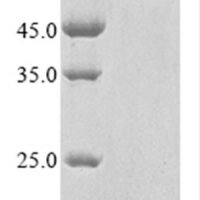
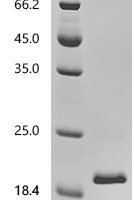
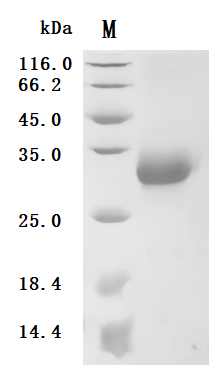
PurityGreater than 95% as determined by SDS-PAGE.
Expression SystemMammalian cell
Expression Region66-247aa
SpeciesHomo sapiens (Human)
Tag InfoN-terminal 10xHis-tagged
Molecular weight23.3 kDa
ActivityMeasured by its binding ability in a functional ELISA. Immobilized Macaca fascicularis SIGLEC15 at 2 μg/mL can bind Anti-SIGLEC15 recombinant antibody . The EC50 is 3.497-4.025 ng/mL.;SIGLEC15 Recombinant Monoclonal Antibody captured on Protein A Chip can bind Recombinant Human SIGLEC15 with an affinity constant of 0.295 nM as detected by MetaSPR Assay (WeSPRTM 200).
BufferLyophilized from a 0.2 μm filtered 20 mM Tris-HCl, 0.5 M NaCl, 6% Trehalose, pH 8.0
StorageStore at -20°C/-80°C upon receipt, aliquoting is necessary for mutiple use. Avoid repeated freeze-thaw cycles.
Alternative NamesC-type lectin domain family 7 member A; Beta-glucan receptor; C-type lectin superfamily member 12; Dendritic cell-associated C-type lectin 1; DC-associated C-type lectin 1; Dectin-1; CD antigen CD369

Function

Lectin that functions as a pattern recognizing receptor (PRR) specific for beta-1,3-linked and beta-1,6-linked glucans, which constitute cell wall constituents from pathogenic bacteria and fungi. Necessary for the TLR2-mediated inflammatory response and activation of NF-kappa-B: upon beta-glucan binding, recruits SYK via its ITAM motif and promotes a signaling cascade that activates some CARD domain-BCL10-MALT1 (CBM) signalosomes, leading to the activation of NF-kappa-B and MAP kinase p38 (MAPK11, MAPK12, MAPK13 and/or MAPK14) pathways which stimulate expression of genes encoding pro-inflammatory cytokines and chemokines. Enhances cytokine production in macrophages and dendritic cells.

Biological Context

Subcellular Location: Cytoplasm
Tissue Specificity: Highly expressed in peripheral blood leukocytes and dendritic cells. Detected in spleen, bone marrow, lung, muscle, stomach and placenta
Disease Association: Candidiasis, familial, 4 (CANDF4) : A primary immunodeficiency disorder with altered immune responses and impaired clearance of fungal infections, selective against Candida. It is characterized by persistent and/or recurrent infections of the skin, nails and mucous membranes caused by organisms of the genus Candida, mainly Candida albicans. [The disease may be caused by variants affecting the gene represented in this entry]

Product Specifications

Recombinant Human C-type lectin domain family 7 member A (CLEC7A), partial (Active) is a recombinant protein from Homo sapiens (Human), expressed in Mammalian cell, covering amino acids 66-247aa, with N-terminal 10xHis-tagged tag, molecular weight 23.3 kDa, purity Greater than 95% as determined by SDS-PAGE.. Suitable for ELISA and Western Blot applications.
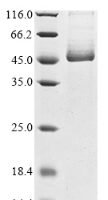
SDS-PAGE: Single band at expected molecular weight confirming purity.

ELISA: Suitable as coating antigen or detection standard.

Western Blot: Compatible with standard Western Blot protocols.

Protein Interaction: Validated for SPR (Surface Plasmon Resonance) and BLI (Bio-Layer Interferometry) studies.

Shipping: Shipped at ambient temperature. Lyophilized protein is stable during transit.

Storage: Store lyophilized protein at -20°C to -80°C. Reconstituted protein should be aliquoted and stored at -80°C. Avoid repeated freeze-thaw cycles.

Shelf Life: 12 months from date of receipt when stored as recommended.

Shipping Time: Orders placed before 2 PM EST ship same day. International orders typically deliver within 5-10 business days.

Protein Biology

Function

Lectin that functions as a pattern recognizing receptor (PRR) specific for beta-1,3-linked and beta-1,6-linked glucans, which constitute cell wall constituents from pathogenic bacteria and fungi (PubMed:11567029, PubMed:12423684). Necessary for the TLR2-mediated inflammatory response and activation of NF-kappa-B: upon beta-glucan binding, recruits SYK via its ITAM motif and promotes a signaling cascade that activates some CARD domain-BCL10-MALT1 (CBM) signalosomes, leading to the activation of NF-kappa-B and MAP kinase p38 (MAPK11, MAPK12, MAPK13 and/or MAPK14) pathways which stimulate expression of genes encoding pro-inflammatory cytokines and chemokines (By similarity). Enhances cytokine production in macrophages and dendritic cells (By similarity). Mediates production of reactive oxygen species in the cell (By similarity). Mediates phagocytosis of C.albicans conidia (PubMed:17230442). Binds T-cells in a way that does not involve their surface glycans and plays a role in T-cell activation. Stimulates T-cell proliferation. Induces phosphorylation of SCIMP after binding beta-glucans (By similarity)

Subcellular Location

Cytoplasm

Disease Association

Candidiasis, familial, 4 (CANDF4) : A primary immunodeficiency disorder with altered immune responses and impaired clearance of fungal infections, selective against Candida. It is characterized by persistent and/or recurrent infections of the skin, nails and mucous membranes caused by organisms of the genus Candida, mainly Candida albicans. [The disease may be caused by variants affecting the gene represented in this entry]

Tissue Specificity

Highly expressed in peripheral blood leukocytes and dendritic cells. Detected in spleen, bone marrow, lung, muscle, stomach and placenta

Subunit

Interacts with RANBP9

Gene: CLEC7A  |  Organism: Homo sapiens  |  Synonyms: Beta-glucan receptor; C-type lectin superfamily member 12; Dendritic cell-associated C-type lectin 1
Key Publications

Frequently Asked Questions

How do I order or inquire about this product?

Fill out the Online Inquiry form with your required quantity and specifications. You can also email sales@biocrestsci.com. Our team typically responds within 4 business hours with a quote and availability confirmation.

What is the shipping and delivery time?

Orders placed before 2 PM EST ship the same day. Domestic (US) delivery typically takes 2-3 business days. International orders deliver within 5-10 business days. All products are shipped at ambient temperature with appropriate packaging to ensure stability.

How should I store this recombinant protein?

Lyophilized proteins should be stored at -20°C to -80°C upon receipt. After reconstitution, aliquot and store at -80°C. Avoid repeated freeze-thaw cycles. Shelf life is 12 months from date of receipt when stored as recommended.

What quality controls are performed on your products?

Each product undergoes SDS-PAGE purity analysis (typically >85-95%), endotoxin testing, and bioactivity validation. Products are validated for ELISA, Western Blot, and SPR/BLI applications as specified on this product page. A Certificate of Analysis (CoA) is available upon request.

Shopping Cart
Scroll to Top