Function
Key player in the regulation of energy balance and body weight control. Once released into the circulation, has central and peripheral effects by binding LEPR, found in many tissues, which results in the activation of several major signaling pathways. In the hypothalamus, acts as an appetite-regulating factor that induces a decrease in food intake and an increase in energy consumption by inducing anorexinogenic factors and suppressing orexigenic neuropeptides, also regulates bone mass and secretion of hypothalamo-pituitary-adrenal hormones.
Biological Context
Subcellular Location: Secreted
Tissue Specificity: Adipose tissue is the main source of leptin. It is also produced by other peripheral tissues such as the skeletal muscle. Expressed by intercalated and striated tracts of submandibular and parotid salivary gland intralobular ducts. Detected by fundic epithelium of the gastric mucosa. Secreted into blood and gastric juice
Disease Association: Leptin deficiency (LEPD) : A rare disease characterized by low levels of serum leptin, severe hyperphagia and intractable obesity from an early age. [The disease is caused by variants affecting the gene represented in this entry]
Product Specifications
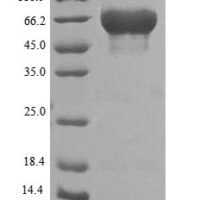
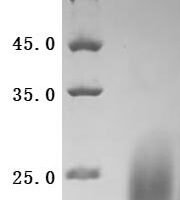
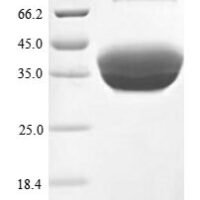
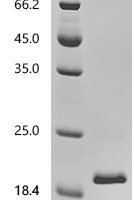
Recombinant Human Leptin protein (LEP) is a recombinant protein from Homo sapiens (Human), expressed in E.Coli, covering amino acids 22-167aa, with Tag-Free tag, molecular weight 16.0 kDa, purity >97% as determined by SDS-PAGE.. Suitable for ELISA and Western Blot applications.