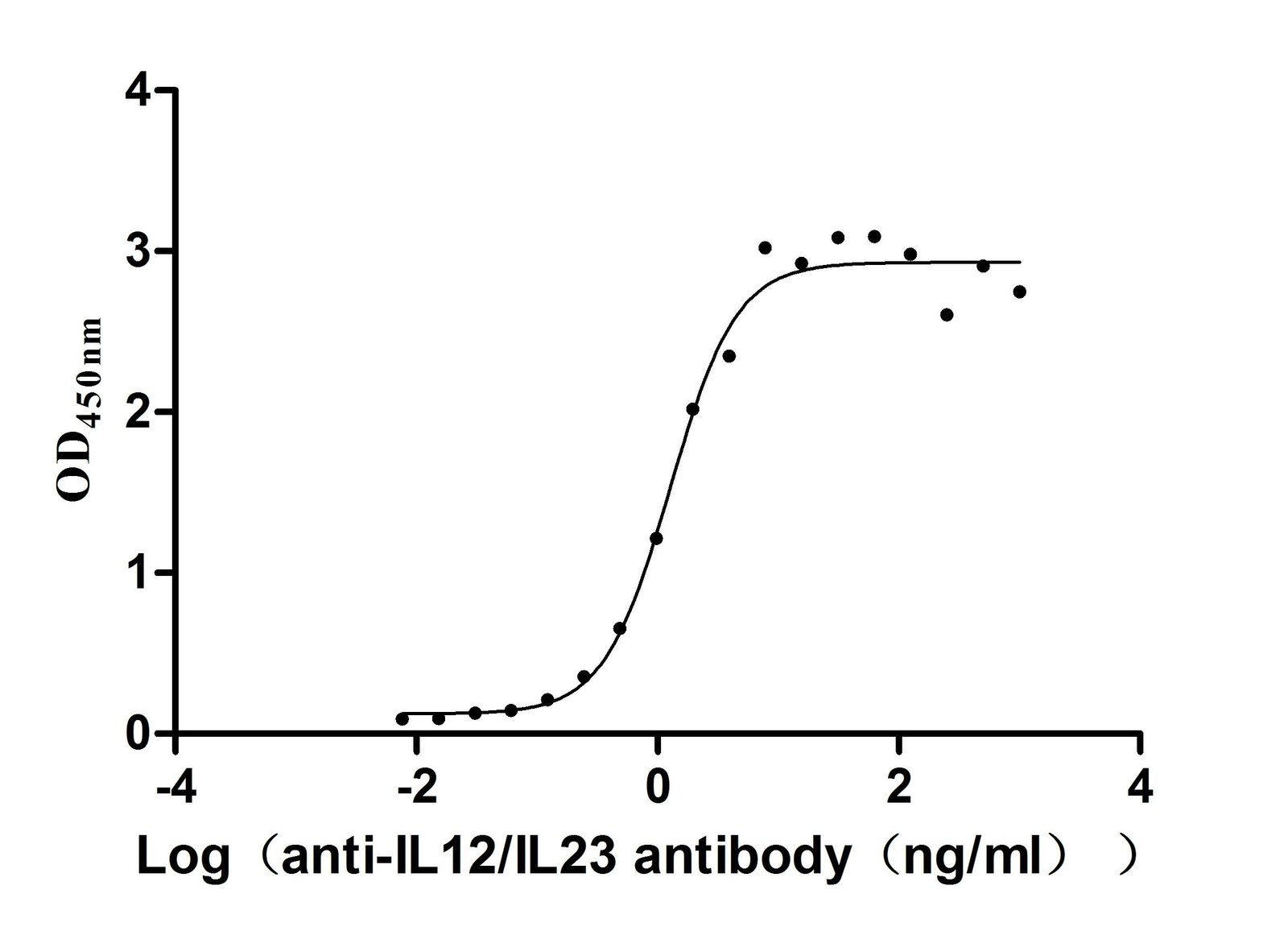
,

Recombinant Human Fructose-2,6-bisphosphatase TIGAR protein (TIGAR)

Recombinant Human Fructose-2,6-bisphosphatase TIGAR protein (TIGAR) — Fructose-bisphosphatase hydrolyzing fructose-2,6-bisphosphate as well as fructose-1,6-bisphosphate. Purity >96%.

SKU: BCACP-000849 Categories: ,
Product SKUBCACP-000849
Product DescriptionRecombinant Human Fructose-2, 6-bisphosphatase TIGAR protein (TIGAR) protein is expressed from E.Coli with C-terminal TAT-tagged. It contains 1-270aa. [Accession | Q9NQ88].
Uniprot No.Q9NQ88
Gene NamesTIGAR
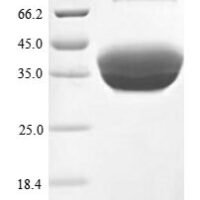
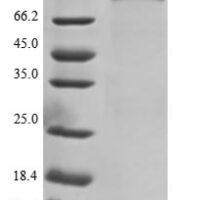
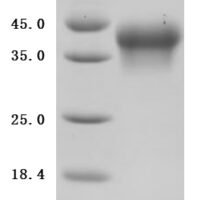
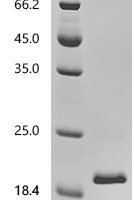
Purity>96% as determined by SDS-PAGE.
Expression SystemE.Coli
Expression Region1-270aa
SpeciesHomo sapiens (Human)
Tag InfoC-terminal TAT-tagged
Molecular weight31.7 kDa
ActivityFully biologically active when compared to standard. The ED50 as determined by a cell proliferation assay using rat C6 cells is less than 0.5 μg/ml, corresponding to a specific activity of >2000 IU/mg.
BufferLyophilized from a 0.2 μm filtered 20 mM Tris-HCl, 0.5 M NaCl, 6% Trehalose, pH 8.0
StorageStore at -20°C/-80°C upon receipt, aliquoting is necessary for mutiple use. Avoid repeated freeze-thaw cycles.
Alternative Names6-bisphosphatase TIGAR; C12ORF5; chromosome 12 open reading frame 5; FR2BP; Fructose-2,6-bisphosphatase TIGAR; Fructose-2,6-bisphosphate 2-phosphatase; Probable fructose 2,6 bisphosphatase TIGAR; Probable fructose-2; tigar; TIGAR_HUMAN; TP53 induced glycolysis and apoptosis regulator; TP53 induced glycolysis regulatory phosphatase; TP53-induced glycolysis and apoptosis regulator; Transactivated by NS3TP2 protein

Function

Fructose-bisphosphatase hydrolyzing fructose-2,6-bisphosphate as well as fructose-1,6-bisphosphate. Acts as a negative regulator of glycolysis by lowering intracellular levels of fructose-2,6-bisphosphate in a p53/TP53-dependent manner, resulting in the pentose phosphate pathway (PPP) activation and NADPH production. Contributes to the generation of reduced glutathione to cause a decrease in intracellular reactive oxygen species (ROS) content, correlating with its ability to protect cells from oxidative or metabolic stress-induced cell death.

Biological Context

Subcellular Location: Cytoplasm; Nucleus; Mitochondrion
Tissue Specificity: Expressed in the brain. Expressed in breast tumors. Expressed in glioblastomas

Product Specifications

Recombinant Human Fructose-2,6-bisphosphatase TIGAR protein (TIGAR) is a recombinant protein from Homo sapiens (Human), expressed in E.Coli, covering amino acids 1-270aa, with C-terminal TAT-tagged tag, molecular weight 31.7 kDa, purity >96% as determined by SDS-PAGE.. Suitable for ELISA and Western Blot applications.

SDS-PAGE: Single band at expected molecular weight confirming purity.

ELISA: Suitable as coating antigen or detection standard.

Western Blot: Compatible with standard Western Blot protocols.

Protein Interaction: Validated for SPR (Surface Plasmon Resonance) and BLI (Bio-Layer Interferometry) studies.

Shipping: Shipped at ambient temperature. Lyophilized protein is stable during transit.

Storage: Store lyophilized protein at -20°C to -80°C. Reconstituted protein should be aliquoted and stored at -80°C. Avoid repeated freeze-thaw cycles.

Shelf Life: 12 months from date of receipt when stored as recommended.

Shipping Time: Orders placed before 2 PM EST ship same day. International orders typically deliver within 5-10 business days.

Protein Biology

Function

Fructose-bisphosphatase hydrolyzing fructose-2,6-bisphosphate as well as fructose-1,6-bisphosphate (PubMed:19015259). Acts as a negative regulator of glycolysis by lowering intracellular levels of fructose-2,6-bisphosphate in a p53/TP53-dependent manner, resulting in the pentose phosphate pathway (PPP) activation and NADPH production (PubMed:16839880, PubMed:22887998). Contributes to the generation of reduced glutathione to cause a decrease in intracellular reactive oxygen species (ROS) content, correlating with its ability to protect cells from oxidative or metabolic stress-induced cell death (PubMed:16839880, PubMed:19713938, PubMed:22887998, PubMed:23726973, PubMed:23817040). Plays a role in promoting protection against cell death during hypoxia by decreasing mitochondria ROS levels in a HK2-dependent manner through a mechanism that is independent of its fructose-bisphosphatase activity (PubMed:23185017). In response to cardiac damage stress, mediates p53-induced inhibition of myocyte mitophagy through ROS levels reduction and the subsequent inactivation of BNIP3. Reduced mitophagy results in an enhanced apoptotic myocyte cell death, and exacerbates cardiac damage (By similarity). Plays a role in adult intestinal regeneration; contributes to the growth, proliferation and survival of intestinal crypts following tissue ablation (PubMed:23726973). Plays a neuroprotective role against ischemic brain damage by enhancing PPP flux and preserving mitochondria functions (By similarity). Protects glioma cells from hypoxia- and ROS-induced cell death by inhibiting glycolysis and activating mitochondrial energy metabolism and oxygen consumption in a TKTL1-dependent and p53/TP53-independent manner (PubMed:22887998). Plays a role in cancer cell survival by promoting DNA repair through activating PPP flux in a CDK5-ATM-dependent signaling pathway during hypoxia and/or genome stress-induced DNA damage responses (PubMed:25928429). Involved in intestinal tumor progression (PubMed:23726973)

Subcellular Location

Cytoplasm; Nucleus; Mitochondrion

Tissue Specificity

Expressed in the brain (PubMed:22887998). Expressed in breast tumors (PubMed:21820150). Expressed in glioblastomas (PubMed:22887998)

Subunit

Interacts with HK2; the interaction increases hexokinase HK2 activity in a hypoxia- and HIF1A-dependent manner, resulting in the regulation of mitochondrial membrane potential, thus increasing NADPH production and decreasing intracellular ROS levels (PubMed:23185017)

Gene: TIGAR  |  Organism: Homo sapiens  |  Synonyms: TP53-induced glycolysis and apoptosis regulator; TP53-induced glycolysis regulatory phosphatase
Key Publications

Frequently Asked Questions

How do I order or inquire about this product?

Fill out the Online Inquiry form with your required quantity and specifications. You can also email sales@biocrestsci.com. Our team typically responds within 4 business hours with a quote and availability confirmation.

What is the shipping and delivery time?

Orders placed before 2 PM EST ship the same day. Domestic (US) delivery typically takes 2-3 business days. International orders deliver within 5-10 business days. All products are shipped at ambient temperature with appropriate packaging to ensure stability.

How should I store this recombinant protein?

Lyophilized proteins should be stored at -20°C to -80°C upon receipt. After reconstitution, aliquot and store at -80°C. Avoid repeated freeze-thaw cycles. Shelf life is 12 months from date of receipt when stored as recommended.

What quality controls are performed on your products?

Each product undergoes SDS-PAGE purity analysis (typically >85-95%), endotoxin testing, and bioactivity validation. Products are validated for ELISA, Western Blot, and SPR/BLI applications as specified on this product page. A Certificate of Analysis (CoA) is available upon request.

Shopping Cart
Scroll to Top