Function
Transmembrane serine/threonine kinase forming with the TGF-beta type II serine/threonine kinase receptor, TGFBR2, the non-promiscuous receptor for the TGF-beta cytokines TGFB1, TGFB2 and TGFB3. Transduces the TGFB1, TGFB2 and TGFB3 signal from the cell surface to the cytoplasm and is thus regulating a plethora of physiological and pathological processes including cell cycle arrest in epithelial and hematopoietic cells, control of mesenchymal cell proliferation and differentiation, wound healing, extracellular matrix production, immunosuppression and carcinogenesis. The formation of the receptor complex composed of 2 TGFBR1 and 2 TGFBR2 molecules symmetrically bound to the cytokine dimer results in the phosphorylation and the activation of TGFBR1 by the constitutively active TGFBR2.
Biological Context
Subcellular Location: Cell membrane (Single-pass type I membrane protein); Cell junction, tight junction; Cell surface; Membrane raft
Tissue Specificity: Found in all tissues examined, most abundant in placenta and least abundant in brain and heart. Expressed in a variety of cancer cell lines
Disease Association: Loeys-Dietz syndrome 1 (LDS1) : An aortic aneurysm syndrome with widespread systemic involvement, characterized by arterial tortuosity and aneurysms, hypertelorism, and bifid uvula or cleft palate. Physical findings include prominent joint laxity, easy bruising, wide and atrophic scars, velvety and translucent skin with easily visible veins, spontaneous rupture of the spleen or bowel, and catastrophic complications of pregnancy, including rupture of the gravid uterus and the arteries, either during pregnancy or in the immediate postpartum period. Some patients have craniosynostosis, exotropy, micrognathia and retrognathia, structural brain abnormalities, and intellectual deficit. [The disease is caused by variants affecting the gene represented in this entry. TGFBR1 mutation Gln-487 has been reported to be associated with thoracic aortic aneurysms and dissection (TAAD). This phenotype, also known as thoracic aortic aneurysms type 5 (AAT5), is distinguised from LDS1 by having aneurysms restricted to thoracic aorta. It is unclear, however, if this condition is fulfilled in individuals bearing Gln-487 mutation, that is why they are considered as LDS1 by the OMIM resource] | Multiple self-healing squamous epithelioma (MSSE) : A disorder characterized by multiple skin tumors that undergo spontaneous regression. Tumors appear most often on sun-exposed regions, are locally invasive, and undergo spontaneous resolution over a period of months leaving pitted scars. [The disease is caused by variants affecting the gene represented in this entry]
Product Specifications
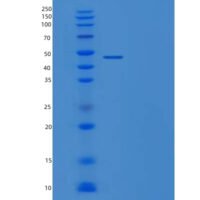
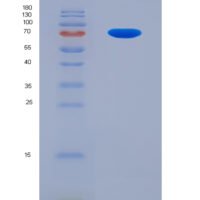
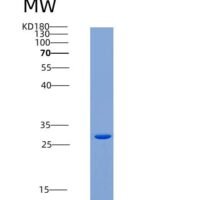
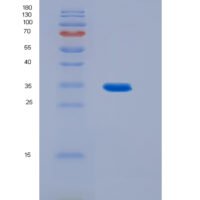
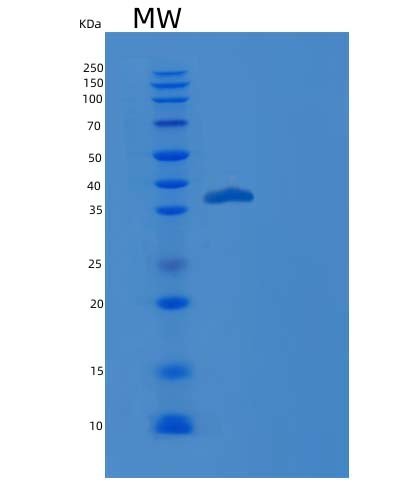
Recombinant Human TGFBR1 / ALK-5 / SKR4 Protein is a recombinant protein, expressed in HEK293 Cells, covering amino acids 1-125aa, with C-His & Fc tag, molecular weight 38.8 kDa, purity Greater than 95% as determined by SDS-PAGE.. Suitable for ELISA and Western Blot applications.