Function
Neurofilaments usually contain three intermediate filament proteins: NEFL, NEFM, and NEFH which are involved in the maintenance of neuronal caliber. May additionally cooperate with the neuronal intermediate filament proteins PRPH and INA to form neuronal filamentous networks.
Biological Context
Subcellular Location: Cell projection, axon; Cytoplasm, cytoskeleton
Disease Association: Charcot-Marie-Tooth disease, demyelinating, type 1F (CMT1F) : A dominant demyelinating form of Charcot-Marie-Tooth disease, a disorder of the peripheral nervous system, characterized by progressive weakness and atrophy, initially of the peroneal muscles and later of the distal muscles of the arms. Charcot-Marie-Tooth disease is classified in two main groups on the basis of electrophysiologic properties and histopathology: primary peripheral demyelinating neuropathies (designated CMT1 when they are dominantly inherited) and primary peripheral axonal neuropathies (CMT2). Demyelinating neuropathies are characterized by severely reduced nerve conduction velocities (less than 38 m/sec), segmental demyelination and remyelination with onion bulb formations on nerve biopsy, slowly progressive distal muscle atrophy and weakness, absent deep tendon reflexes, and hollow feet. CMT1F is characterized by onset in infancy or childhood (range 1 to 13 years). [The disease is caused by variants affecting the gene represented in this entry] | Charcot-Marie-Tooth disease, axonal, type 2E (CMT2E) : A dominant axonal form of Charcot-Marie-Tooth disease, a disorder of the peripheral nervous system, characterized by progressive weakness and atrophy, initially of the peroneal muscles and later of the distal muscles of the arms. Charcot-Marie-Tooth disease is classified in two main groups on the basis of electrophysiologic properties and histopathology: primary peripheral demyelinating neuropathies (designated CMT1 when they are dominantly inherited) and primary peripheral axonal neuropathies (CMT2). Neuropathies of the CMT2 group are characterized by signs of axonal degeneration in the absence of obvious myelin alterations, normal or slightly reduced nerve conduction velocities, and progressive distal muscle weakness and atrophy. [The disease is caused by variants affecting the gene represented in this entry] | Charcot-Marie-Tooth disease, dominant intermediate G (CMTDIG) : An autosomal dominant, intermediate form of Charcot-Marie-Tooth disease, a disorder of the peripheral nervous system, characterized by progressive weakness and atrophy, initially of the peroneal muscles and later of the distal muscles of the arms. Dominant intermediate forms are characterized by clinical and pathologic features intermediate between demyelinating and axonal peripheral neuropathies, and motor median nerve conduction velocities ranging from 25 to 45 m/sec. CMTDIG is phenotypically variable. Most affected individuals have onset in the first or second decades of slowly progressive distal motor weakness and atrophy, resulting in gait instability and distal upper limb impairment, as well as distal sensory impairment. [The disease is caused by variants affecting the gene represented in this entry]
Product Specifications
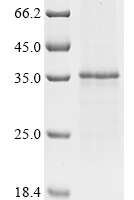
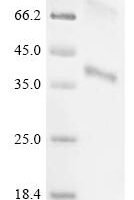
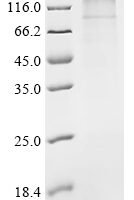
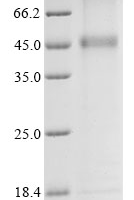
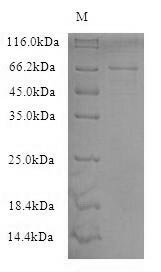
Recombinant Human Neurofilament light polypeptide (NEFL) Protein is a recombinant protein from Homo sapiens(Human), expressed in in vitro E.coli expression system, covering amino acids 2-543aa, with N-terminal 10xHis-tagged tag, molecular weight 64.9kDa, purity Greater than 90% as determined by SDS-PAGE.. Suitable for ELISA and Western Blot applications.