Function
(Microbial infection) Binds M.pneumoniae CARDS toxin, serves as one receptor for this pathogen. When SFTPA1 is down-regulated by siRNA, less toxin binds to human cells and less vacuolization (a symptom of M.pneumoniae infection) is seen.
Biological Context
Subcellular Location: Secreted; Secreted, extracellular space, extracellular matrix; Secreted, extracellular space, surface film
Disease Association: Interstitial lung disease 1 (ILD1) : A form of interstitial lung disease, a heterogeneous group of diseases affecting the distal part of the lung and characterized by a progressive remodeling of the alveolar interstitium. The disease spectrum ranges from idiopathic interstitial pneumonia or pneumonitis to idiopathic pulmonary fibrosis, that is associated with an increased risk of developing lung cancer. Clinical features of interstitial lung disease include dyspnea, clubbing of the fingers, and restrictive lung capacity. ILD1 inheritance can be autosomal dominant with incomplete penetrance, and autosomal recessive. [The disease is caused by variants affecting the gene represented in this entry] | Respiratory distress syndrome in premature infants (RDS) : A lung disease affecting usually premature newborn infants. It is characterized by deficient gas exchange, diffuse atelectasis, high-permeability lung edema and fibrin-rich alveolar deposits called 'hyaline membranes'. [Disease susceptibility may be associated with variants affecting the gene represented in this entry. The association between SFTPA1 alleles and respiratory distress syndrome in premature infants is dependent on a variation Ile to Thr at position 131 in SFTPB]
Product Specifications
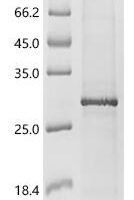
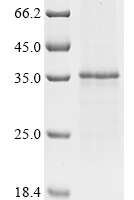
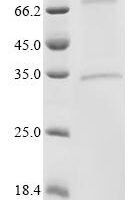
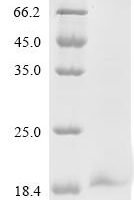
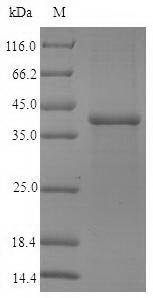
Recombinant Human Pulmonary surfactant-associated protein A1 (SFTPA1) Protein is a recombinant protein from Homo sapiens(Human), expressed in in vitro E.coli expression system, covering amino acids 21-248aa, with N-terminal 10xHis-B2M-tagged and C-terminal Myc-tagged tag, molecular weight 41.2kDa, purity Greater than 90% as determined by SDS-PAGE.. Suitable for ELISA and Western Blot applications.