Function
Stores iron in a soluble, non-toxic, readily available form. Important for iron homeostasis. Has ferroxidase activity.
Biological Context
Subcellular Location: Cytoplasm; Lysosome; Cytoplasmic vesicle, autophagosome
Tissue Specificity: Expressed in the liver
Disease Association: Hemochromatosis 5 (HFE5) : A disorder of iron metabolism characterized by iron overload. Excess iron is deposited in a variety of organs leading to their failure, and resulting in serious illnesses including cirrhosis, hepatomas, diabetes, cardiomyopathy, arthritis, and hypogonadotropic hypogonadism. Severe effects of the disease usually do not appear until after decades of progressive iron loading. [The disease is caused by variants affecting the gene represented in this entry. In a Japanese family affected by HFE5, a single point mutation has been detected in the iron-responsive element (IRE) in the 5'-UTR of FTH1 mRNA. This mutation leads to an increased binding affinity for iron regulatory protein and thereby to the efficient suppression of mRNA translation] | Neurodegeneration with brain iron accumulation 9 (NBIA9) : An autosomal dominant neurodegenerative disorder associated with iron accumulation, primarily in the basal ganglia. It is characterized by global developmental delay apparent from infancy, and progressive decline of motor and cognitive skills. Clinical features include delayed walking or inability to walk, spasticity with hyperreflexia, ataxia, dystonia, and poor or absent language. [The disease is caused by variants affecting the gene represented in this entry]
Product Specifications
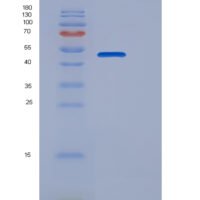
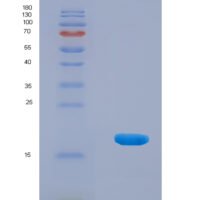
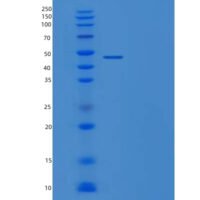
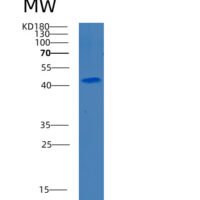
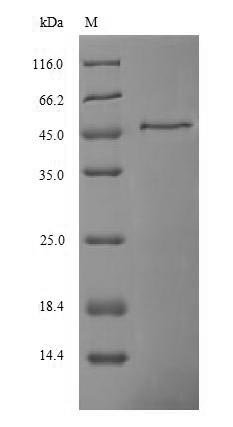
Recombinant Human Ferritin heavy chain (FTH1) is a recombinant protein from Homo sapiens (Human), expressed in E.coli, covering amino acids 2-183aa, with N-terminal GST-tagged tag, molecular weight 48.1kDa, purity Greater than 90% as determined by SDS-PAGE.. Suitable for ELISA and Western Blot applications.