, ,

Recombinant Human Membrane-bound transcription factor site-1 protease (MBTPS1), partial

Recombinant Human Membrane-bound transcription factor site-1 protease (MBTPS1), partial — Serine protease that cleaves after hydrophobic or small residues, provided that Arg or Lys is in position P4: known substrates include SREBF1/SREBP1, SREBF2/SREBP2, BDNF, GNPTAB, ATF6, ATF6B and FA… Purity…

SKU: BCRECP-001140 Categories: , ,

Product Specifications

Product SkuBCRECP-001140
Product DescriptionRecombinant Human Membrane-bound transcription factor site-1 protease (MBTPS1) Protein is expressed from E.coli with N-terminal 6xHis-tagged. It contains 187-400aa. [Accession | Q14703].
Uniprot No.Q14703
Gene NamesMBTPS1
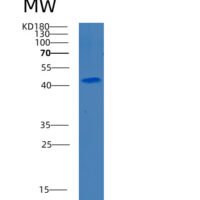
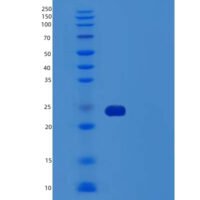
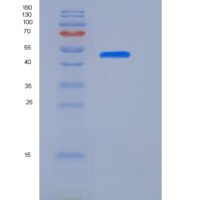
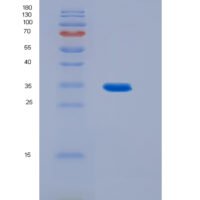
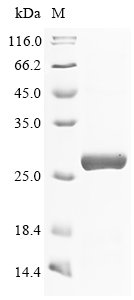
PurityGreater than 90% as determined by SDS-PAGE.
Expression SystemE.coli
Expression Region187-400aa
SpeciesHomo sapiens (Human)
Tag InfoN-terminal 6xHis-tagged
Molecular weight27.8kDa
ActivityPlease contact us to obtain bioactivity data.
BufferIf the delivery form is liquid, the default storage buffer is Tris/PBS-based buffer, 5%-50% glycerol. If the delivery form is lyophilized powder, the buffer before lyophilization is Tris/PBS-based buffer, 6% Trehalose.
StorageStore at -20°C/-80°C upon receipt, aliquoting is necessary for mutiple use. Avoid repeated freeze-thaw cycles.
Research AreasEpigenetics and Nuclear Signaling

Function

Serine protease that cleaves after hydrophobic or small residues, provided that Arg or Lys is in position P4: known substrates include SREBF1/SREBP1, SREBF2/SREBP2, BDNF, GNPTAB, ATF6, ATF6B and FAM20C. Cleaves substrates after Arg-Ser-Val-Leu (SREBP2), Arg-His-Leu-Leu (ATF6), Arg-Gly-Leu-Thr (BDNF) and its own propeptide after Arg-Arg-Leu-Leu. Catalyzes the first step in the proteolytic activation of the sterol regulatory element-binding proteins (SREBPs) SREBF1/SREBP1 and SREBF2/SREBP2.

Biological Context

Subcellular Location: Endoplasmic reticulum membrane (Single-pass type I membrane protein); Golgi apparatus membrane (Single-pass type I membrane protein); Secreted; Mitochondrion
Tissue Specificity: Widely expressed
Disease Association: Spondyloepiphyseal dysplasia, Kondo-Fu type (SEDKF) : A disorder characterized by severely retarded growth, spondyloepiphyseal dysplasia, reduced bone mineral density, and markedly elevated plasma levels of various lysosomal enzymes. Additional features include pectus carinatum, kyphosis, a waddling gait, brachydactyly and dysmorphic facial features. SEDKF transmission pattern is consistent with autosomal recessive inheritance. [The disease is caused by variants affecting the gene represented in this entry] | Cataract, alopecia, oral mucosal disorder, and psoriasis-like syndrome (CAOP) : An autosomal recessive disorder characterized by early-onset bilateral lens cataract, generalized non-scarring alopecia, oral mucosal disorder, and severe psoriasiform skin lesions affecting the scalp, facial, inguinal region, buttocks, and lower extremities. [The disease is caused by variants affecting the gene represented in this entry]

Product Specifications

Recombinant Human Membrane-bound transcription factor site-1 protease (MBTPS1), partial is a recombinant protein from Homo sapiens (Human), expressed in E.coli, covering amino acids 187-400aa, with N-terminal 6xHis-tagged tag, molecular weight 27.8kDa, purity Greater than 90% as determined by SDS-PAGE.. Suitable for ELISA and Western Blot applications.

SDS-PAGE: Single band at expected molecular weight confirming purity.

ELISA: Suitable as coating antigen or detection standard.

Western Blot: Compatible with standard Western Blot protocols.

Protein Interaction: Validated for SPR (Surface Plasmon Resonance) and BLI (Bio-Layer Interferometry) studies.

Shipping: Shipped at ambient temperature. Lyophilized protein is stable during transit.

Storage: Store lyophilized protein at -20°C to -80°C. Reconstituted protein should be aliquoted and stored at -80°C. Avoid repeated freeze-thaw cycles.

Shelf Life: 12 months from date of receipt when stored as recommended.

Shipping Time: Orders placed before 2 PM EST ship same day. International orders typically deliver within 5-10 business days.

Protein Biology

Function

Serine protease that cleaves after hydrophobic or small residues, provided that Arg or Lys is in position P4: known substrates include SREBF1/SREBP1, SREBF2/SREBP2, BDNF, GNPTAB, ATF6, ATF6B and FAM20C (PubMed:10644685, PubMed:12782636, PubMed:21719679, PubMed:34349020). Cleaves substrates after Arg-Ser-Val-Leu (SREBP2), Arg-His-Leu-Leu (ATF6), Arg-Gly-Leu-Thr (BDNF) and its own propeptide after Arg-Arg-Leu-Leu (PubMed:10644685, PubMed:21719679). Catalyzes the first step in the proteolytic activation of the sterol regulatory element-binding proteins (SREBPs) SREBF1/SREBP1 and SREBF2/SREBP2 (PubMed:12782636). Also mediates the first step in the proteolytic activation of the cyclic AMP-dependent transcription factor ATF-6 (ATF6 and ATF6B) (PubMed:12782636). Mediates the protein cleavage of GNPTAB into subunit alpha and beta, thereby participating in biogenesis of lysosomes (PubMed:21719679). Cleaves the propeptide from FAM20C which is required for FAM20C secretion from the Golgi apparatus membrane and for enhancement of FAM20C kinase activity, promoting osteoblast differentiation and biomineralization (PubMed:34349020). Involved in the regulation of M6P-dependent Golgi-to-lysosome trafficking of lysosomal enzymes (PubMed:21719679, PubMed:30046013). It is required for the activation of CREB3L2/BBF2H7, a transcriptional activator of MIA3/TANGO and other genes controlling mega vesicle formation (PubMed:30046013). Therefore, it plays a key role in the regulation of mega vesicle-mediated collagen trafficking (PubMed:30046013). Promotes FAD binding to the ETFA/ETFB complex and is therefore involved in mitochondrial respiratory chain regulation (PubMed:35362222). In astrocytes and osteoblasts, upon DNA damage and ER stress, mediates the first step of the regulated intramembrane proteolytic activation of the transcription factor CREB3L1, leading to the inhibition of cell-cycle progression (PubMed:16417584)

Subcellular Location

Endoplasmic reticulum membrane (Single-pass type I membrane protein); Golgi apparatus membrane (Single-pass type I membrane protein); Secreted; Mitochondrion

Disease Association

Spondyloepiphyseal dysplasia, Kondo-Fu type (SEDKF) : A disorder characterized by severely retarded growth, spondyloepiphyseal dysplasia, reduced bone mineral density, and markedly elevated plasma levels of various lysosomal enzymes. Additional features include pectus carinatum, kyphosis, a waddling gait, brachydactyly and dysmorphic facial features. SEDKF transmission pattern is consistent with autosomal recessive inheritance. [The disease is caused by variants affecting the gene represented in this entry] | Cataract, alopecia, oral mucosal disorder, and psoriasis-like syndrome (CAOP) : An autosomal recessive disorder characterized by early-onset bilateral lens cataract, generalized non-scarring alopecia, oral mucosal disorder, and severe psoriasiform skin lesions affecting the scalp, facial, inguinal region, buttocks, and lower extremities. [The disease is caused by variants affecting the gene represented in this entry]

Tissue Specificity

Widely expressed

Subunit

Interacts with LYSET; this interaction bridges GNPTAB to MBTPS1. Forms a complex with ETFA and ETFB; the interaction stabilizes the ETFA/ETFB heterodimer, promotes FAD binding to ETFA/ETFB and is independent of MBTPS1 proteolytic activity (PubMed:35362222)

Gene: MBTPS1  |  Organism: Homo sapiens  |  Synonyms: Endopeptidase S1P; Subtilisin/kexin-isozyme 1
Key Publications

Frequently Asked Questions

How do I order or inquire about this product?

Fill out the Online Inquiry form with your required quantity and specifications. You can also email sales@biocrestsci.com. Our team typically responds within 4 business hours with a quote and availability confirmation.

What is the shipping and delivery time?

Orders placed before 2 PM EST ship the same day. Domestic (US) delivery typically takes 2-3 business days. International orders deliver within 5-10 business days. All products are shipped at ambient temperature with appropriate packaging to ensure stability.

How should I store this recombinant protein?

Lyophilized proteins should be stored at -20°C to -80°C upon receipt. After reconstitution, aliquot and store at -80°C. Avoid repeated freeze-thaw cycles. Shelf life is 12 months from date of receipt when stored as recommended.

What quality controls are performed on your products?

Each product undergoes SDS-PAGE purity analysis (typically >85-95%), endotoxin testing, and bioactivity validation. Products are validated for ELISA, Western Blot, and SPR/BLI applications as specified on this product page. A Certificate of Analysis (CoA) is available upon request.

Shopping Cart
Scroll to Top