Recombinant Apis mellifera Major royal jelly protein 1 (MRJP1)

Recombinant Apis mellifera Major royal jelly protein 1 (MRJP1) — Lacks antibacterial and antifungal activity. Purity >85%.

SKU: BCRECP-003412 Category:

Product Specifications

Product SkuBCRECP-003412
Product DescriptionRecombinant Apis mellifera Major royal jelly protein 1 (MRJP1) Protein is expressed from Baculovirus with N-terminal 10xHis-tagged. It contains 20-432aa. [Accession | O18330].
Uniprot No.O18330
Gene NamesMRJP1
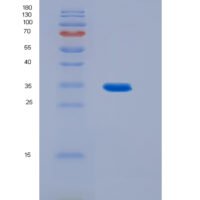
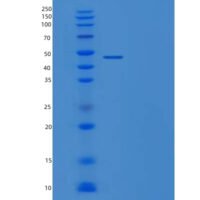
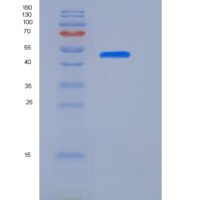
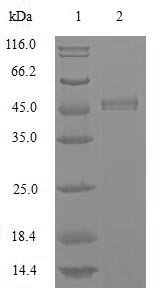
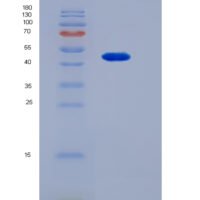
PurityGreater than 85% as determined by SDS-PAGE.
Expression SystemBaculovirus
Expression Region20-432aa
SpeciesApis mellifera (Honeybee)
Tag InfoN-terminal 10xHis-tagged
Molecular weight49.4kDa
ActivityPlease contact us to obtain bioactivity data.
BufferIf the delivery form is liquid, the default storage buffer is Tris/PBS-based buffer, 5%-50% glycerol. If the delivery form is lyophilized powder, the buffer before lyophilization is Tris/PBS-based buffer, 6% Trehalose.
StorageStore at -20°C/-80°C upon receipt, aliquoting is necessary for mutiple use. Avoid repeated freeze-thaw cycles.
Research AreasOthers

Function

Lacks antibacterial and antifungal activity. Lacks cytolytic activity and does not induce rat peritoneal mast cell degranulation.

Product Specifications

Recombinant Apis mellifera Major royal jelly protein 1 (MRJP1) — Lacks antibacterial and antifungal activity. Purity >85%. Suitable for ELISA and Western Blot applications.

SDS-PAGE: Single band at expected molecular weight confirming purity.

ELISA: Suitable as coating antigen or detection standard.

Western Blot: Compatible with standard Western Blot protocols.

Protein Interaction: Validated for SPR (Surface Plasmon Resonance) and BLI (Bio-Layer Interferometry) studies.

Shipping: Shipped at ambient temperature. Lyophilized protein is stable during transit.

Storage: Store lyophilized protein at -20°C to -80°C. Reconstituted protein should be aliquoted and stored at -80°C. Avoid repeated freeze-thaw cycles.

Shelf Life: 12 months from date of receipt when stored as recommended.

Shipping Time: Orders placed before 2 PM EST ship same day. International orders typically deliver within 5-10 business days.

Protein Biology

Function

Lacks antibacterial and antifungal activity. Lacks cytolytic activity and does not induce rat peritoneal mast cell degranulation

Subcellular Location

Secreted; Cytoplasm; Cell projection, rhabdomere; Cytoplasm, cytoskeleton

Tissue Specificity

Found in and secreted from the hypopharyngeal glands of the worker honey bee (at protein level); expression peaks at 12 days post eclosion (PubMed:15203237, PubMed:15607658, PubMed:31410279, PubMed:9395329). Expressed in the brains of worker bees (at protein level); found in antennal lobe, optical lobe and a subpopulation of Kenyon cells in the mushroom body (PubMed:17065613, PubMed:19203288, PubMed:36414079, PubMed:9722965). Found in the ommatidia of worker bees (at protein level) (PubMed:19203288). Expressed in the spermatheca of adult queen bees (at protein level); expression levels are higher in mated queens than in virgin queens (PubMed:34442256). Expressed in queen bee ovaries and male drone testes (PubMed:17065613)

Subunit

Is present in royal jelly in different forms: monomer (55 kDa), oligomeric subunit (ca. 287-420 kDa), and water-insoluble aggregates in sediment after interaction with fatty acids (PubMed:28252287, PubMed:30135511, Ref.11). Component of the apisin heterooligomer complex consisting of 4 copies of MRJP1 and 4 copies of apisimin, associated with 8 molecules of 24-methylenecholesterol; apisimin forms a bridge connecting two MRJP1 dimers (PubMed:20017154, PubMed:27721892, PubMed:28252287, PubMed:29551410, PubMed:30135511, PubMed:33293513). At low pH multiple apisin octamers stack to form filaments that increase the viscosity of royal jelly; these filaments may be stabilized by bound fatty acid chains (PubMed:29551410, PubMed:30135511, PubMed:33293513). The mandibular gland, where royal jelly is produced, has low pH conditions favouring filament formation, while the higher pH of the insect midgut favors filament disassembly (Probable)

Gene: Mrjp1  |  Organism: Apis mellifera  |  Synonyms: 56-kDa protein 4; Apalbumin 1; Apisin subunit MRJP1; Bee-milk protein; Royal jelly protein RJP57-3; Royalactin
Key Publications

Frequently Asked Questions

How do I order or inquire about this product?

Fill out the Online Inquiry form with your required quantity and specifications. You can also email sales@biocrestsci.com. Our team typically responds within 4 business hours with a quote and availability confirmation.

What is the shipping and delivery time?

Orders placed before 2 PM EST ship the same day. Domestic (US) delivery typically takes 2-3 business days. International orders deliver within 5-10 business days. All products are shipped at ambient temperature with appropriate packaging to ensure stability.
How should I store this recombinant protein?

Lyophilized proteins should be stored at -20°C to -80°C upon receipt. After reconstitution, aliquot and store at -80°C. Avoid repeated freeze-thaw cycles. Shelf life is 12 months from date of receipt when stored as recommended.

What quality controls are performed on your products?

Each product undergoes SDS-PAGE purity analysis (typically >85-95%), endotoxin testing, and bioactivity validation. Products are validated for ELISA, Western Blot, and SPR/BLI applications as specified on this product page. A Certificate of Analysis (CoA) is available upon request.

Shopping Cart
Scroll to Top