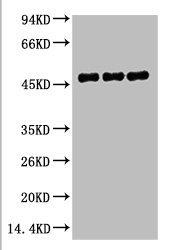
Mouse anti-Human/Mouse/Rat FH Monoclonal Antibody

Mouse anti-Human/Mouse/Rat FH Monoclonal Antibody — Catalyzes the dehydration of L-malate to fumarate.

SKU: BCREC-000111MA Category:

Product Specifications

Uniprot No.P07954
Target NamesFH
Species ReactivityMouse
ImmunogenRecombinant Protein
ConjugateNon-conjugated
IsotypeIgG
ClonalityMonoclonal
ApplicationsELISA,WB,IHC,IF
BufferPBS, 50% glycerol, 0.05% Proclin 300, 0.05%BSA
StorageUpon receipt, store at -20°C or -80°C. Avoid repeated freeze.

Function

Catalyzes the dehydration of L-malate to fumarate. Fumarate metabolism in the cytosol plays a role during urea cycle and arginine metabolism; fumarate being a by-product of the urea cycle and amino-acid catabolism. Also plays a role in DNA repair by promoting non-homologous end-joining (NHEJ).

Biological Context

Subcellular Location: Cytoplasm, cytosol; Nucleus; Chromosome
Tissue Specificity: Expressed in red blood cells; underexpressed in red blood cells (cytoplasm) of patients with hereditary non-spherocytic hemolytic anemia of unknown etiology
Disease Association: Fumarase deficiency (FMRD) : A severe autosomal recessive metabolic disorder characterized by early-onset hypotonia, profound psychomotor retardation, and brain abnormalities, such as agenesis of the corpus callosum, gyral defects, and ventriculomegaly. Many patients show neonatal distress, metabolic acidosis, and/or encephalopathy. [The disease is caused by variants affecting the gene represented in this entry] | Hereditary leiomyomatosis and renal cell cancer (HLRCC) : A disorder characterized by predisposition to cutaneous and uterine leiomyomas, and papillary type 2 renal cancer which occurs in about 20% of patients. [The disease is caused by variants affecting the gene represented in this entry. Isoform Cytoplasmic: HLRCC is probably caused by an accumulation of fumarate. Accumulation of fumarate coupled with protonation promotes the formation of non-enzymatic post-translational modification cysteine S-succination (S-(2-succinyl)cysteine) on proteins, such as SMARCC1 ]
Pathway: Carbohydrate metabolism; tricarboxylic acid cycle; (S)-malate from fumarate: step 1/1

Product Specifications

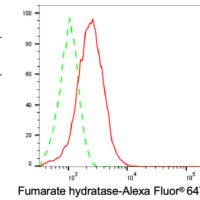
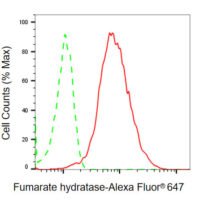
Mouse anti-Human/Mouse/Rat FH Monoclonal Antibody is a recombinant protein. Suitable for ELISA and Western Blot applications.

Catalog number: BCREC-000111MA.

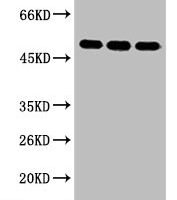
SDS-PAGE: Single band at expected molecular weight confirming purity.

ELISA: Suitable as coating antigen or detection standard.

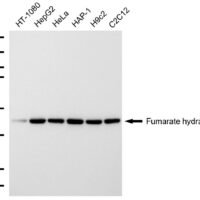
Western Blot: Compatible with standard Western Blot protocols.

Protein Interaction: Validated for SPR (Surface Plasmon Resonance) and BLI (Bio-Layer Interferometry) studies.

Shipping: Shipped at ambient temperature. Lyophilized protein is stable during transit.

Storage: Store lyophilized protein at -20°C to -80°C. Reconstituted protein should be aliquoted and stored at -80°C. Avoid repeated freeze-thaw cycles.

Shelf Life: 12 months from date of receipt when stored as recommended.

Shipping Time: Orders placed before 2 PM EST ship same day. International orders typically deliver within 5-10 business days.

Protein Biology

Function

Catalyzes the dehydration of L-malate to fumarate (By similarity). Fumarate metabolism in the cytosol plays a role during urea cycle and arginine metabolism; fumarate being a by-product of the urea cycle and amino-acid catabolism (By similarity). Also plays a role in DNA repair by promoting non-homologous end-joining (NHEJ) (PubMed:20231875, PubMed:26237645). In response to DNA damage and phosphorylation by PRKDC, translocates to the nucleus and accumulates at DNA double-strand breaks (DSBs): acts by catalyzing formation of fumarate, an inhibitor of KDM2B histone demethylase activity, resulting in enhanced dimethylation of histone H3 'Lys-36' (H3K36me2) (PubMed:26237645)

Subcellular Location

Cytoplasm, cytosol; Nucleus; Chromosome

Disease Association

Fumarase deficiency (FMRD) : A severe autosomal recessive metabolic disorder characterized by early-onset hypotonia, profound psychomotor retardation, and brain abnormalities, such as agenesis of the corpus callosum, gyral defects, and ventriculomegaly. Many patients show neonatal distress, metabolic acidosis, and/or encephalopathy. [The disease is caused by variants affecting the gene represented in this entry] | Hereditary leiomyomatosis and renal cell cancer (HLRCC) : A disorder characterized by predisposition to cutaneous and uterine leiomyomas, and papillary type 2 renal cancer which occurs in about 20% of patients. [The disease is caused by variants affecting the gene represented in this entry. Isoform Cytoplasmic: HLRCC is probably caused by an accumulation of fumarate (PubMed:30718813). Accumulation of fumarate coupled with protonation promotes the formation of non-enzymatic post-translational modification cysteine S-succination (S-(2-succinyl)cysteine) on proteins, such as SMARCC1 (PubMed:30718813)]

Tissue Specificity

Expressed in red blood cells; underexpressed in red blood cells (cytoplasm) of patients with hereditary non-spherocytic hemolytic anemia of unknown etiology

Subunit

Homotetramer (PubMed:21445611, PubMed:30761759). Interacts with H2AZ1 (PubMed:26237645)

Pathway

Carbohydrate metabolism; tricarboxylic acid cycle; (S)-malate from fumarate: step 1/1

Gene: FH  |  Organism: Homo sapiens

Frequently Asked Questions

How do I order or inquire about this product?

Fill out the Online Inquiry form with your required quantity and specifications. You can also email sales@biocrestsci.com. Our team typically responds within 4 business hours with a quote and availability confirmation.

What is the shipping and delivery time?

Orders placed before 2 PM EST ship the same day. Domestic (US) delivery typically takes 2-3 business days. International orders deliver within 5-10 business days. All products are shipped at ambient temperature with appropriate packaging to ensure stability.

How should I store this recombinant protein?

Lyophilized proteins should be stored at -20°C to -80°C upon receipt. After reconstitution, aliquot and store at -80°C. Avoid repeated freeze-thaw cycles. Shelf life is 12 months from date of receipt when stored as recommended.

What quality controls are performed on your products?

Each product undergoes SDS-PAGE purity analysis (typically >85-95%), endotoxin testing, and bioactivity validation. Products are validated for ELISA, Western Blot, and SPR/BLI applications as specified on this product page. A Certificate of Analysis (CoA) is available upon request.

Shopping Cart
Scroll to Top