Function
May have a role in chylomicrons and VLDL secretion and catabolism. Required for efficient activation of lipoprotein lipase by ApoC-II; potent activator of LCAT. Apoa-IV is a major component of HDL and chylomicrons.
Biological Context
Subcellular Location: Secreted
Tissue Specificity: Synthesized primarily in the intestine and secreted in plasma
Disease Association: Tubulointerstitial kidney disease, autosomal dominant 6 (ADTKD6) : A form of autosomal dominant tubulointerstitial kidney disease, a genetically heterogeneous disorder characterized by slowly progressive loss of kidney function, bland urinary sediment, hyperuricemia, absent or mildly increased albuminuria, lack of severe hypertension during the early stages, and normal or small kidneys on ultrasound. Renal histology shows variable abnormalities including interstitial fibrosis with tubular atrophy, microcystic dilatation of the tubules, thickening of tubular basement membranes, medullary cysts, and secondary glomerulosclerotic or glomerulocystic changes with abnormal glomerular tufting. There is significant variability, as well as incomplete penetrance. ADTKD6 is characterized by the onset of slowly progressive renal failure in mid-to-late adulthood, and the presence of APOA4-positive amyloid deposits in the renal medulla without systemic amyloid deposition in other organs. [The disease is caused by variants affecting the gene represented in this entry]
Product Specifications
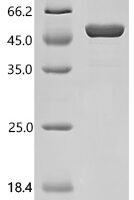
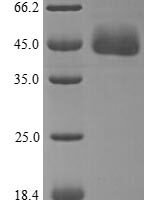
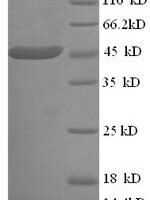
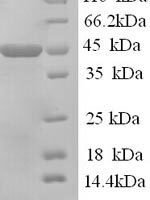
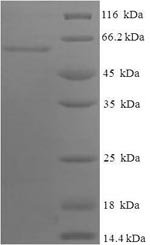
Recombinant Human Apolipoprotein A-IV (APOA4) is a recombinant protein from Homo sapiens (Human), expressed in E.coli, covering amino acids 21-396aa, with N-terminal 6xHis-SUMO-tagged tag, molecular weight 59.4kDa, purity Greater than 90% as determined by SDS-PAGE.. Suitable for ELISA and Western Blot applications.