Function
Required in cooperation with CD79B for initiation of the signal transduction cascade activated by binding of antigen to the B-cell antigen receptor complex (BCR) which leads to internalization of the complex, trafficking to late endosomes and antigen presentation. Also required for BCR surface expression and for efficient differentiation of pro- and pre-B-cells. Stimulates SYK autophosphorylation and activation.
Biological Context
Subcellular Location: Cell membrane (Single-pass type I membrane protein)
Tissue Specificity: B-cells
Disease Association: Agammaglobulinemia 3, autosomal recessive (AGM3) : A primary immunodeficiency characterized by profoundly low or absent serum antibodies and low or absent circulating B-cells due to an early block of B-cell development. Affected individuals develop severe infections in the first years of life. [The disease is caused by variants affecting the gene represented in this entry. Two different mutations, one at the splice donor site of intron 2 and the other at the splice acceptor site for exon 3, have been identified. Both mutations give rise to a truncated protein]
Product Specifications
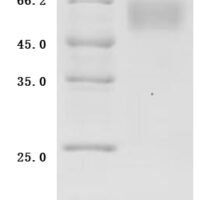
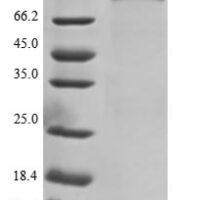
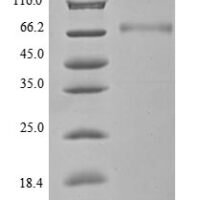
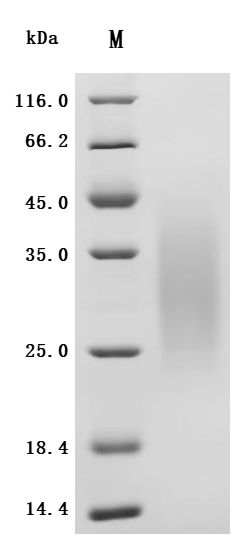
Recombinant Human B-cell antigen receptor complex-associated protein alpha chain (CD79A), partial (Active) is a recombinant protein from Homo sapiens (Human), expressed in Mammalian cell, covering amino acids 33-143aa, with C-terminal 10xHis-tagged tag, molecular weight 14.0 kDa, purity Greater than 90% as determined by SDS-PAGE.. Suitable for ELISA and Western Blot applications. Explore more CD proteins →