Function
Catalyzes the reduction of 7,8-dihydrofolate (DHF) to 5,6,7,8-tetrahydrofolate in a NADPH-dependent manner. Key enzyme in folate metabolism. Contributes to the nuclear and mitochondrial de novo thymidylate biosynthesis pathway.
Biological Context
Subcellular Location: Mitochondrion; Cytoplasm; Nucleus
Tissue Specificity: Widely expressed in fetal and adult tissues, including throughout the fetal and adult brains and whole blood. Expression is higher in the adult brain than in the fetal brain
Disease Association: Megaloblastic anemia due to dihydrofolate reductase deficiency (DHFRD) : An inborn error of metabolism, characterized by megaloblastic anemia and/or pancytopenia, severe cerebral folate deficiency, and cerebral tetrahydrobiopterin deficiency. Clinical features include variable neurologic symptoms, ranging from severe developmental delay and generalized seizures in infancy, to childhood absence epilepsy with learning difficulties, to lack of symptoms. [The disease is caused by variants affecting the gene represented in this entry]
Pathway: Cofactor biosynthesis; tetrahydrofolate biosynthesis; 5,6,7,8-tetrahydrofolate from 7,8-dihydrofolate: step 1/1
Product Specifications
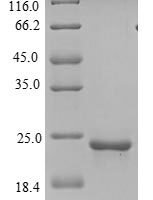
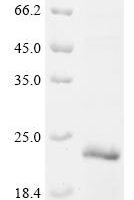
Recombinant Human Dihydrofolate reductase (DHFR) is a recombinant protein from Homo sapiens (Human), expressed in E.coli, covering amino acids 1-187aa, with N-terminal 6xHis-tagged tag, molecular weight 25.5kDa, purity Greater than 90% as determined by SDS-PAGE.. Suitable for ELISA and Western Blot applications. Explore more Enzyme proteins →
![Human Succinate dehydrogenase [ubiquinone] flavoprotein subunit, mitochondrial (SDHA), partial Recombinant Protein, N-GST - BioCrest Sci](https://www.biocrestsci.com/wp-content/uploads/protein/1/BCACP-838381-SDS-150x200.jpg)