Function
Inward rectifier potassium channels are characterized by a greater tendency to allow potassium to flow into the cell rather than out of it. Their voltage dependence is regulated by the concentration of extracellular potassium; as external potassium is raised, the voltage range of the channel opening shifts to more positive voltages. The inward rectification is mainly due to the blockage of outward current by internal magnesium.
Biological Context
Subcellular Location: Membrane (Multi-pass membrane protein); Basolateral cell membrane
Tissue Specificity: Widely expressed, with highest levels in adult and fetal kidney (at protein level). In the kidney, expressed in the proximal and distal convoluted tubules, but not in glomeruli nor collecting ducts
Disease Association: Hypokalemic tubulopathy and deafness (HKTD) : An autosomal recessive disease characterized by renal tubulopathy with hypokalemia, salt wasting, disturbed acid-base homeostasis, and sensorineural deafness. [The disease is caused by variants affecting the gene represented in this entry]
Product Specifications
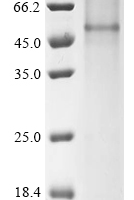
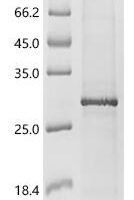
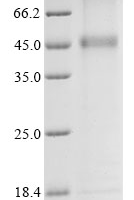
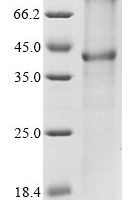
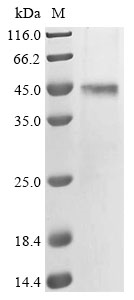
Recombinant Human Inward rectifier potassium channel 16 (KCNJ16) Protein is a recombinant protein from Homo sapiens (Human), expressed in in vitro E.coli expression system, covering amino acids 1-418aa, with N-terminal 10xHis-tagged tag, molecular weight 50.8kDa, purity Greater than 85% as determined by SDS-PAGE.. Suitable for ELISA and Western Blot applications.