Function
(Microbial infection) Binds S.pneumoniae PsrP, mediating adherence of the bacteria to lung cell lines. Reduction of levels of KRT10 keratin decrease adherence, overexpression increases adherence. Neither protein has to be glycosylated for the interaction to occur.
Biological Context
Subcellular Location: Secreted, extracellular space; Cell surface; Cytoplasm
Tissue Specificity: Seen in all suprabasal cell layers including stratum corneum. Expressed on the surface of lung cell lines. Localized on the surface of desquamated nasal epithelial cells (at protein level)
Disease Association: Epidermolytic hyperkeratosis 2A (EHK2A) : An autosomal dominant form of epidermolytic hyperkeratosis, a skin disorder characterized by widespread blistering and an ichthyotic erythroderma at birth that persist into adulthood. Histologically there is a diffuse epidermolytic degeneration in the lower spinous layer of the epidermis. Within a few weeks from birth, erythroderma and blister formation diminish and hyperkeratoses develop. EHK2 inheritance is autosomal dominant or autosomal recessive. [The disease is caused by variants affecting the gene represented in this entry] | Epidermolytic hyperkeratosis 2B, autosomal recessive (EHK2B) : An autosomal recessive form of epidermolytic hyperkeratosis, a skin disorder characterized by widespread blistering and an ichthyotic erythroderma at birth that persist into adulthood. Histologically there is a diffuse epidermolytic degeneration in the lower spinous layer of the epidermis. Within a few weeks from birth, erythroderma and blister formation diminish and hyperkeratoses develop. [The disease is caused by variants affecting the gene represented in this entry] | Ichthyosis, annular epidermolytic, 1 (AEI1) : A form of annular epidermolytic ichthyosis, an autosomal dominant skin disorder characterized by polycyclic, migratory erythematous and scaly plaques. AEI1 is characterized by the development of widespread erythematous blistering in the neonatal period or early childhood that subsides over time. [The disease is caused by variants affecting the gene represented in this entry] | Ichthyosis with confetti (IWC) : An autosomal dominant, rare skin condition characterized by slowly enlarging islands of normal skin surrounded by erythematous ichthyotic patches in a reticulated pattern. The condition starts in infancy as a lamellar ichthyosis, with small islands of normal skin resembling confetti appearing in late childhood and at puberty. Histopathologic findings include band-like parakeratosis, psoriasiform acanthosis, and vacuolization of keratinocytes with binucleated cells in the upper epidermis, sometimes associated with amyloid deposition in the dermis. Ultrastructural abnormalities include perinuclear shells formed from a network of fine filaments in the upper epidermis. [The disease is caused by variants affecting the gene represented in this entry] | Ichthyosis histrix, Lambert type (IHL) : An autosomal dominant form of ichthyosis, a disorder of keratinization with abnormal differentiation and desquamation of the epidermis, resulting in abnormal skin scaling. IHL is characterized by normal skin at birth that develops striking spiny hyperkeratotic lesions within a few months. There is sparing of the face, palms, and soles, and affected individuals do not experience blistering. [The disease may be caused by variants affecting the gene represented in this entry]
Product Specifications
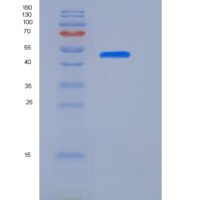
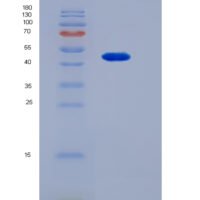
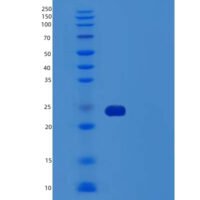
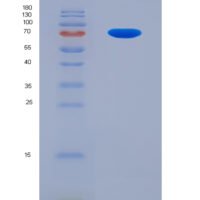
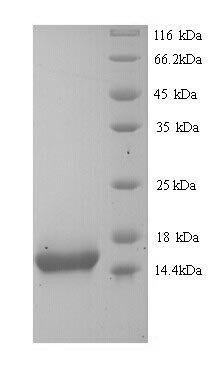
Recombinant Human KeRatin, type I cytoskeletal 10 (KRT10), partial is a recombinant protein from Homo sapiens (Human), expressed in Yeast, covering amino acids 326-443aa, with N-terminal 6xHis-tagged tag, molecular weight 15.7kDa, purity Greater than 90% as determined by SDS-PAGE.. Suitable for ELISA and Western Blot applications.