Recombinant Human Neural cell adhesion molecule L1 (L1CAM), partial (Active)

Recombinant Human Neural cell adhesion molecule L1 (L1CAM), partial (Active) — Neural cell adhesion molecule involved in the dynamics of cell adhesion and in the generation of transmembrane signals at tyrosine kinase receptors. Purity >95%.

SKU: BCRECP-001046 Category:

Product Specifications

Product SkuBCRECP-001046
Product DescriptionRecombinant Human Neural cell adhesion molecule L1 (L1CAM) Protein is expressed from Mammalian cell with N-terminal 10xHis-tagged and C-terminal Myc-tagged. It contains 20-1120aa. [Accession | P32004].
Uniprot No.P32004
Gene NamesL1CAM
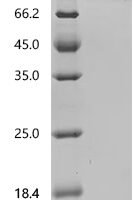
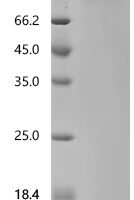
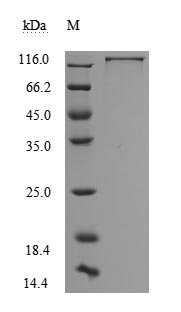
PurityGreater than 95% as determined by SDS-PAGE.
Expression SystemMammalian cell
Expression Region20-1120aa
SpeciesHomo sapiens (Human)
Tag InfoN-terminal 10xHis-tagged and C-terminal Myc-tagged
Molecular weight128.2kDa
ActivityPlease contact us to obtain bioactivity data.
BufferIf the delivery form is liquid, the default storage buffer is Tris/PBS-based buffer, 5%-50% glycerol. If the delivery form is lyophilized powder, the buffer before lyophilization is Tris/PBS-based buffer, 6% Trehalose.
StorageStore at -20°C/-80°C upon receipt, aliquoting is necessary for mutiple use. Avoid repeated freeze-thaw cycles.
Research AreasCell Adhesion

Function

Neural cell adhesion molecule involved in the dynamics of cell adhesion and in the generation of transmembrane signals at tyrosine kinase receptors. During brain development, critical in multiple processes, including neuronal migration, axonal growth and fasciculation, and synaptogenesis. In the mature brain, plays a role in the dynamics of neuronal structure and function, including synaptic plasticity.

Biological Context

Subcellular Location: Cell membrane (Single-pass type I membrane protein); Cell projection, growth cone; Cell projection, axon; Cell projection, dendrite
Disease Association: Hydrocephalus, congenital, X-linked (HYCX) : An X-linked recessive form of congenital hydrocephalus, a disease characterized by in utero onset of enlarged ventricles due to accumulation of ventricular cerebrospinal fluid. HYCX is the most common inherited form and occurs in approximately 1/30000 male births. The primary diagnostic criteria of intellectual disability and enlarged cerebral ventricles are often accompanied by spastic paraparesis and adducted thumbs and, occasionally, visual defects or seizures. The most severe cases die pre- or perinatally with gross hydrocephalus and enlarged head circumference. Stenosis of the aqueduct of Sylvius is frequently associated with the disorder. [The disease is caused by variants affecting the gene represented in this entry. L1CAM mutations have also been found in few patients affected by hydrocephalus with Hirschsprung disease, suggesting a role of this gene acting either in a direct or indirect way in the pathogenesis of Hirschsprung disease ] | MASA syndrome (MASA) : An X-linked recessive syndrome with a highly variable clinical spectrum. Main clinical features include spasticity and hyperreflexia of lower limbs, shuffling gait, intellectual disability, aphasia and adducted thumbs. The features of spasticity have been referred to as complicated spastic paraplegia type 1 (SPG1). Some patients manifest corpus callosum hypoplasia and hydrocephalus. Inter- and intrafamilial variability is very wide, such that patients with hydrocephalus, MASA, SPG1, and agenesis of corpus callosum can be present within the same family. [The disease is caused by variants affecting the gene represented in this entry] | [Defects in L1CAM may contribute to Hirschsprung disease by modifying the effects of Hirschsprung disease-associated genes to cause intestinal aganglionosis] | Agenesis of the corpus callosum, X-linked, partial (ACCPX) : A syndrome characterized by partial corpus callosum agenesis, hypoplasia of inferior vermis and cerebellum, intellectual disability, seizures and spasticity. Other features include microcephaly, unusual facies, and Hirschsprung disease in some patients. [The disease is caused by variants affecting the gene represented in this entry] | [Defects in L1CAM are associated with a wide phenotypic spectrum which varies from severe hydrocephalus and prenatal death (HYCX) to a milder phenotype (MASA). These variations may even occur within the same family. Due to the overlap of phenotypes between HYCX and MASA, many authors use the general concept of L1 syndrome which covers both ends of the spectrum]

Product Specifications

Recombinant Human Neural cell adhesion molecule L1 (L1CAM), partial (Active) is a recombinant protein from Homo sapiens (Human), expressed in Mammalian cell, covering amino acids 20-1120aa, with N-terminal 10xHis-tagged and C-terminal Myc-tagged tag, molecular weight 128.2kDa, purity Greater than 95% as determined by SDS-PAGE.. Suitable for ELISA and Western Blot applications.

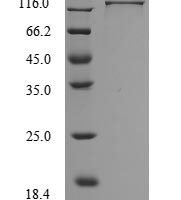
SDS-PAGE: Single band at expected molecular weight confirming purity.

ELISA: Suitable as coating antigen or detection standard.

Western Blot: Compatible with standard Western Blot protocols.

Protein Interaction: Validated for SPR (Surface Plasmon Resonance) and BLI (Bio-Layer Interferometry) studies.

Shipping: Shipped at ambient temperature. Lyophilized protein is stable during transit.

Storage: Store lyophilized protein at -20°C to -80°C. Reconstituted protein should be aliquoted and stored at -80°C. Avoid repeated freeze-thaw cycles.

Shelf Life: 12 months from date of receipt when stored as recommended.

Shipping Time: Orders placed before 2 PM EST ship same day. International orders typically deliver within 5-10 business days.

Protein Biology

Function

Neural cell adhesion molecule involved in the dynamics of cell adhesion and in the generation of transmembrane signals at tyrosine kinase receptors. During brain development, critical in multiple processes, including neuronal migration, axonal growth and fasciculation, and synaptogenesis. In the mature brain, plays a role in the dynamics of neuronal structure and function, including synaptic plasticity

Subcellular Location

Cell membrane (Single-pass type I membrane protein); Cell projection, growth cone; Cell projection, axon; Cell projection, dendrite

Disease Association

Hydrocephalus, congenital, X-linked (HYCX) : An X-linked recessive form of congenital hydrocephalus, a disease characterized by in utero onset of enlarged ventricles due to accumulation of ventricular cerebrospinal fluid. HYCX is the most common inherited form and occurs in approximately 1/30000 male births. The primary diagnostic criteria of intellectual disability and enlarged cerebral ventricles are often accompanied by spastic paraparesis and adducted thumbs and, occasionally, visual defects or seizures. The most severe cases die pre- or perinatally with gross hydrocephalus and enlarged head circumference. Stenosis of the aqueduct of Sylvius is frequently associated with the disorder. [The disease is caused by variants affecting the gene represented in this entry. L1CAM mutations have also been found in few patients affected by hydrocephalus with Hirschsprung disease, suggesting a role of this gene acting either in a direct or indirect way in the pathogenesis of Hirschsprung disease (PubMed:22344793)] | MASA syndrome (MASA) : An X-linked recessive syndrome with a highly variable clinical spectrum. Main clinical features include spasticity and hyperreflexia of lower limbs, shuffling gait, intellectual disability, aphasia and adducted thumbs. The features of spasticity have been referred to as complicated spastic paraplegia type 1 (SPG1). Some patients manifest corpus callosum hypoplasia and hydrocephalus. Inter- and intrafamilial variability is very wide, such that patients with hydrocephalus, MASA, SPG1, and agenesis of corpus callosum can be present within the same family. [The disease is caused by variants affecting the gene represented in this entry] | [Defects in L1CAM may contribute to Hirschsprung disease by modifying the effects of Hirschsprung disease-associated genes to cause intestinal aganglionosis] | Agenesis of the corpus callosum, X-linked, partial (ACCPX) : A syndrome characterized by partial corpus callosum agenesis, hypoplasia of inferior vermis and cerebellum, intellectual disability, seizures and spasticity. Other features include microcephaly, unusual facies, and Hirschsprung disease in some patients. [The disease is caused by variants affecting the gene represented in this entry] | [Defects in L1CAM are associated with a wide phenotypic spectrum which varies from severe hydrocephalus and prenatal death (HYCX) to a milder phenotype (MASA). These variations may even occur within the same family. Due to the overlap of phenotypes between HYCX and MASA, many authors use the general concept of L1 syndrome which covers both ends of the spectrum]

Subunit

Interacts with SHTN1; the interaction occurs in axonal growth cones (By similarity). Interacts with isoform 2 of BSG (By similarity)

Gene: L1CAM  |  Organism: Homo sapiens
Key Publications

Frequently Asked Questions

How do I order or inquire about this product?

Fill out the Online Inquiry form with your required quantity and specifications. You can also email sales@biocrestsci.com. Our team typically responds within 4 business hours with a quote and availability confirmation.

What is the shipping and delivery time?

Orders placed before 2 PM EST ship the same day. Domestic (US) delivery typically takes 2-3 business days. International orders deliver within 5-10 business days. All products are shipped at ambient temperature with appropriate packaging to ensure stability.

How should I store this recombinant protein?

Lyophilized proteins should be stored at -20°C to -80°C upon receipt. After reconstitution, aliquot and store at -80°C. Avoid repeated freeze-thaw cycles. Shelf life is 12 months from date of receipt when stored as recommended.

What quality controls are performed on your products?

Each product undergoes SDS-PAGE purity analysis (typically >85-95%), endotoxin testing, and bioactivity validation. Products are validated for ELISA, Western Blot, and SPR/BLI applications as specified on this product page. A Certificate of Analysis (CoA) is available upon request.

Shopping Cart
Scroll to Top