Function
Non-functional alone but modulatory when coexpressed with the full-length isoform 1.
Biological Context
Subcellular Location: Cell membrane (Multi-pass membrane protein); Cytoplasmic vesicle membrane; Early endosome; Membrane raft; Endoplasmic reticulum; Basolateral cell membrane; Apical cell membrane (Multi-pass membrane protein)
Tissue Specificity: Abundantly expressed in heart, pancreas, prostate, kidney, small intestine and peripheral blood leukocytes. Less abundant in placenta, lung, spleen, colon, thymus, testis and ovaries
Disease Association: Long QT syndrome 1 (LQT1) : A heart disorder characterized by a prolonged QT interval on the ECG and polymorphic ventricular arrhythmias. They cause syncope and sudden death in response to exercise or emotional stress, and can present with a sentinel event of sudden cardiac death in infancy. [The disease is caused by variants affecting the gene represented in this entry] | Jervell and Lange-Nielsen syndrome 1 (JLNS1) : An autosomal recessive disorder characterized by congenital deafness, prolongation of the QT interval, syncopal attacks due to ventricular arrhythmias, and a high risk of sudden death. [The disease is caused by variants affecting the gene represented in this entry] | Atrial fibrillation, familial, 3 (ATFB3) : An autosomal dominant form of atrial fibrillation, a common sustained cardiac rhythm disturbance. Atrial fibrillation is characterized by disorganized atrial electrical activity and ineffective atrial contraction promoting blood stasis in the atria and reduces ventricular filling. It can result in palpitations, syncope, thromboembolic stroke, and congestive heart failure. [The disease is caused by variants affecting the gene represented in this entry] | Short QT syndrome 2 (SQT2) : An autosomal dominant form of short QT syndrome, a heart disorder characterized by idiopathic persistently and uniformly short QT interval on ECG in the absence of structural heart disease in affected individuals. It can cause syncope and sudden death. [The disease is caused by variants affecting the gene represented in this entry] | Type 2 diabetes mellitus (T2D) : A multifactorial disorder of glucose homeostasis caused by a lack of sensitivity to insulin. Affected individuals usually have an obese body habitus and manifestations of a metabolic syndrome characterized by diabetes, insulin resistance, hypertension and hypertriglyceridemia. The disease results in long-term complications that affect the eyes, kidneys, nerves, and blood vessels. [Disease susceptibility is associated with variants affecting the gene represented in this entry]
Product Specifications
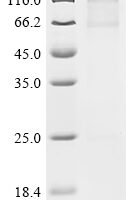
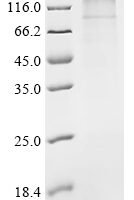
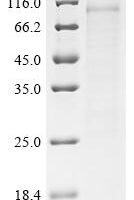
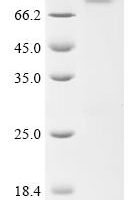
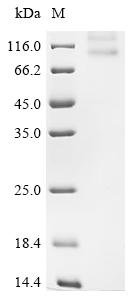
Recombinant Human Potassium voltage-gated channel subfamily KQT member 1 (KCNQ1) Protein is a recombinant protein from Homo sapiens (Human), expressed in in vitro E.coli expression system, covering amino acids 1-676aa, with N-terminal 10xHis-tagged tag, molecular weight 80.7kDa, purity Greater than 90% as determined by SDS-PAGE.. Suitable for ELISA and Western Blot applications.