, ,

Recombinant Human RAC-beta serine/threonine-protein kinase (AKT2)

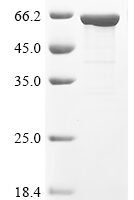
Recombinant Human RAC-beta serine/threonine-protein kinase (AKT2) — Several AKT2-specific substrates have been identified, including ANKRD2, C2CD5, CLK2 and PITX2. Purity >90%.

SKU: BCRECP-000055 Categories: , ,

Product Specifications

Product SkuBCRECP-000055
Product DescriptionRecombinant Human RAC-beta serine/threonine-protein kinase (AKT2) Protein is expressed from E.coli with N-terminal 6xHis-SUMO-tagged. It contains 2-481aa. [Accession | P31751].
Uniprot No.P31751
Gene NamesAKT2
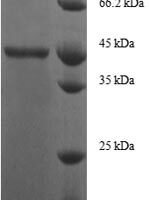
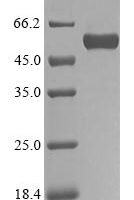
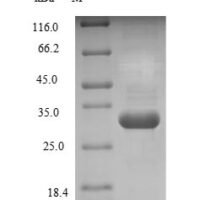
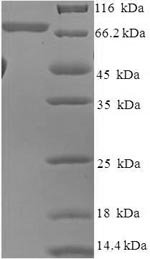
PurityGreater than 90% as determined by SDS-PAGE.
Expression SystemE.coli
Expression Region2-481aa
SpeciesHomo sapiens (Human)
Tag InfoN-terminal 6xHis-SUMO-tagged
Molecular weight71.6kDa
ActivityPlease contact us to obtain bioactivity data.
BufferIf the delivery form is liquid, the default storage buffer is Tris/PBS-based buffer, 5%-50% glycerol. If the delivery form is lyophilized powder, the buffer before lyophilization is Tris/PBS-based buffer, 6% Trehalose.
StorageStore at -20°C/-80°C upon receipt, aliquoting is necessary for mutiple use. Avoid repeated freeze-thaw cycles.
Research AreasApoptosis

Function

Several AKT2-specific substrates have been identified, including ANKRD2, C2CD5, CLK2 and PITX2. May play a role in myoblast differentiation. In this context, may act through PITX2 phosphorylation.

Biological Context

Subcellular Location: Cytoplasm; Nucleus; Cell membrane (Peripheral membrane protein); Early endosome
Tissue Specificity: Widely expressed. Expressed in myoblasts
Disease Association: [Defects in AKT2 are a cause of susceptibility to breast cancer (BC). AKT2 promotes metastasis of tumor cells without affecting the latency of tumor development. May play a role in glioblastoma cell survival ] | Type 2 diabetes mellitus (T2D) : A multifactorial disorder of glucose homeostasis caused by a lack of sensitivity to insulin. Affected individuals usually have an obese body habitus and manifestations of a metabolic syndrome characterized by diabetes, insulin resistance, hypertension and hypertriglyceridemia. The disease results in long-term complications that affect the eyes, kidneys, nerves, and blood vessels. [Disease susceptibility is associated with variants affecting the gene represented in this entry] | Hypoinsulinemic hypoglycemia with hemihypertrophy (HIHGHH) : A disorder characterized by hypoglycemia, low insulin levels, low serum levels of ketone bodies and branched-chain amino acids, left-sided hemihypertrophy, neonatal macrosomia, reduced consciousness and hypoglycemic seizures. [The disease is caused by variants affecting the gene represented in this entry]

Product Specifications

Recombinant Human RAC-beta serine/threonine-protein kinase (AKT2) is a recombinant protein from Homo sapiens (Human), expressed in E.coli, covering amino acids 2-481aa, with N-terminal 6xHis-SUMO-tagged tag, molecular weight 71.6kDa, purity Greater than 90% as determined by SDS-PAGE.. Suitable for ELISA and Western Blot applications.

Recommended applications depend on the target, product format, and product-specific validation data. Refer to the product datasheet or Certificate of Analysis (CoA), or contact BioCrest Sci for application guidance.

Biological Activity: Please contact us to obtain bioactivity data.

Storage: Store at -20°C/-80°C upon receipt, aliquoting is necessary for mutiple use. Avoid repeated freeze-thaw cycles.

Shipping & Lead Time: Availability, shipping conditions, and estimated lead time are confirmed in the formal quotation or order confirmation based on the product format, destination, and order requirements.

Protein Biology

Function

Several AKT2-specific substrates have been identified, including ANKRD2, C2CD5, CLK2 and PITX2. May play a role in myoblast differentiation. In this context, may act through PITX2 phosphorylation. Unphosphorylated PITX2 associates with an ELAVL1/HuR-containing complex, which stabilizes CCND1 cyclin mRNA, ensuring cell proliferation. Phosphorylation by AKT2 impairs this association, leading to CCND1 mRNA destabilization and progression towards differentiation (By similarity). Also involved in the negative regulation of myogenesis in response to stress conditions. In this context, acts by phosphorylating ANKRD2 (By similarity). May also be a key regulator of glucose uptake. Regulates insulin-stimulated glucose transport by the increase of glucose transporter GLUT4 translocation from intracellular stores to the plasma membrane. In this context, acts by phosphorylating C2CD5/CDP138 on 'Ser-197' in insulin-stimulated adipocytes (By similarity). Through the phosphorylation of CLK2 on 'Thr-343', involved in insulin-regulated suppression of hepatic gluconeogenesis (By similarity)

Subcellular Location

Cytoplasm; Nucleus; Cell membrane (Peripheral membrane protein); Early endosome

Disease Association

[Defects in AKT2 are a cause of susceptibility to breast cancer (BC). AKT2 promotes metastasis of tumor cells without affecting the latency of tumor development. May play a role in glioblastoma cell survival (PubMed:20167810)] | Type 2 diabetes mellitus (T2D) : A multifactorial disorder of glucose homeostasis caused by a lack of sensitivity to insulin. Affected individuals usually have an obese body habitus and manifestations of a metabolic syndrome characterized by diabetes, insulin resistance, hypertension and hypertriglyceridemia. The disease results in long-term complications that affect the eyes, kidneys, nerves, and blood vessels. [Disease susceptibility is associated with variants affecting the gene represented in this entry] | Hypoinsulinemic hypoglycemia with hemihypertrophy (HIHGHH) : A disorder characterized by hypoglycemia, low insulin levels, low serum levels of ketone bodies and branched-chain amino acids, left-sided hemihypertrophy, neonatal macrosomia, reduced consciousness and hypoglycemic seizures. [The disease is caused by variants affecting the gene represented in this entry]

Tissue Specificity

Widely expressed. Expressed in myoblasts (PubMed:17565718)

Subunit

Interacts with BTBD10 (By similarity). Interacts with KCTD20 (By similarity). Interacts (via PH domain) with MTCP1, TCL1A and TCL1B; this interaction may facilitate AKT2 oligomerization and phosphorylation, hence increasing kinase activity (PubMed:10983986). Interacts with PHB2; this interaction may be important for myogenic differentiation (By similarity). Interacts (when phosphorylated) with CLIP3/ClipR-59; this interaction promotes AKT2 recruitment to the plasma membrane (By similarity). Interacts with WDFY2/ProF (via WD repeats 1-3) (PubMed:16792529)

Gene: AKT2  |  Organism: Homo sapiens  |  Synonyms: Protein kinase Akt-2; Protein kinase B beta; RAC protein kinase beta
Key Publications

Frequently Asked Questions

How do I order or inquire about this product?

Submit the Online Inquiry form with your required quantity and specifications, or email sales@biocrestsci.com. Available sizes, pricing, stock status, documentation, and estimated lead time are confirmed in the formal quotation.

What is the shipping and delivery time?

Availability, dispatch timing, shipping conditions, and delivery estimates depend on the product format, destination, and order requirements. These details are confirmed in the formal quotation or order confirmation.

How should this product be stored?

Follow the storage and handling instructions in the product-specific datasheet and Certificate of Analysis (CoA). Requirements may vary by product form and formulation; contact BioCrest Sci if product-specific guidance is needed.

What quality controls are performed on your products?

Quality-control data such as identity, purity, endotoxin level, or biological activity are provided only when specified on this product page, the datasheet, or Certificate of Analysis (CoA). Biological activity is not implied unless explicitly stated.

Shopping Cart
Scroll to Top