Function
PPIases accelerate the folding of proteins. It catalyzes the cis-trans isomerization of proline imidic peptide bonds in oligopeptides. Acts as a regulatory subunit for serine/threonine-protein phosphatase 2A (PP2A).
Biological Context
Subcellular Location: Cytoplasm; Nucleus
Tissue Specificity: Widely expressed
Disease Association: Parkinson disease 25, autosomal recessive early-onset, with impaired intellectual development (PARK25) : An autosomal recessive, early-onset form of Parkinson disease, a complex neurodegenerative disorder characterized by bradykinesia, resting tremor, muscular rigidity and postural instability, as well as by a clinically significant response to treatment with levodopa. The pathology involves the loss of dopaminergic neurons in the substantia nigra and the presence of Lewy bodies (intraneuronal accumulations of aggregated proteins), in surviving neurons in various areas of the brain. PARK25 is characterized by onset of parkinsonism in late childhood or adolescence, developmental delay and intellectual disability. Cognitive impairment is mild to moderate and non-progressive. [The disease is caused by variants affecting the gene represented in this entry]
Product Specifications
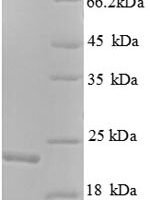
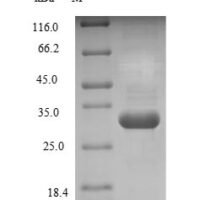
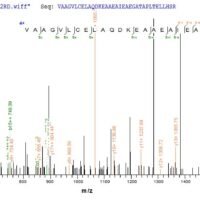
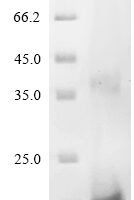
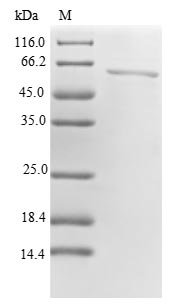
Recombinant Human Serine/threonine-protein phosphatase 2A activator (PTPA) is a recombinant protein from Homo sapiens (Human), expressed in E.coli, covering amino acids 2-358aa, with N-terminal 10xHis-SUMO-tagged and C-terminal Myc-tagged tag, molecular weight 60.5kDa, purity Greater than 90% as determined by SDS-PAGE.. Suitable for ELISA and Western Blot applications. Explore more Enzyme proteins →