, ,

Recombinant Human SHC-transforming protein 1 (SHC1), partial, Biotinylated

Recombinant Human SHC-transforming protein 1 (SHC1), partial, Biotinylated — Signaling adapter that couples activated growth factor receptors to signaling pathways. Purity >85%.

Product Specifications

Product SkuBCRECP-001629
Product DescriptionRecombinant Human SHC-transforming protein 1 (SHC1) Protein is expressed from E.coli with N-terminal MBP-tagged and C-terminal 6xHis-Avi-tagged. It contains 150-320aa. [Accession | P29353].
Uniprot No.P29353
Gene NamesSHC1
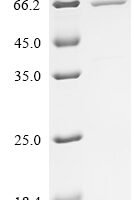
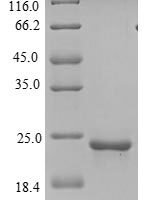
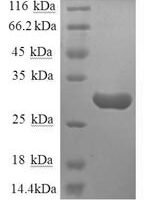
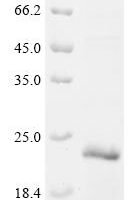
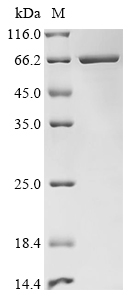
PurityGreater than 85% as determined by SDS-PAGE.
Expression SystemE.coli
Expression Region150-320aa
SpeciesHomo sapiens (Human)
Tag InfoN-terminal MBP-tagged and C-terminal 6xHis-Avi-tagged
Molecular weight66.4kDa
ActivityPlease contact us to obtain bioactivity data.
BufferIf the delivery form is liquid, the default storage buffer is Tris/PBS-based buffer, 5%-50% glycerol. If the delivery form is lyophilized powder, the buffer before lyophilization is Tris/PBS-based buffer, 6% Trehalose.
StorageStore at -20°C/-80°C upon receipt, aliquoting is necessary for mutiple use. Avoid repeated freeze-thaw cycles.
Research AreasNeuroscience

Function

Signaling adapter that couples activated growth factor receptors to signaling pathways. Participates in a signaling cascade initiated by activated KIT and KITLG/SCF. Isoform p46Shc and isoform p52Shc, once phosphorylated, couple activated receptor tyrosine kinases to Ras via the recruitment of the GRB2/SOS complex and are implicated in the cytoplasmic propagation of mitogenic signals.

Biological Context

Subcellular Location: Mitochondrion
Tissue Specificity: Widely expressed. Expressed in neural stem cells but absent in mature neurons

Product Specifications

Recombinant Human SHC-transforming protein 1 (SHC1), partial, Biotinylated is a recombinant protein from Homo sapiens (Human), expressed in E.coli, covering amino acids 150-320aa, with N-terminal MBP-tagged and C-terminal 6xHis-Avi-tagged tag, molecular weight 66.4kDa, purity Greater than 85% as determined by SDS-PAGE.. Suitable for ELISA and Western Blot applications.

Recommended applications depend on the target, product format, and product-specific validation data. Refer to the product datasheet or Certificate of Analysis (CoA), or contact BioCrest Sci for application guidance.

Biological Activity: Please contact us to obtain bioactivity data.

Storage: Store at -20°C/-80°C upon receipt, aliquoting is necessary for mutiple use. Avoid repeated freeze-thaw cycles.

Shipping & Lead Time: Availability, shipping conditions, and estimated lead time are confirmed in the formal quotation or order confirmation based on the product format, destination, and order requirements.

Protein Biology

Function

Signaling adapter that couples activated growth factor receptors to signaling pathways. Participates in a signaling cascade initiated by activated KIT and KITLG/SCF. Isoform p46Shc and isoform p52Shc, once phosphorylated, couple activated receptor tyrosine kinases to Ras via the recruitment of the GRB2/SOS complex and are implicated in the cytoplasmic propagation of mitogenic signals. Isoform p46Shc and isoform p52Shc may thus function as initiators of the Ras signaling cascade in various non-neuronal systems. Isoform p66Shc does not mediate Ras activation, but is involved in signal transduction pathways that regulate the cellular response to oxidative stress and life span. Isoform p66Shc acts as a downstream target of the tumor suppressor p53 and is indispensable for the ability of stress-activated p53 to induce elevation of intracellular oxidants, cytochrome c release and apoptosis. The expression of isoform p66Shc has been correlated with life span (By similarity). Participates in signaling downstream of the angiopoietin receptor TEK/TIE2, and plays a role in the regulation of endothelial cell migration and sprouting angiogenesis. Involved in the oncostatin-M-mediated signaling pathway through type II OSM receptor complex (heterodimers composed of OSMR and IL6ST) where it contributes to activation of the Ras/Raf/MAPK pathway through JAK1-dependent recruitment to OSMR subunit of OSMR complex and SHC1 association with GRB2 (PubMed:11016927)

Subcellular Location

Mitochondrion

Tissue Specificity

Widely expressed. Expressed in neural stem cells but absent in mature neurons

Subunit

(Microbial infection) Interacts with herpes simplex virus 1 UL46

Gene: SHC1  |  Organism: Homo sapiens  |  Synonyms: SHC-transforming protein 3; SHC-transforming protein A; Src homology 2 domain-containing-transforming protein C1
Key Publications

Frequently Asked Questions

How do I order or inquire about this product?

Submit the Online Inquiry form with your required quantity and specifications, or email sales@biocrestsci.com. Available sizes, pricing, stock status, documentation, and estimated lead time are confirmed in the formal quotation.

What is the shipping and delivery time?

Availability, dispatch timing, shipping conditions, and delivery estimates depend on the product format, destination, and order requirements. These details are confirmed in the formal quotation or order confirmation.

How should this product be stored?

Follow the storage and handling instructions in the product-specific datasheet and Certificate of Analysis (CoA). Requirements may vary by product form and formulation; contact BioCrest Sci if product-specific guidance is needed.

What quality controls are performed on your products?

Quality-control data such as identity, purity, endotoxin level, or biological activity are provided only when specified on this product page, the datasheet, or Certificate of Analysis (CoA). Biological activity is not implied unless explicitly stated.

Shopping Cart
Scroll to Top