Function
Facilitative glucose transporter, which is responsible for constitutive or basal glucose uptake. Has a very broad substrate specificity; can transport a wide range of aldoses including both pentoses and hexoses. Most important energy carrier of the brain: present at the blood-brain barrier and assures the energy-independent, facilitative transport of glucose into the brain.
Biological Context
Subcellular Location: Cell membrane (Multi-pass membrane protein); Melanosome; Photoreceptor inner segment
Tissue Specificity: Detected in erythrocytes (at protein level). Expressed at variable levels in many human tissues
Disease Association: GLUT1 deficiency syndrome 1 (GLUT1DS1) : A neurologic disorder showing wide phenotypic variability. The most severe 'classic' phenotype comprises infantile-onset epileptic encephalopathy associated with delayed development, acquired microcephaly, motor incoordination, and spasticity. Onset of seizures, usually characterized by apneic episodes, staring spells, and episodic eye movements, occurs within the first 4 months of life. Other paroxysmal findings include intermittent ataxia, confusion, lethargy, sleep disturbance, and headache. Varying degrees of cognitive impairment can occur, ranging from learning disabilities to severe intellectual disability. [The disease is caused by variants affecting the gene represented in this entry] | GLUT1 deficiency syndrome 2 (GLUT1DS2) : A clinically variable disorder characterized primarily by onset in childhood of paroxysmal exercise-induced dyskinesia. The dyskinesia involves transient abnormal involuntary movements, such as dystonia and choreoathetosis, induced by exercise or exertion, and affecting the exercised limbs. Some patients may also have epilepsy, most commonly childhood absence epilepsy. Mild intellectual disability may also occur. In some patients involuntary exertion-induced dystonic, choreoathetotic, and ballistic movements may be associated with macrocytic hemolytic anemia. [The disease is caused by variants affecting the gene represented in this entry] | Epilepsy, idiopathic generalized 12 (EIG12) : A disorder characterized by recurring generalized seizures in the absence of detectable brain lesions and/or metabolic abnormalities. Generalized seizures arise diffusely and simultaneously from both hemispheres of the brain. Seizure types include juvenile myoclonic seizures, absence seizures, and generalized tonic-clonic seizures. In some EIG12 patients seizures may remit with age. [Disease susceptibility is associated with variants affecting the gene represented in this entry] | Dystonia 9 (DYT9) : An autosomal dominant neurologic disorder characterized by childhood onset of paroxysmal choreoathetosis and progressive spastic paraplegia. Most patients show some degree of cognitive impairment. Other variable features may include seizures, migraine headaches, and ataxia. [The disease is caused by variants affecting the gene represented in this entry] | Stomatin-deficient cryohydrocytosis with neurologic defects (SDCHCN) : A rare form of stomatocytosis characterized by episodic hemolytic anemia, cold-induced red cells cation leak, erratic hyperkalemia, neonatal hyperbilirubinemia, hepatosplenomegaly, cataracts, seizures, intellectual disability, and movement disorder. [The disease is caused by variants affecting the gene represented in this entry]
Pathway: Carbohydrate degradation
Product Specifications
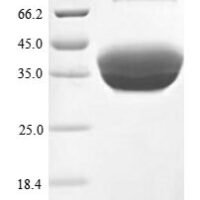
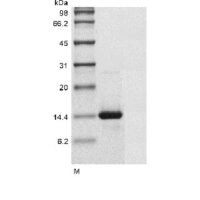
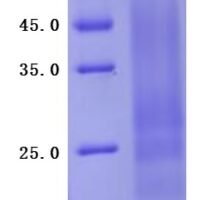
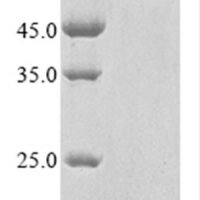
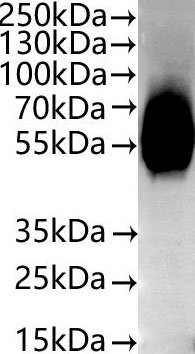
Recombinant Human Solute carrier family 2, facilitated glucose transporter member 1 (SLC2A1)-VLPs (Active) is a recombinant protein from Homo sapiens (Human), expressed in Mammalian cell, covering amino acids 1-492aa, with C-terminal 10xHis-tagged tag, molecular weight 55.5 kDa, purity /. Suitable for ELISA and Western Blot applications. Explore more VLP Transmembrane proteins →