,

Recombinant Human Thioredoxin-dependent peroxide reductase, mitochondrial (PRDX3), partial

Recombinant Human Thioredoxin-dependent peroxide reductase, mitochondrial (PRDX3), partial — Thiol-specific peroxidase that catalyzes the reduction of hydrogen peroxide and organic hydroperoxides to water and alcohols, respectively. Purity >90%.

SKU: BCRECP-001439 Categories: ,

Product Specifications

Product SkuBCRECP-001439
Product DescriptionRecombinant Human Thioredoxin-dependent peroxide reductase, mitochondrial (PRDX3) Protein is expressed from E.coli with N-terminal 6xHis-tagged. It contains 63-256aa. [Accession | P30048].
Uniprot No.P30048
Gene NamesPRDX3
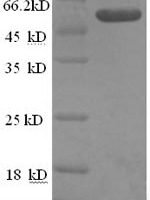
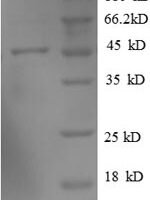
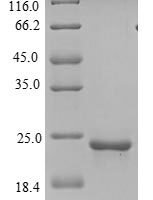
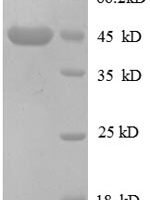
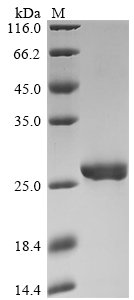
PurityGreater than 90% as determined by SDS-PAGE.
Expression SystemE.coli
Expression Region63-256aa
SpeciesHomo sapiens (Human)
Tag InfoN-terminal 6xHis-tagged
Molecular weight25.5kDa
ActivityPlease contact us to obtain bioactivity data.
BufferIf the delivery form is liquid, the default storage buffer is Tris/PBS-based buffer, 5%-50% glycerol. If the delivery form is lyophilized powder, the buffer before lyophilization is Tris/PBS-based buffer, 6% Trehalose.
StorageStore at -20°C/-80°C upon receipt, aliquoting is necessary for mutiple use. Avoid repeated freeze-thaw cycles.
Research AreasCancer

Function

Thiol-specific peroxidase that catalyzes the reduction of hydrogen peroxide and organic hydroperoxides to water and alcohols, respectively. Plays a role in cell protection against oxidative stress by detoxifying peroxides. Acts synergistically with MAP3K13 to regulate the activation of NF-kappa-B in the cytosol.

Biological Context

Subcellular Location: Mitochondrion; Cytoplasm; Early endosome
Disease Association: Spinocerebellar ataxia, autosomal recessive, 32 (SCAR32) : A form of spinocerebellar ataxia, a clinically and genetically heterogeneous group of cerebellar disorders due to degeneration of the cerebellum with variable involvement of the brainstem and spinal cord. SCAR32 is characterized by the onset of gait ataxia in the second or third decades of life. Other classic features include upper limb ataxia, oculomotor signs, dysphagia, and dysarthria. Some patients may have hyper- or hypokinetic movement abnormalities. Brain imaging shows cerebellar atrophy. Atrophy can extend to the brainstem and medullary olives. [The disease is caused by variants affecting the gene represented in this entry] | Corneal dystrophy, punctiform and polychromatic pre-Descemet (PPPCD) : An autosomal dominant corneal dystrophy characterized by the presence of punctiform, multicolored opacities in the posterior stroma, immediately anterior to Descemet membrane. Affected individuals are typically asymptomatic. [The disease is caused by variants affecting the gene represented in this entry]

Product Specifications

Recombinant Human Thioredoxin-dependent peroxide reductase, mitochondrial (PRDX3), partial is a recombinant protein from Homo sapiens (Human), expressed in E.coli, covering amino acids 63-256aa, with N-terminal 6xHis-tagged tag, molecular weight 25.5kDa, purity Greater than 90% as determined by SDS-PAGE.. Suitable for ELISA and Western Blot applications.

SDS-PAGE: Single band at expected molecular weight confirming purity.

ELISA: Suitable as coating antigen or detection standard.

Western Blot: Compatible with standard Western Blot protocols.

Protein Interaction: Validated for SPR (Surface Plasmon Resonance) and BLI (Bio-Layer Interferometry) studies.

Shipping: Shipped at ambient temperature. Lyophilized protein is stable during transit.

Storage: Store lyophilized protein at -20°C to -80°C. Reconstituted protein should be aliquoted and stored at -80°C. Avoid repeated freeze-thaw cycles.

Shelf Life: 12 months from date of receipt when stored as recommended.

Shipping Time: Orders placed before 2 PM EST ship same day. International orders typically deliver within 5-10 business days.

Protein Biology

Function

Thiol-specific peroxidase that catalyzes the reduction of hydrogen peroxide and organic hydroperoxides to water and alcohols, respectively. Plays a role in cell protection against oxidative stress by detoxifying peroxides (PubMed:17707404, PubMed:29438714, PubMed:33889951, PubMed:7733872). Acts synergistically with MAP3K13 to regulate the activation of NF-kappa-B in the cytosol (PubMed:12492477). Required for the maintenance of physical strength (By similarity)

Subcellular Location

Mitochondrion; Cytoplasm; Early endosome

Disease Association

Spinocerebellar ataxia, autosomal recessive, 32 (SCAR32) : A form of spinocerebellar ataxia, a clinically and genetically heterogeneous group of cerebellar disorders due to degeneration of the cerebellum with variable involvement of the brainstem and spinal cord. SCAR32 is characterized by the onset of gait ataxia in the second or third decades of life. Other classic features include upper limb ataxia, oculomotor signs, dysphagia, and dysarthria. Some patients may have hyper- or hypokinetic movement abnormalities. Brain imaging shows cerebellar atrophy. Atrophy can extend to the brainstem and medullary olives. [The disease is caused by variants affecting the gene represented in this entry] | Corneal dystrophy, punctiform and polychromatic pre-Descemet (PPPCD) : An autosomal dominant corneal dystrophy characterized by the presence of punctiform, multicolored opacities in the posterior stroma, immediately anterior to Descemet membrane. Affected individuals are typically asymptomatic. [The disease is caused by variants affecting the gene represented in this entry]

Subunit

Homodimer; disulfide-linked, upon oxidation (PubMed:17707404, PubMed:27238969, PubMed:29438714). 6 homodimers assemble to form a ring-like dodecamer (PubMed:17707404, PubMed:27238969, PubMed:29438714). Interacts with NEK6 (PubMed:20873783). Interacts with LRRK2 (PubMed:21850687). Interacts with MAP3K13 (PubMed:12492477). Interacts with RPS6KC1 (via PX domain) (PubMed:15750338)

Gene: PRDX3  |  Organism: Homo sapiens  |  Synonyms: Antioxidant protein 1; HBC189; Peroxiredoxin III; Peroxiredoxin-3; Protein MER5 homolog; Thioredoxin-dependent peroxiredoxin 3

Frequently Asked Questions

How do I order or inquire about this product?

Fill out the Online Inquiry form with your required quantity and specifications. You can also email sales@biocrestsci.com. Our team typically responds within 4 business hours with a quote and availability confirmation.

What is the shipping and delivery time?

Orders placed before 2 PM EST ship the same day. Domestic (US) delivery typically takes 2-3 business days. International orders deliver within 5-10 business days. All products are shipped at ambient temperature with appropriate packaging to ensure stability.

How should I store this recombinant protein?

Lyophilized proteins should be stored at -20°C to -80°C upon receipt. After reconstitution, aliquot and store at -80°C. Avoid repeated freeze-thaw cycles. Shelf life is 12 months from date of receipt when stored as recommended.

What quality controls are performed on your products?

Each product undergoes SDS-PAGE purity analysis (typically >85-95%), endotoxin testing, and bioactivity validation. Products are validated for ELISA, Western Blot, and SPR/BLI applications as specified on this product page. A Certificate of Analysis (CoA) is available upon request.

Shopping Cart
Scroll to Top