,

Recombinant Human UTP–glucose-1-phosphate uridylyltransferase (UGP2)

Recombinant Human UTP–glucose-1-phosphate uridylyltransferase (UGP2) — recombinant protein from Homo sapiens (Human), expressed in E.coli. Purity >90%.

SKU: BCRECP-001892 Categories: ,

Product Specifications

Product SkuBCRECP-001892
Product DescriptionRecombinant Human UTP--glucose-1-phosphate uridylyltransferase (UGP2) Protein is expressed from E.coli with N-terminal 6xHis-SUMO-tagged. It contains 1-497aa. [Accession | Q16851].
Uniprot No.Q16851
Gene NamesUGP2
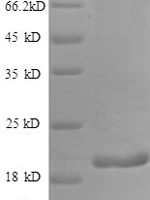
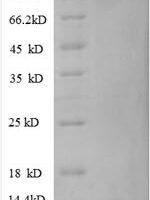
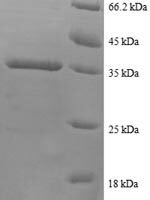
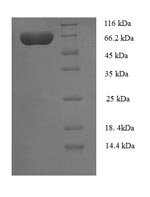
PurityGreater than 90% as determined by SDS-PAGE.
Expression SystemE.coli
Expression Region1-497aa
SpeciesHomo sapiens (Human)
Tag InfoN-terminal 6xHis-SUMO-tagged
Molecular weight71.7kDa
ActivityPlease contact us to obtain bioactivity data.
BufferIf the delivery form is liquid, the default storage buffer is Tris/PBS-based buffer, 5%-50% glycerol. If the delivery form is lyophilized powder, the buffer before lyophilization is Tris/PBS-based buffer, 6% Trehalose.
StorageStore at -20°C/-80°C upon receipt, aliquoting is necessary for mutiple use. Avoid repeated freeze-thaw cycles.
Research AreasCancer

Function

UTP–glucose-1-phosphate uridylyltransferase catalyzing the conversion of glucose-1-phosphate into UDP-glucose, a crucial precursor for the production of glycogen.

Biological Context

Subcellular Location: Cytoplasm
Tissue Specificity: Highly expressed in various brain regions. Expressed in amygdala, anterior cingulate cortex, caudate, cerebellar hemisphere, cerebellum, cortex, frontal cortex, hippocampus, hypothalamus, nucleus accumbens, putamen, spinal cord and substantia nigra. Also widely expressed among other tissues, including liver, heart, placenta, lung, kidney, pancreas and skeletal muscle
Disease Association: Developmental and epileptic encephalopathy 83 (DEE83) : A form of epileptic encephalopathy, a heterogeneous group of severe early-onset epilepsies characterized by refractory seizures, neurodevelopmental impairment, and poor prognosis. Development is normal prior to seizure onset, after which cognitive and motor delays become apparent. DEE83 is an autosomal recessive form characterized by onset of frequent, intractable seizures in the first days to months of life. Affected individuals have profound developmental delay with no motor or language skill acquisition, and poor or absent visual tracking. Many patients die in the first years of life. [The disease is caused by variants affecting the gene represented in this entry. A recurrent, pathogenic variant affecting the translation initiation codon of isoform 2 has been found in multiple DEE83 families. The variant results in the absence of isoform 2 and leads to reduced levels of functional UGP2 enzyme in neural stem cells. The absence of isoform 2 is compensated by an increased abundance of a functional isoform 1, carrying variant p.Met12Val, which may explain the survival of the patients. A complete absence of functional UGP2 in all cells would be embryonic lethal]
Pathway: Glycan biosynthesis; glycogen biosynthesis

Product Specifications

Recombinant Human UTP–glucose-1-phosphate uridylyltransferase (UGP2) is a recombinant protein from Homo sapiens (Human), expressed in E.coli, covering amino acids 1-497aa, with N-terminal 6xHis-SUMO-tagged tag, molecular weight 71.7kDa, purity Greater than 90% as determined by SDS-PAGE.. Suitable for ELISA and Western Blot applications.

Recommended applications depend on the target, product format, and product-specific validation data. Refer to the product datasheet or Certificate of Analysis (CoA), or contact BioCrest Sci for application guidance.

Biological Activity: Please contact us to obtain bioactivity data.

Storage: Store at -20°C/-80°C upon receipt, aliquoting is necessary for mutiple use. Avoid repeated freeze-thaw cycles.

Shipping & Lead Time: Availability, shipping conditions, and estimated lead time are confirmed in the formal quotation or order confirmation based on the product format, destination, and order requirements.

Protein Biology

Function

UTP--glucose-1-phosphate uridylyltransferase catalyzing the conversion of glucose-1-phosphate into UDP-glucose, a crucial precursor for the production of glycogen

Subcellular Location

Cytoplasm

Disease Association

Developmental and epileptic encephalopathy 83 (DEE83) : A form of epileptic encephalopathy, a heterogeneous group of severe early-onset epilepsies characterized by refractory seizures, neurodevelopmental impairment, and poor prognosis. Development is normal prior to seizure onset, after which cognitive and motor delays become apparent. DEE83 is an autosomal recessive form characterized by onset of frequent, intractable seizures in the first days to months of life. Affected individuals have profound developmental delay with no motor or language skill acquisition, and poor or absent visual tracking. Many patients die in the first years of life. [The disease is caused by variants affecting the gene represented in this entry. A recurrent, pathogenic variant affecting the translation initiation codon of isoform 2 has been found in multiple DEE83 families. The variant results in the absence of isoform 2 and leads to reduced levels of functional UGP2 enzyme in neural stem cells. The absence of isoform 2 is compensated by an increased abundance of a functional isoform 1, carrying variant p.Met12Val, which may explain the survival of the patients. A complete absence of functional UGP2 in all cells would be embryonic lethal]

Tissue Specificity

Highly expressed in various brain regions. Expressed in amygdala, anterior cingulate cortex, caudate, cerebellar hemisphere, cerebellum, cortex, frontal cortex, hippocampus, hypothalamus, nucleus accumbens, putamen, spinal cord and substantia nigra (PubMed:31820119). Also widely expressed among other tissues, including liver, heart, placenta, lung, kidney, pancreas and skeletal muscle (PubMed:8354390, PubMed:8631325)

Subunit

Homooctamer

Pathway

Glycan biosynthesis; glycogen biosynthesis

Gene: UGP2  |  Organism: Homo sapiens  |  Synonyms: UDP-glucose pyrophosphorylase
Key Publications

Frequently Asked Questions

How do I order or inquire about this product?

Submit the Online Inquiry form with your required quantity and specifications, or email sales@biocrestsci.com. Available sizes, pricing, stock status, documentation, and estimated lead time are confirmed in the formal quotation.

What is the shipping and delivery time?

Availability, dispatch timing, shipping conditions, and delivery estimates depend on the product format, destination, and order requirements. These details are confirmed in the formal quotation or order confirmation.

How should this product be stored?

Follow the storage and handling instructions in the product-specific datasheet and Certificate of Analysis (CoA). Requirements may vary by product form and formulation; contact BioCrest Sci if product-specific guidance is needed.

What quality controls are performed on your products?

Quality-control data such as identity, purity, endotoxin level, or biological activity are provided only when specified on this product page, the datasheet, or Certificate of Analysis (CoA). Biological activity is not implied unless explicitly stated.

Shopping Cart
Scroll to Top