Recombinant Human RNA-binding protein FUS (FUS)

Recombinant Human RNA-binding protein FUS (FUS) — DNA/RNA-binding protein that plays a role in various cellular processes such as transcription regulation, RNA splicing, RNA transport, DNA repair and damage response. Purity >90%.

SKU: BCRECP-000701 Category:

Product Specifications

Product SkuBCRECP-000701
Product DescriptionRecombinant Human RNA-binding protein FUS (FUS) Protein is expressed from E.coli with N-terminal 10xHis-tagged and C-terminal Myc-tagged. It contains 1-526aa. [Accession | P35637].
Uniprot No.P35637
Gene NamesFUS
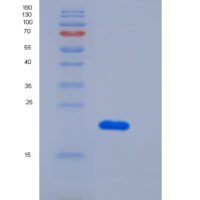
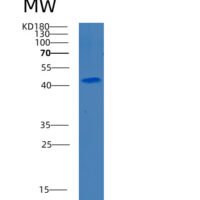
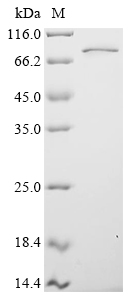
PurityGreater than 90% as determined by SDS-PAGE.
Expression SystemE.coli
Expression Region1-526aa
SpeciesHomo sapiens (Human)
Tag InfoN-terminal 10xHis-tagged and C-terminal Myc-tagged
Molecular weight60.9kDa
ActivityPlease contact us to obtain bioactivity data.
BufferIf the delivery form is liquid, the default storage buffer is Tris/PBS-based buffer, 5%-50% glycerol. If the delivery form is lyophilized powder, the buffer before lyophilization is Tris/PBS-based buffer, 6% Trehalose.
StorageStore at -20°C/-80°C upon receipt, aliquoting is necessary for mutiple use. Avoid repeated freeze-thaw cycles.
Research AreasCancer

Function

DNA/RNA-binding protein that plays a role in various cellular processes such as transcription regulation, RNA splicing, RNA transport, DNA repair and damage response. Binds to ssRNA containing the consensus sequence 5'-AGGUAA-3'. Binds to nascent pre-mRNAs and acts as a molecular mediator between RNA polymerase II and U1 small nuclear ribonucleoprotein thereby coupling transcription and splicing.

Biological Context

Subcellular Location: Nucleus
Tissue Specificity: Ubiquitous
Disease Association: [A chromosomal aberration involving FUS is found in a patient with malignant myxoid liposarcoma. Translocation t(12;16)(q13;p11) with DDIT3] | [A chromosomal aberration involving FUS is a cause of acute myeloid leukemia (AML). Translocation t(16;21)(p11;q22) with ERG] | Angiomatoid fibrous histiocytoma (AFH) : A distinct variant of malignant fibrous histiocytoma that typically occurs in children and adolescents and is manifest by nodular subcutaneous growth. Characteristic microscopic features include lobulated sheets of histiocyte-like cells intimately associated with areas of hemorrhage and cystic pseudovascular spaces, as well as a striking cuffing of inflammatory cells, mimicking a lymph node metastasis. [The gene represented in this entry is involved in disease pathogenesis. A chromosomal aberration involving FUS is found in a patient with angiomatoid fibrous histiocytoma. Translocation t(12;16)(q13;p11.2) with ATF1 generates a chimeric FUS/ATF1 protein] | Amyotrophic lateral sclerosis 6, with or without frontotemporal dementia (ALS6) : A neurodegenerative disorder affecting upper motor neurons in the brain and lower motor neurons in the brain stem and spinal cord, resulting in fatal paralysis. Sensory abnormalities are absent. The pathologic hallmarks of the disease include pallor of the corticospinal tract due to loss of motor neurons, presence of ubiquitin-positive inclusions within surviving motor neurons, and deposition of pathologic aggregates. The etiology of amyotrophic lateral sclerosis is likely to be multifactorial, involving both genetic and environmental factors. The disease is inherited in 5-10% of the cases. [The disease is caused by variants affecting the gene represented in this entry] | Tremor, hereditary essential 4 (ETM4) : A common movement disorder mainly characterized by postural tremor of the arms. Head, legs, trunk, voice, jaw, and facial muscles may also be involved. The condition can be aggravated by emotions, hunger, fatigue and temperature extremes, and may cause a functional disability or even incapacitation. Inheritance is autosomal dominant. [The disease is caused by variants affecting the gene represented in this entry]

Product Specifications

Recombinant Human RNA-binding protein FUS (FUS) is a recombinant protein from Homo sapiens (Human), expressed in E.coli, covering amino acids 1-526aa, with N-terminal 10xHis-tagged and C-terminal Myc-tagged tag, molecular weight 60.9kDa, purity Greater than 90% as determined by SDS-PAGE.. Suitable for ELISA and Western Blot applications.
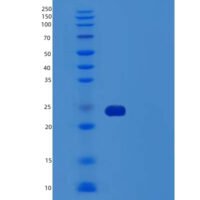
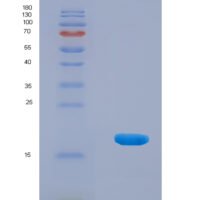
SDS-PAGE: Single band at expected molecular weight confirming purity.

ELISA: Suitable as coating antigen or detection standard.

Western Blot: Compatible with standard Western Blot protocols.

Protein Interaction: Validated for SPR (Surface Plasmon Resonance) and BLI (Bio-Layer Interferometry) studies.

Shipping: Shipped at ambient temperature. Lyophilized protein is stable during transit.

Storage: Store lyophilized protein at -20°C to -80°C. Reconstituted protein should be aliquoted and stored at -80°C. Avoid repeated freeze-thaw cycles.

Shelf Life: 12 months from date of receipt when stored as recommended.

Shipping Time: Orders placed before 2 PM EST ship same day. International orders typically deliver within 5-10 business days.

Protein Biology

Function

DNA/RNA-binding protein that plays a role in various cellular processes such as transcription regulation, RNA splicing, RNA transport, DNA repair and damage response (PubMed:27731383). Binds to ssRNA containing the consensus sequence 5'-AGGUAA-3' (PubMed:21256132). Binds to nascent pre-mRNAs and acts as a molecular mediator between RNA polymerase II and U1 small nuclear ribonucleoprotein thereby coupling transcription and splicing (PubMed:26124092). Also binds its own pre-mRNA and autoregulates its expression; this autoregulation mechanism is mediated by non-sense-mediated decay (PubMed:24204307). Plays a role in DNA repair mechanisms by promoting D-loop formation and homologous recombination during DNA double-strand break repair (PubMed:10567410). In neuronal cells, plays crucial roles in dendritic spine formation and stability, RNA transport, mRNA stability and synaptic homeostasis (By similarity)

Subcellular Location

Nucleus

Disease Association

[A chromosomal aberration involving FUS is found in a patient with malignant myxoid liposarcoma. Translocation t(12;16)(q13;p11) with DDIT3] | [A chromosomal aberration involving FUS is a cause of acute myeloid leukemia (AML). Translocation t(16;21)(p11;q22) with ERG] | Angiomatoid fibrous histiocytoma (AFH) : A distinct variant of malignant fibrous histiocytoma that typically occurs in children and adolescents and is manifest by nodular subcutaneous growth. Characteristic microscopic features include lobulated sheets of histiocyte-like cells intimately associated with areas of hemorrhage and cystic pseudovascular spaces, as well as a striking cuffing of inflammatory cells, mimicking a lymph node metastasis. [The gene represented in this entry is involved in disease pathogenesis. A chromosomal aberration involving FUS is found in a patient with angiomatoid fibrous histiocytoma. Translocation t(12;16)(q13;p11.2) with ATF1 generates a chimeric FUS/ATF1 protein] | Amyotrophic lateral sclerosis 6, with or without frontotemporal dementia (ALS6) : A neurodegenerative disorder affecting upper motor neurons in the brain and lower motor neurons in the brain stem and spinal cord, resulting in fatal paralysis. Sensory abnormalities are absent. The pathologic hallmarks of the disease include pallor of the corticospinal tract due to loss of motor neurons, presence of ubiquitin-positive inclusions within surviving motor neurons, and deposition of pathologic aggregates. The etiology of amyotrophic lateral sclerosis is likely to be multifactorial, involving both genetic and environmental factors. The disease is inherited in 5-10% of the cases. [The disease is caused by variants affecting the gene represented in this entry] | Tremor, hereditary essential 4 (ETM4) : A common movement disorder mainly characterized by postural tremor of the arms. Head, legs, trunk, voice, jaw, and facial muscles may also be involved. The condition can be aggravated by emotions, hunger, fatigue and temperature extremes, and may cause a functional disability or even incapacitation. Inheritance is autosomal dominant. [The disease is caused by variants affecting the gene represented in this entry]

Tissue Specificity

Ubiquitous

Subunit

Self-oligomerizes (via N-terminal region) (PubMed:25453086). Oligomerization is essential for chromatin binding (PubMed:25453086). Component of nuclear riboprotein complexes. Interacts with ILF3, TDRD3 and SF1 (PubMed:9660765). Interacts through its C-terminus with SFRS13A (PubMed:9774382). Interacts with OTUB1 and SARNP. Interacts with LRSAM1 (PubMed:27615052). Interacts with SAFB1 in a DNA-dependent manner; this interaction tethers FUS to chromatin (PubMed:27731383). Interacts with MATR3 (PubMed:27731383). Interacts with SNRNP70 and POLR2A; these interactions couple RNA transcription and splicing (PubMed:26124092). Interacts (through its RNA-binding domain) with RALY (through its RNA-binding domain); both are components of the same RNPs (PubMed:30354839)

Gene: FUS  |  Organism: Homo sapiens  |  Synonyms: 75 kDa DNA-pairing protein; Oncogene FUS; Oncogene TLS; POMp75; Translocated in liposarcoma protein
Key Publications

Frequently Asked Questions

How do I order or inquire about this product?

Fill out the Online Inquiry form with your required quantity and specifications. You can also email sales@biocrestsci.com. Our team typically responds within 4 business hours with a quote and availability confirmation.

What is the shipping and delivery time?

Orders placed before 2 PM EST ship the same day. Domestic (US) delivery typically takes 2-3 business days. International orders deliver within 5-10 business days. All products are shipped at ambient temperature with appropriate packaging to ensure stability.

How should I store this recombinant protein?

Lyophilized proteins should be stored at -20°C to -80°C upon receipt. After reconstitution, aliquot and store at -80°C. Avoid repeated freeze-thaw cycles. Shelf life is 12 months from date of receipt when stored as recommended.

What quality controls are performed on your products?

Each product undergoes SDS-PAGE purity analysis (typically >85-95%), endotoxin testing, and bioactivity validation. Products are validated for ELISA, Western Blot, and SPR/BLI applications as specified on this product page. A Certificate of Analysis (CoA) is available upon request.

Shopping Cart
Scroll to Top