,

Recombinant Human Acylamino-acid-releasing enzyme (APEH) (Active)

Recombinant Human Acylamino-acid-releasing enzyme (APEH) (Active) — Aminopeptidase involved in the degradation of N(alpha)-acylated peptides. Purity >95%.

SKU: BCACP-000657 Categories: ,
Product SKUBCACP-000657
Product DescriptionRecombinant Human Acylamino-acid-releasing enzyme (APEH) protein is expressed from Mammalian cell with C-terminal 10xHis-tagged. It contains 1-732aa. [Accession | P13798].
Uniprot No.P13798
Gene NamesAPEH
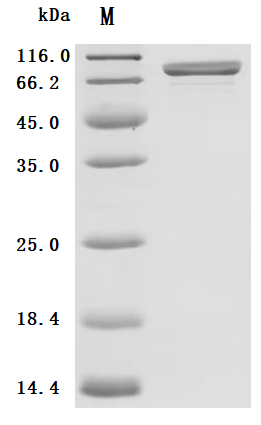
PurityGreater than 95% as determined by SDS-PAGE.Greater than 95% as determined by SEC-HPLC.
Expression SystemMammalian cell
Expression Region1-732aa
SpeciesHomo sapiens (Human)
Tag InfoC-terminal 10xHis-tagged
Molecular weight82.9 kDa
ActivityMeasured by its binding ability in a functional ELISA. Immobilized Human CLEC5A at 2 μg/mL can bind Anti-CLEC5A recombinant antibody . The EC50 is 0.5964-0.6743 ng/mL.;CLEC5A Recombinant Monoclonal Antibody captured on Protein A Chip can bind Recombinant Human CLEC5A with an affinity constant of 0.285 nM as detected by MetaSPR Assay (WeSPRTM 200).
BufferLyophilized from a 0.2 μm filtered 20 mM Tris-HCl, 0.5 M NaCl, 6% Trehalose, pH 8.0
StorageStore at -20°C/-80°C upon receipt, aliquoting is necessary for mutiple use. Avoid repeated freeze-thaw cycles.
Alternative NamesAcylamino-acid-releasing enzyme; AARE; EC 3.4.19.1; Acyl-peptide hydrolase; APH; Acylaminoacyl-peptidase; Oxidized protein hydrolase; OPH

Function

Aminopeptidase involved in the degradation of N(alpha)-acylated peptides. Displays exopeptidase activity toward N-formyl and N-acetyl peptides with a preference for dipeptide substrates. Catalyzes the hydrolysis of the N-terminal peptide bond of an N-acetylated peptide to generate an N-acetylated amino acid and a peptide with a free N-terminus.

Biological Context

Subcellular Location: Cytoplasm
Tissue Specificity: Expressed in erythrocytes (at protein level)

Product Specifications

Recombinant Human Acylamino-acid-releasing enzyme (APEH) (Active) is a recombinant protein from Homo sapiens (Human), expressed in Mammalian cell, covering amino acids 1-732aa, with C-terminal 10xHis-tagged tag, molecular weight 82.9 kDa, purity Greater than 95% as determined by SDS-PAGE.Greater than 95% as determined by SEC-HPLC.. Suitable for ELISA and Western Blot applications.

SDS-PAGE: Single band at expected molecular weight confirming purity.

ELISA: Suitable as coating antigen or detection standard.

Western Blot: Compatible with standard Western Blot protocols.

Protein Interaction: Validated for SPR (Surface Plasmon Resonance) and BLI (Bio-Layer Interferometry) studies.

Shipping: Shipped at ambient temperature. Lyophilized protein is stable during transit.

Storage: Store lyophilized protein at -20°C to -80°C. Reconstituted protein should be aliquoted and stored at -80°C. Avoid repeated freeze-thaw cycles.

Shelf Life: 12 months from date of receipt when stored as recommended.

Shipping Time: Orders placed before 2 PM EST ship same day. International orders typically deliver within 5-10 business days.

Protein Biology

Function

Aminopeptidase involved in the degradation of N(alpha)-acylated peptides. Displays exopeptidase activity toward N-formyl and N-acetyl peptides with a preference for dipeptide substrates (By similarity). Catalyzes the hydrolysis of the N-terminal peptide bond of an N-acetylated peptide to generate an N-acetylated amino acid and a peptide with a free N-terminus (PubMed:10719179, PubMed:1740429, PubMed:2006156). It preferentially cleaves off Ac-Ala, Ac-Met and Ac-Ser (By similarity). Hydrolyzes N-formylated peptides likely arising from N-terminal proteolytic cleavage of bacterial and mitochondrial proteins. May act sequentially with ACY1 in the degradation of N-acylated peptides: APEH first cleaves N-acylaminoacids from N-acylated peptides, then ACY1 further hydrolyzes the N-acylaminoacid into free aminoacid and a carboxylate (By similarity). Displays endopeptidase activity involved in the degradation of oxidized and glycated proteins (PubMed:10719179)

Subcellular Location

Cytoplasm

Tissue Specificity

Expressed in erythrocytes (at protein level)

Subunit

Homotetramer

Gene: APEH  |  Organism: Homo sapiens  |  Synonyms: Acyl-peptide hydrolase; Acylaminoacyl-peptidase; Oxidized protein hydrolase
Key Publications

Frequently Asked Questions

How do I order or inquire about this product?

Fill out the Online Inquiry form with your required quantity and specifications. You can also email sales@biocrestsci.com. Our team typically responds within 4 business hours with a quote and availability confirmation.

What is the shipping and delivery time?

Orders placed before 2 PM EST ship the same day. Domestic (US) delivery typically takes 2-3 business days. International orders deliver within 5-10 business days. All products are shipped at ambient temperature with appropriate packaging to ensure stability.

How should I store this recombinant protein?

Lyophilized proteins should be stored at -20°C to -80°C upon receipt. After reconstitution, aliquot and store at -80°C. Avoid repeated freeze-thaw cycles. Shelf life is 12 months from date of receipt when stored as recommended.

What quality controls are performed on your products?

Each product undergoes SDS-PAGE purity analysis (typically >85-95%), endotoxin testing, and bioactivity validation. Products are validated for ELISA, Western Blot, and SPR/BLI applications as specified on this product page. A Certificate of Analysis (CoA) is available upon request.

Shopping Cart
Scroll to Top