Function
Lectin that functions as a pattern recognizing receptor (PRR) specific for beta-1,3-linked and beta-1,6-linked glucans, which constitute cell wall constituents from pathogenic bacteria and fungi. Necessary for the TLR2-mediated inflammatory response and activation of NF-kappa-B: upon beta-glucan binding, recruits SYK via its ITAM motif and promotes a signaling cascade that activates some CARD domain-BCL10-MALT1 (CBM) signalosomes, leading to the activation of NF-kappa-B and MAP kinase p38 (MAPK11, MAPK12, MAPK13 and/or MAPK14) pathways which stimulate expression of genes encoding pro-inflammatory cytokines and chemokines. Enhances cytokine production in macrophages and dendritic cells.
Biological Context
Subcellular Location: Cytoplasm
Tissue Specificity: Highly expressed in peripheral blood leukocytes and dendritic cells. Detected in spleen, bone marrow, lung, muscle, stomach and placenta
Disease Association: Candidiasis, familial, 4 (CANDF4) : A primary immunodeficiency disorder with altered immune responses and impaired clearance of fungal infections, selective against Candida. It is characterized by persistent and/or recurrent infections of the skin, nails and mucous membranes caused by organisms of the genus Candida, mainly Candida albicans. [The disease may be caused by variants affecting the gene represented in this entry]
Product Specifications
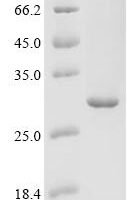
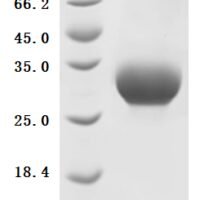
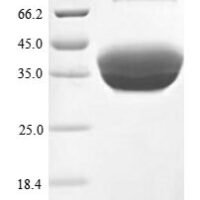
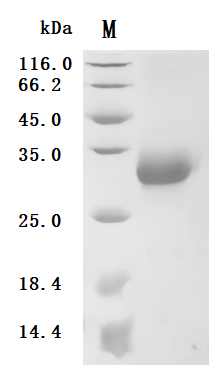
Recombinant Human C-type lectin domain family 7 member A (CLEC7A), partial (Active) is a recombinant protein from Homo sapiens (Human), expressed in Mammalian cell, covering amino acids 66-247aa, with N-terminal 10xHis-tagged tag, molecular weight 23.3 kDa, purity Greater than 95% as determined by SDS-PAGE.. Suitable for ELISA and Western Blot applications.