Function
Plays an important role in the regulation of embryonic development, cell proliferation and cell differentiation. Required for normal branching morphogenesis. May play a role in wound healing.
Biological Context
Subcellular Location: Secreted
Disease Association: Aplasia of lacrimal and salivary glands (ALSG) : A rare condition characterized by dry conjunctival mucosae, irritable eyes, epiphora (constant tearing), and xerostomia (dryness of the mouth), which increases risk of dental erosion, dental caries, periodontal disease, and oral infections. ALSG has variable expressivity, and affected individuals may have aplasia or hypoplasia of the lacrimal, parotid, submandibular, and sublingual glands and absence of the lacrimal puncta. [The disease is caused by variants affecting the gene represented in this entry] | Lacrimo-auriculo-dento-digital syndrome 3 (LADD3) : A form of lacrimo-auriculo-dento-digital syndrome, an autosomal dominant disease characterized by aplastic/hypoplastic lacrimal and salivary glands and ducts, cup-shaped ears, hearing loss, hypodontia and enamel hypoplasia, and distal limb segments anomalies. In addition to these cardinal features, facial dysmorphism, malformations of the kidney and respiratory system and abnormal genitalia have been reported. Craniosynostosis and severe syndactyly are not observed. [The disease is caused by variants affecting the gene represented in this entry]
Product Specifications
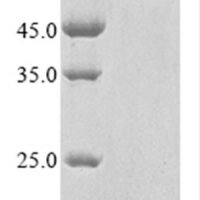
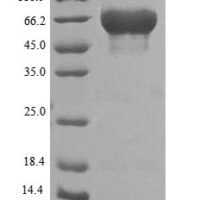
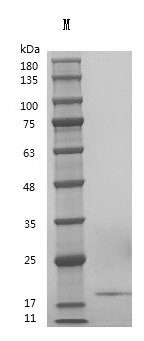
Recombinant Human Fibroblast growth factor 10 (FGF10) (Active) is a recombinant protein from Homo sapiens (Human), expressed in Mammalian cell, covering amino acids 38-208aa, with Tag free tag, molecular weight 19.3 kDa, purity Greater than 95% as determined by SDS-PAGE.. Suitable for ELISA and Western Blot applications. Explore more Growth Factor proteins →