Function
Involved in the control of reactive oxygen species levels and the regulation of mitochondrial redox homeostasis. Maintains thioredoxin in a reduced state. May play a role in redox-regulated cell signaling.
Biological Context
Subcellular Location: Mitochondrion
Tissue Specificity: Highly expressed in the prostate, ovary, liver, testis, uterus, colon and small intestine. Intermediate levels in brain, skeletal muscle, heart and spleen. Low levels in placenta, pancreas, thymus and peripheral blood leukocytes. According to PubMed:10608886, high levels in kidney, whereas according to PubMed:9923614, levels are low. High expression is observed in the adrenal cortex
Disease Association: Glucocorticoid deficiency 5 (GCCD5) : A form of glucocorticoid deficiency, a rare autosomal recessive disorder characterized by resistance to ACTH action on the adrenal cortex, adrenal insufficiency and an inability of the adrenal cortex to produce cortisol. It usually presents in the neonatal period or in early childhood with episodes of hypoglycemia and other symptoms related to cortisol deficiency, including failure to thrive, recurrent illnesses or infections, convulsions, and shock. In a small number of patients hypoglycemia can be sufficiently severe and persistent that it leads to serious long-term neurological damage or death. The diagnosis is readily confirmed with a low plasma cortisol measurement in the presence of an elevated ACTH level, and normal aldosterone and plasma renin measurements. [The disease may be caused by variants affecting the gene represented in this entry]
Product Specifications
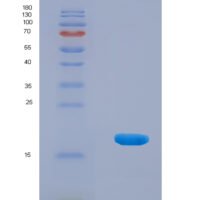
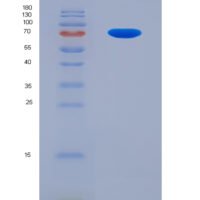
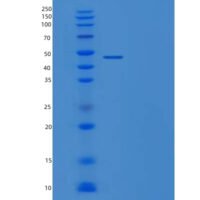
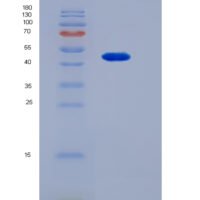
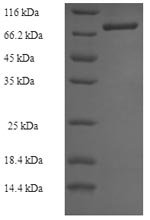
Recombinant Human Thioredoxin reductase 2, mitochondrial (TXNRD2) (U523S) is a recombinant protein from Homo sapiens (Human), expressed in E.coli, covering amino acids 37-524aa(U523S), with N-terminal 6xHis-SUMO-tagged tag, molecular weight 68.9kDa, purity Greater than 90% as determined by SDS-PAGE.. Suitable for ELISA and Western Blot applications. Explore more Enzyme proteins →